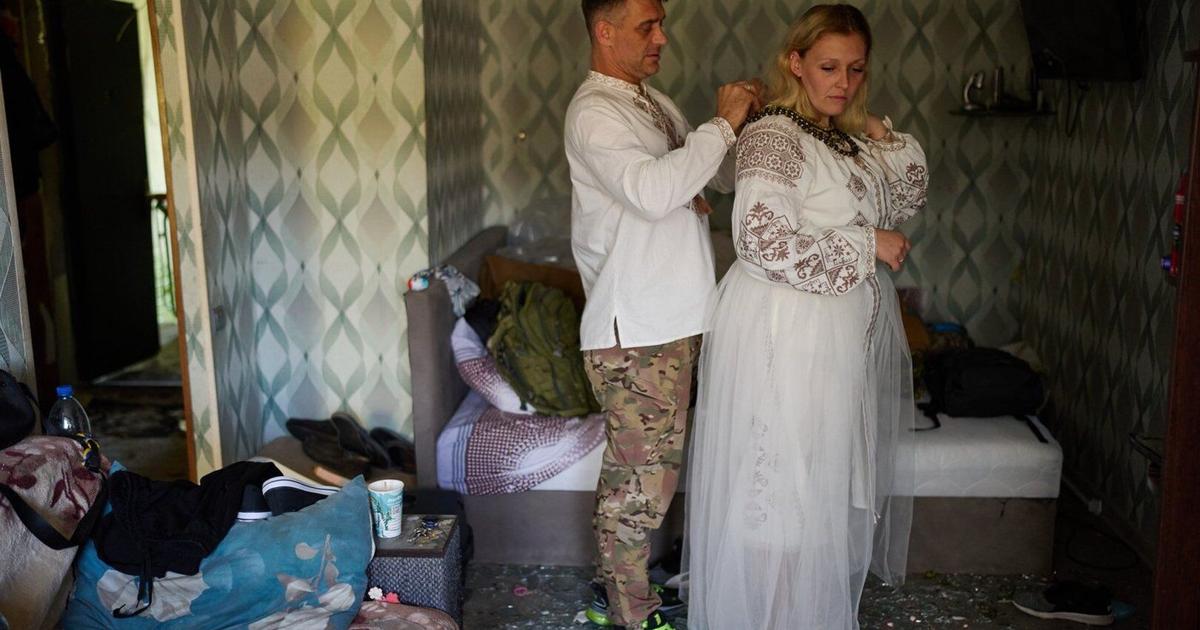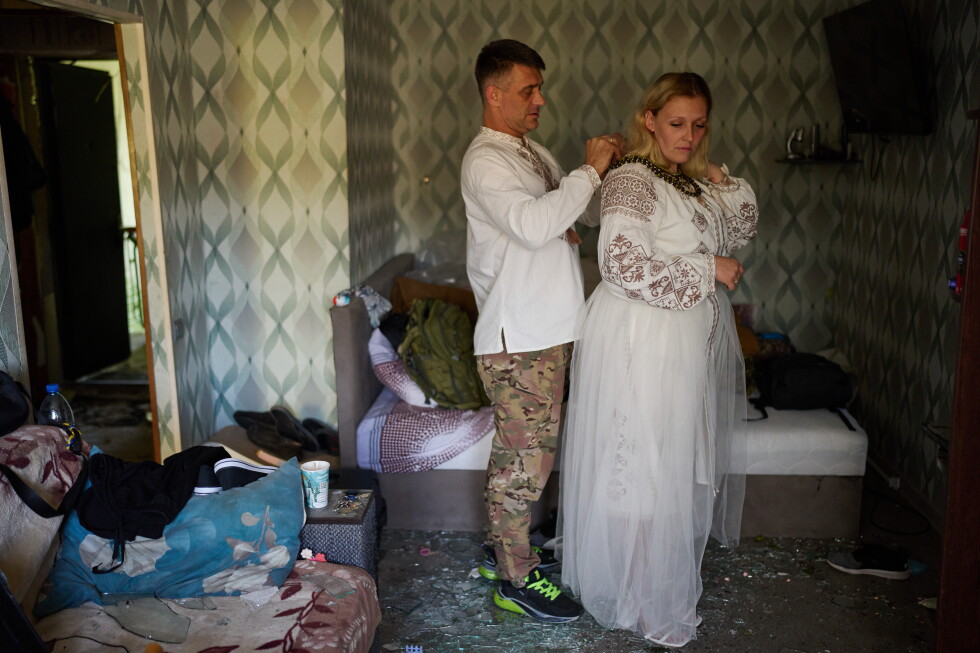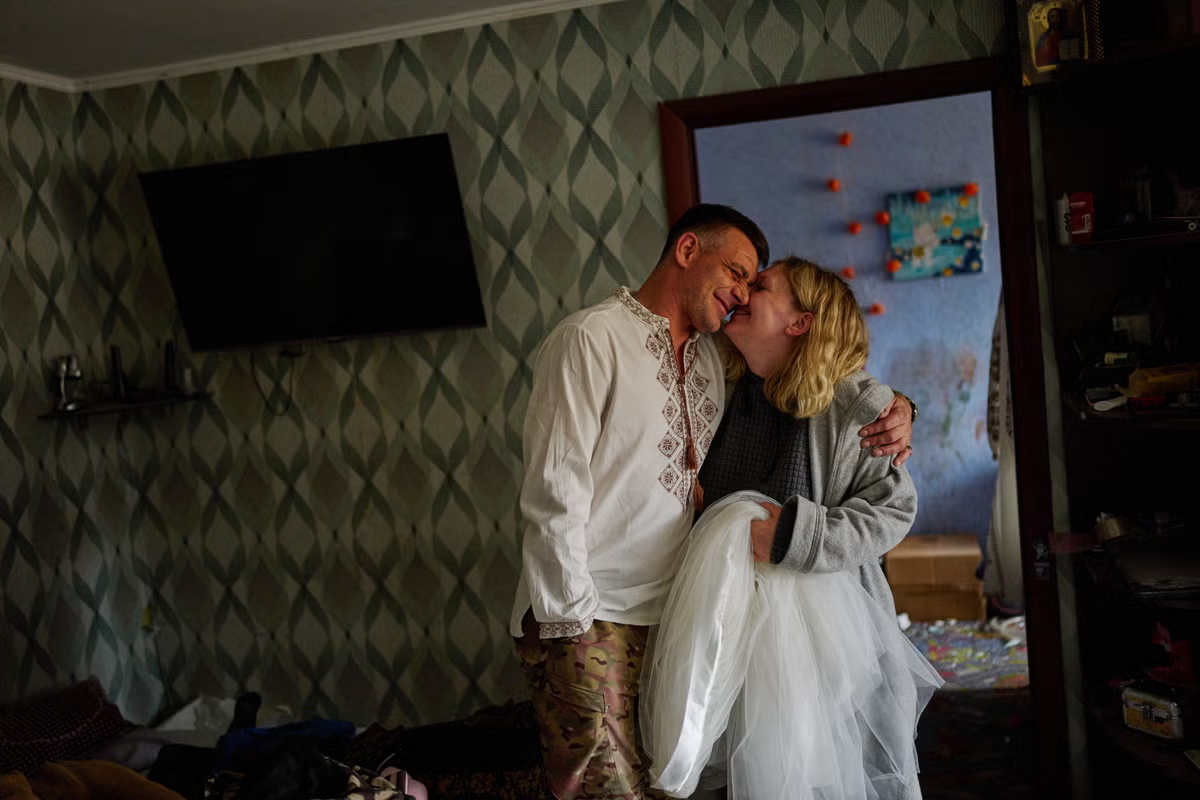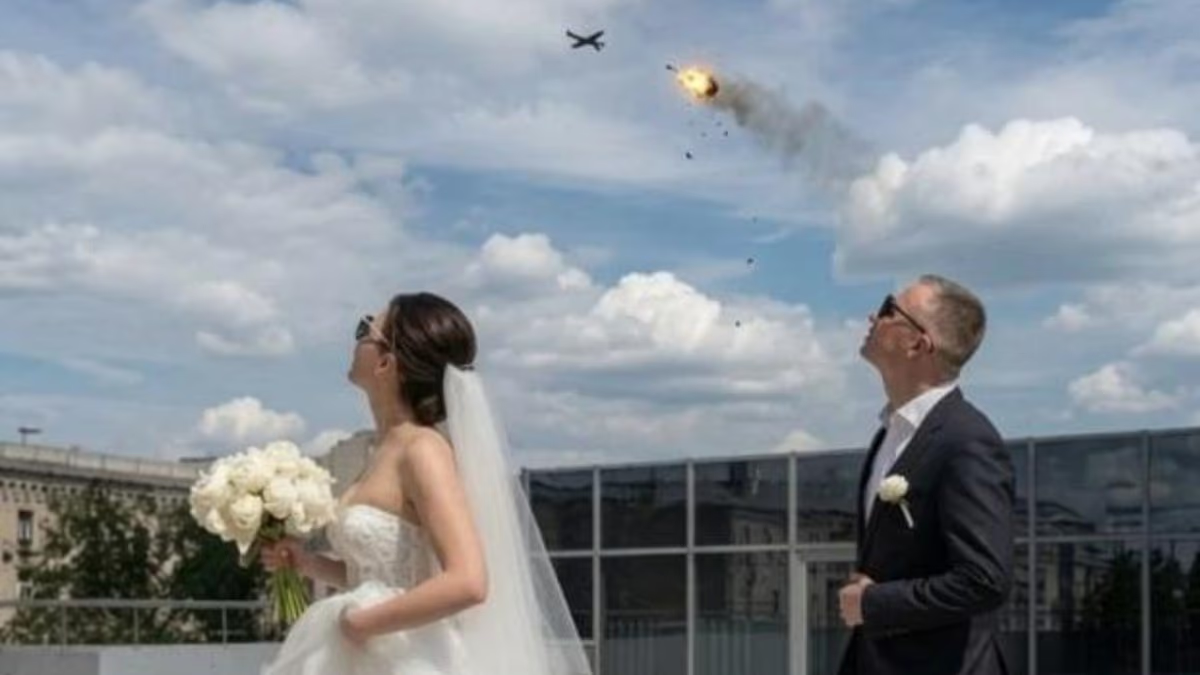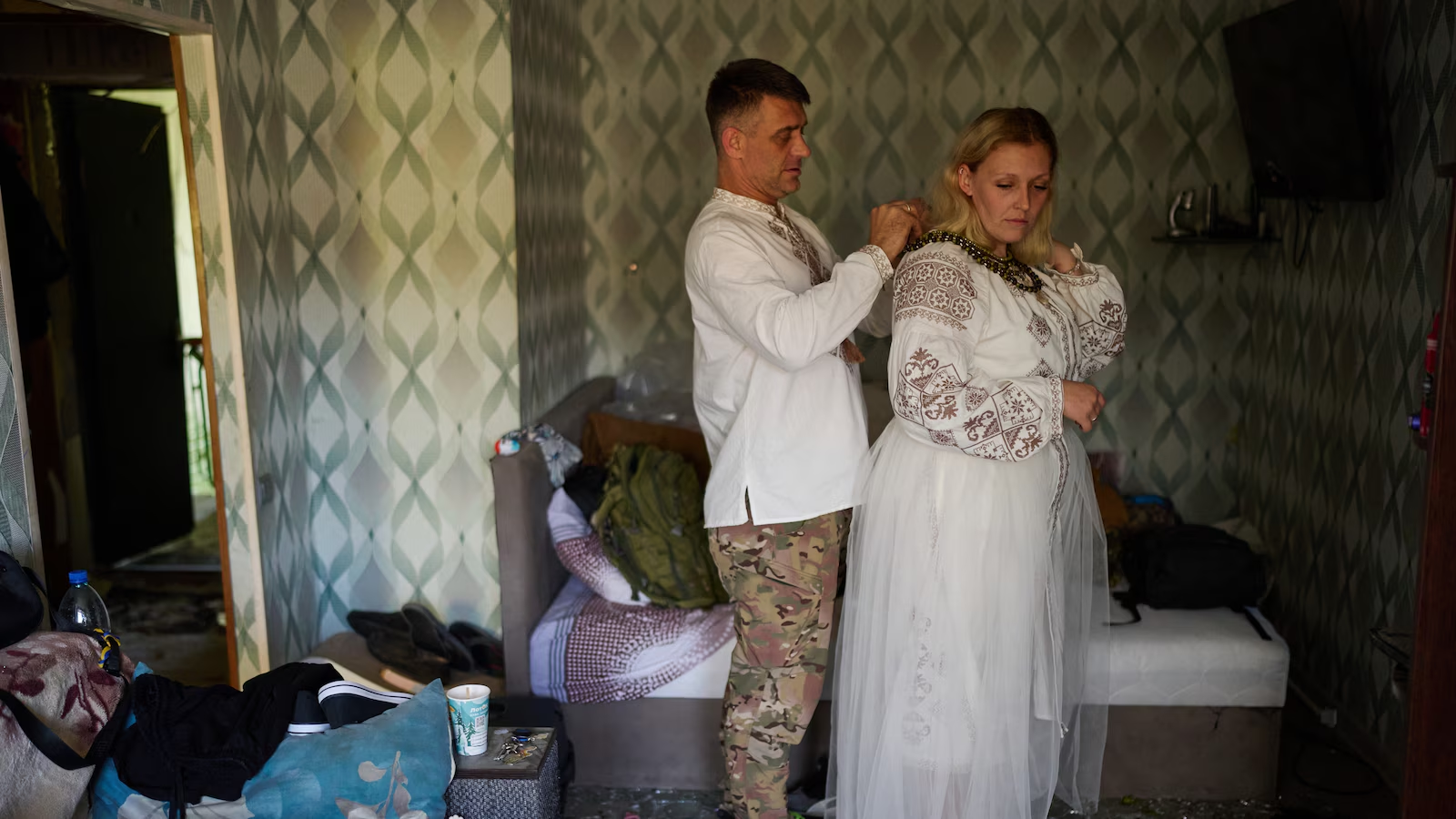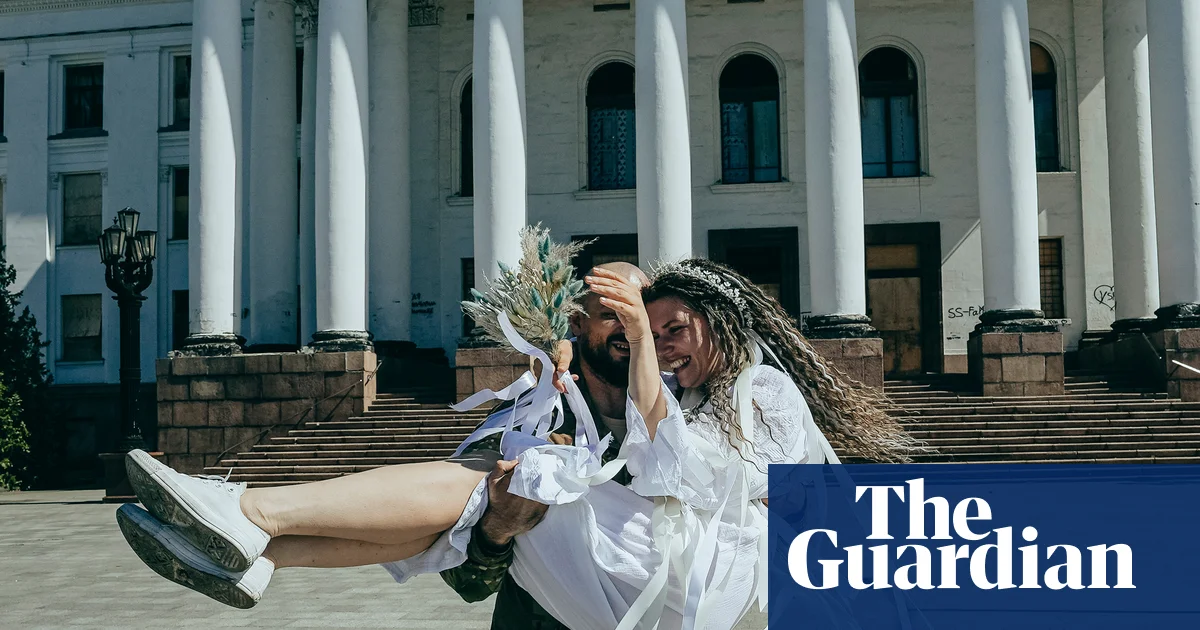
In the bright early afternoon sun of Kramatorsk’s central and now ironically named Peace Square, Tetiana, in her bridal dress, and Oleksandr, in his military uniform, are holding up their phones at the ready. It is a public holiday, 35 years since Ukraine’s declaration of independence, and a popular day for a wedding, though the open-air location is not obviously ideal.Three days earlier, Kramatorsk, perhaps Vladimir Putin’s principal target, was formally designated part of the combat zone, the front inching towards the city as Russia closes in on the parts of the Donetsk region it does not control. It is quiet at 2pm though; the ceremony brief. There are no guests other than the Guardian team.
Tetiana and Oleksandr pose for a wedding photo on Mount Karachun, near Sloviansk, the scene of fierce fighting in 2014.
Getting married in Kramatorsk, Oleksandr says, is a necessary act of memory, because soon there may not be much more left to survive. “In this war, all this can just be vaporised, in a few months, in a few days,” the groom explains after the ceremony. “On the battlefield, many cities, towns, small villages where I was two, three years ago, they are now just ruins, just destroyed.”Map showing location of Kramatorsk in Ukraine and in relation to frontline of warA year ago, Kramatorsk was a functioning city, a regional industrial centre, swollen with the presence of the military. It was possible to slowly sip coffee in the street and talk to local people and soldiers about how the city is an intrinsic part of Ukraine. Now it is covered in anti-drone netting, people and businesses are in short supply; many buildings have been bombed, chipboard replacing windows in those still standing.