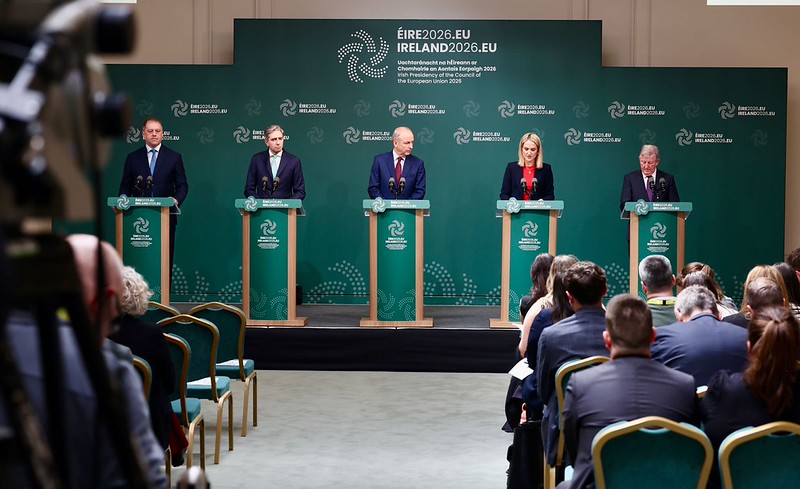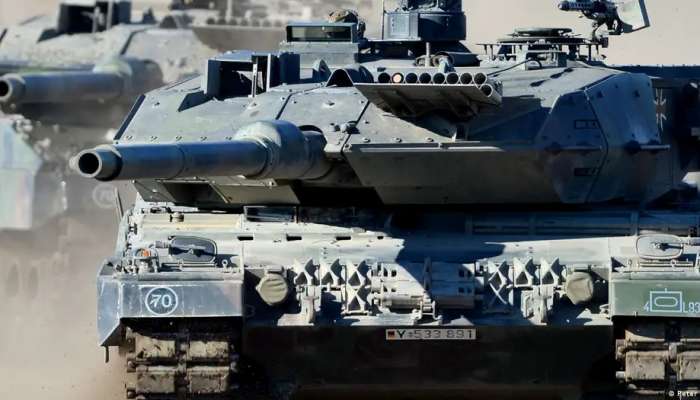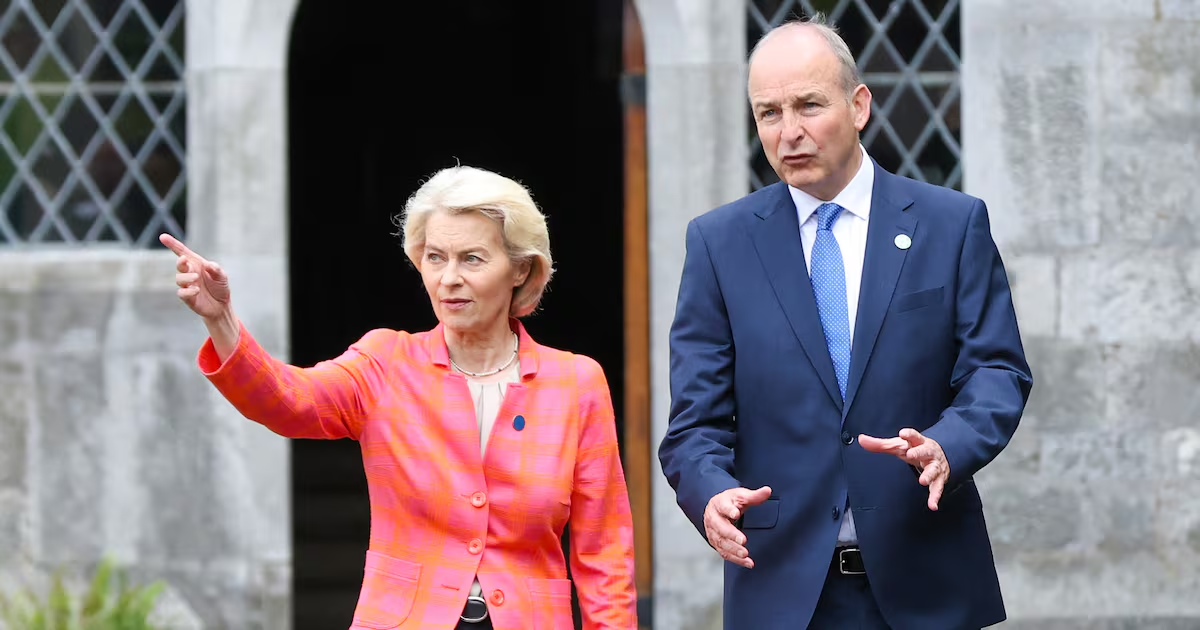
At the launch of the White Paper for European Defence – Readiness 2030, Ursula von der Leyen declared the era of Europe’s peace dividend “long gone”. Peace, apparently, was a phase that we have now outgrown.The EU’s centre of gravity has rapidly moved from a focus on trading to armament, as outlined by von der Leyen in early 2025, and this transfer of meaning is not happening through defence memorandums but through nation state treasuries. Consider the following: the European Commission is in the midst of mobilising €800 billion defence spending by 2030; more than 15 member states have activated “escape clauses” to enable an economic breach of fiscal rules to procure weapons; €150 billion of so-called “bomb bonds” has been raised for collective borrowing; a new multilateral bank – the Defence, Security and Resilience Bank – is targeting hundreds of billions of euro, with Belgium, Greece, Romania, Latvia and Ukraine among its founders; Canada has been admitted as a non-EU member state, in a leadership role, on many of these initiatives.What if Europe is no longer a trading bloc that hopes to enable peace, but a geographic union whose budgets and institutions are being rebuilt around the certainty of war?In February, Canada became the first non-EU member state admitted to Europe’s joint weapons-procurement fund, with Canadian firms being allowed to supply up to 80 per cent of Europe’s arms contracts, more than twice the cap applied to any other outside country. Further, Europe’s new defence bank is Canadian-led, despite being Luxembourg-based. Put another way, a North American G7 heavyweight, and a founding Nato member, now exists within the EU’s defence architecture. What then, when confronted with these facts, does the European Union resemble more closely – a single-market trading bloc with a foreign policy, or a defence alliance with a currency backed by wartime industrialisation?[ German factory retools from trains to tanks: ‘Not everyone is happy about the transition’Opens in new window ]This change is all but reversible. Germany’s broken industrial model – of using cheap Russian energy that came with a price that was never accounted for to manufacture cars that are more expensive than their Chinese equivalents – has been catastrophic for local jobs and communities. But in this vacuum, the economic lottery ticket of wartime manufacturing provides an immediate relief, as expensive energy doesn’t matter when the customer is the government itself – buying ammunition.Thus, Europe has stumbled into a new growth paradigm built on militarisation that comes with a large economic reliance on the permanent threat of war.Similar to Germany, Emmanuel Macron’s France has doubled its defence budget since 2017 with several austerity measures in place for social spending. The fastest growing large economy in Europe – Poland – now allocates a quarter of its budget to weapons. Joining on this new strategy on Europe’s periphery is the UK – with a new Defence Investment Plan favouring military investments over transport and energy infrastructure, while incentivising British firms to engage more deeply with the defence supply chain.Meanwhile, the urgency to grant Ukraine immediate accession to Europe has only accelerated Europe’s largest postwar restructuring. Volodymyr Zelenskiy’s request goes far beyond just enlargement; it is viewed as a useful vehicle through which Europe can be reindustrialised for war – to rebuild its defence-industrial base and to make more concrete a new security architecture. This is happening, in part, in Dublin. Through the assumption of the EU presidency, it is Irish ministers who are contouring Europe’s new form by leading these very negotiations on accession and defence alike. Somewhere between discussions on GDPR and agricultural subsidies, the architecture of this new military pact is being defined. [ EU presidency is a double-edged sword for the GovernmentOpens in new window ]But do our elected politicians realise that they are convening a new continental war economy, most likely away from our own interests? As Europe’s fiscal and industrial growth becomes tightly coupled with a permanent war-footing and increasingly reliant on government spending through the current war, is there a gross misalignment of incentives – that we should want this war to end, while our economy will need it to continue?While it is true that post-American European power urgently needs a new security model in addition to a new economic model whether these two become the same is a deeply moral and political question for the member states with skin in the game. Ireland’s relationship with neutrality has not yet updated to this new reality. We obsess over whether Ireland might one day find itself joining Nato without realising that we may already be inside the new defence alliance that will eventually take Nato’s place. Amid the most consequential realignment of European power since its formation, what remains of the Republic’s role in a militarised union with no fiscal or industrial leverage against its peers? With an unsubstantiated and ill-defined agreement between the State and its citizens on the topic of neutrality, can Irish people trust that a wink and a nod from the political class will suffice to safeguard our desire for non-alignment? And trust whom, exactly?[ Ireland’s neutrality a ‘difficult path’ to follow, senior official saysOpens in new window ]Let’s look at the record of the Taoiseach doing the winking. Micheál Martin’s Defence (Amendment) Bill 2026 seeks to remove the triple lock, thus reneging on the UN mandatory requirement his own party gave as a guarantee of Irish neutrality. Of course, when 400 academics and university workers wrote against this volte-face, he later dismissed opponents of the reform as guilty of “wide misrepresentations and demagoguery”, while in the same breath assuring Irish people that “we’re not joining any military bloc”.Yet Martin committed Irish troops to a German-led EU Battlegroup not contingent on a UN mandate, withdrawing 130 UN peacekeepers to do so; signed an Individually Tailored Partnership Programme (ITPP) with Nato; and sent air defence radar systems to a country at war without the need for the peoples’ mandate. It is therefore hard to imagine, as he tours Kyiv pledging to use every available accession cluster to clear Ukraine’s path into a militarised EU, that Martin can be trusted as custodian of a neutral state.What is perhaps more plausible is that we have a leader who sees no clear need for Ireland to enter Nato, because he suspects, like me, that Nato is over – and that the EU has taken its place; a bloc in which Ireland is already in.Standing behind him now is von der Leyen, Germany’s former defence minister, who has shaped the new European order in the mould of a German crisis – not Ireland’s interests. Irish neutrality was able to endure through Europe when it acted as a peace project of 1957, but it is unclear that it will still be intact after the 2026 defence project Europe is becoming. The time to define and protect Irish neutrality is now.
Irish Ministers are helping to reshape the EU as a defence alliance with a wartime economy
Europe has stumbled into a new growth paradigm with a reliance on the permanent threat of war
1,146 words~5 min read