Story audio is generated using AI
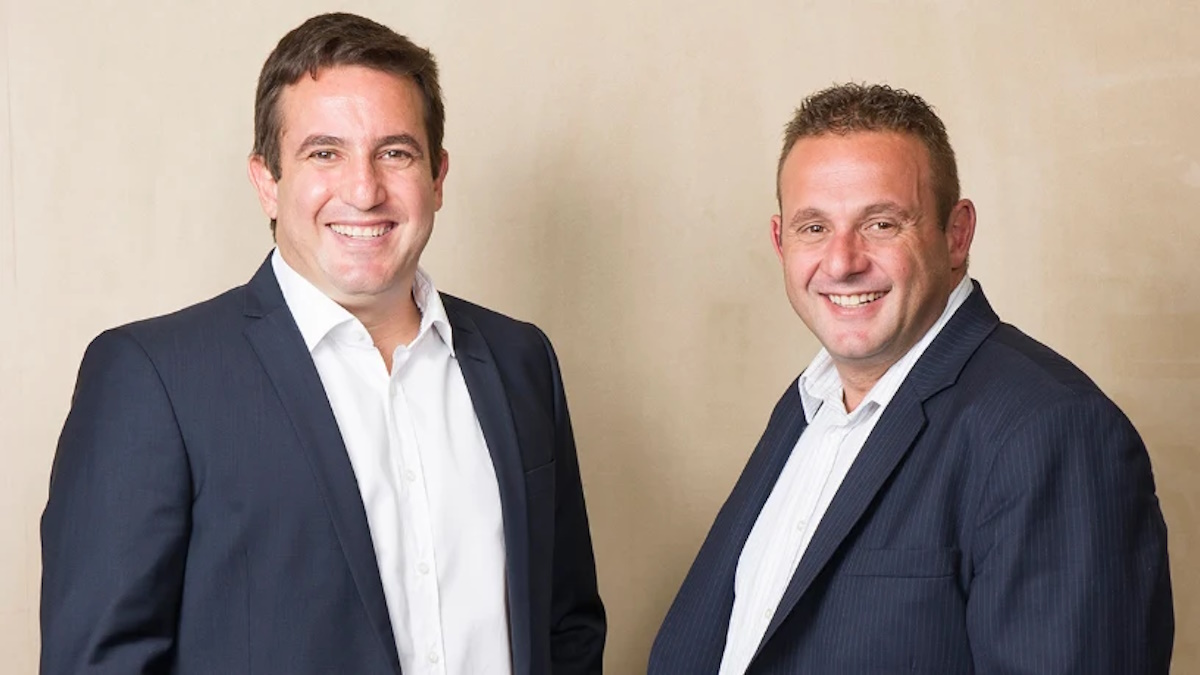
Blu Label Unlimited (BLU) is positioning its universal voucher business as the next major growth engine after electricity, betting that consumers will increasingly want a single digital voucher that can be used across everything from airtime and electricity to transport and gaming.The strategy comes as consumers increasingly use prepaid platforms for a broader range of everyday needs — from electricity and airtime to gaming, transport and fibre — while BLU sees growing demand for a voucher that gives customers the flexibility to decide what they want to spend their money on later. Universal voucher sales rose 22% in the year to May to R18.7bn, after growth of just over 40% in the past two financial years.The company’s strategy is to move consumers away from buying individual vouchers for specific products towards a generic stored-value voucher that can be used across its ecosystem. Brett Levy, co-CEO of BLU believes this could ultimately change the structure of the prepaid market. “We think the future is generic PINs (personal identification numbers), like what BLU is doing, and that you’ll see individual PINs fall away, and you will have a generic PIN across the board,” he said.He believes the growth is pointing to a fundamental change in consumer behaviour.The customer prefers the generic voucher, he said, because they would rather buy rand value and decide later what to do with it than commit immediately to electricity, airtime, bus tickets or gaming.The opportunity for BLU is to turn that behaviour into a proprietary platform cutting across its entire prepaid ecosystem.Instead of buying a R100 electricity voucher or R100 airtime voucher, consumers could eventually buy a R100 BLU voucher and use it for whichever product they need.Levy believes the technology is now close to making that possible at scale. “We’re about six months to 12 months away from a generic voucher across the board of everything,” he said.However, one of the main obstacles for the voucher business is that different products carry different discounts. A customer might receive one discount on electricity, another on airtime and another on transport, making it difficult to price a single voucher.BLU’s technology will allow it to issue the voucher first and allocate the appropriate discount when the customer eventually uses it, Levy said.In the year to May 2026, gross transaction value across PIN-less top-ups, prepaid electricity, ticketing and universal vouchers rose 7% to R99.9bn.Commenting on trends, Levy said gaming continues to grow “exponentially”, while prepaid water consumption is beginning to increase, albeit from a small base. Smaller fibre providers are also gaining traction in townships and other underserved areas, with BLU seeing increased voucher sales from those operators.About 60% of BLU’s prepaid voucher sales currently go through banks, with another 30% to 35% through the informal market and only about 5% through formal retail, according to Levy.The universal voucher strategy is emerging as BLU simultaneously expands into electricity, which it views as a broader ecosystem rather than simply a prepaid vending business.The group has secured an electricity trading licence and is developing an integrated model covering generation, trading, wheeling, vending, metering and revenue assurance.The business is expected to begin rolling out electricity projects in the fourth quarter, targeting both rooftop and ground-mounted solar projects. “The licence adds to the ecosystem because then it allows us to trade in electricity as well. So you’ve got one part of the ecosystem where we build it, and then of course you’ve got the license which allows us then to wheel and to trade with what we do,” said Levy.The group also saw an opportunity around batteries, both as part of renewable generation solutions and as a standalone opportunity. Levy said BLU was pursuing partnerships rather than acquisitions to build the operation.BLU earns commissions based on electricity units sold rather than the rand value of transactions. Electricity revenue generated on behalf of utilities increased by R1.9bn to R46.2bn. Commission earnings, primarily calculated based on kilowatt-hour consumption, declined by R40m to R279m.The decline in commissions was driven by margin compression despite overall growth in gross electricity revenueAs tariffs rise, consumers purchasing the same rand amount receive fewer units, reducing vending margins.The group is responding by expanding into revenue assurance and related services designed to help municipalities improve billing and collections.BLU has been simplifying the group and reducing its reliance on its legacy telecommunications businesses.Levy said BLU was also simplifying its corporate structure. Several businesses have already been merged and at least one further consolidation is expected. The group comprises about 17 businesses and between 25 and 30 entities when subsidiaries are included.He does not expect significant expansion through acquisitions, saying the company has largely reached its desired size and structure. Business Times