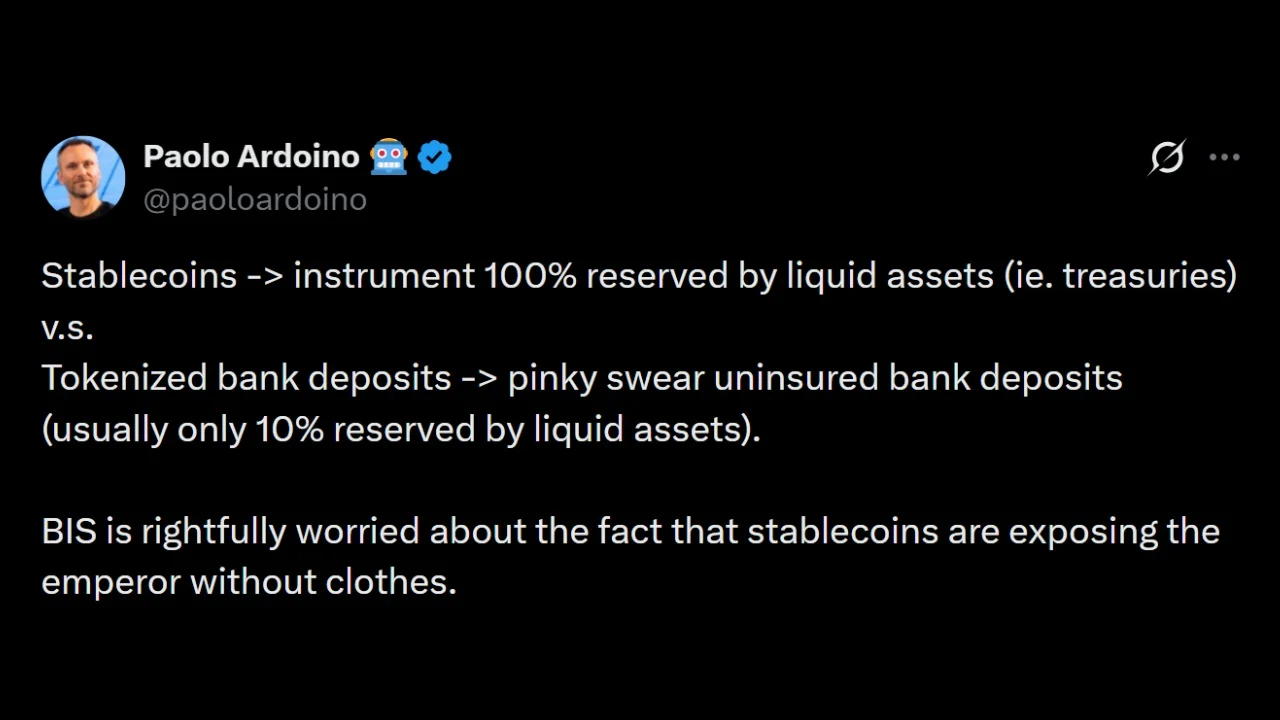
The head of the world’s most influential central banking body just told the crypto industry what it probably didn’t want to hear at one of the most closely watched economic gatherings on the planet: stablecoins, as they exist today, aren’t ready for prime time.
Pablo Hernández de Cos, General Manager of the Bank for International Settlements, delivered the critique during the Federal Reserve’s Jackson Hole Economic Policy Symposium on August 28. His recommendation? Tokenized deposits, not stablecoins, should handle the bulk of everyday payments.
The four-part indictment
De Cos didn’t offer a vague wave of skepticism. He laid out specific attributes that stablecoins currently fail to deliver: par redeemability, elasticity, interoperability, and financial integrity. In plainer terms, he’s saying stablecoins can’t guarantee a clean one-to-one exchange back to fiat on demand, they don’t flex well across different blockchain ecosystems, and they fall short on the compliance controls that regulators expect from anything calling itself “money.”
De Cos contrasted stablecoins with tokenized deposits, which are structured as bank liabilities settled in central bank money. The BIS chief argued that tokenized deposits better adhere to the core principles of the monetary system precisely because they don’t try to reinvent it. They digitize what already works rather than replacing it with something untested at scale.