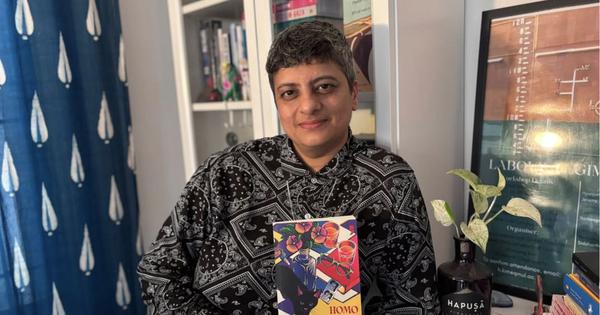
Queer love has a way of dismantling inherited ways of life with inhabited feelings of desire that compel every person – queer or not yet – to introspect their own trysts with romance, with an enforcement of honesty. Homo and Juliet, written by Shruti Chakravarty, is one such book of eight real-life love stories of lesbian couples and non-binary persons. In their diversity of experiences emerge the vicious worlds of family violence, societal condemnation, legal non-recognition and public stigma that queer lovers in this country have to navigate to simply, honestly say “I love you” to another consenting human being. And yet the joys, struggles, negotiations and triumphs in the lives of the protagonists of these stories are unmistakable testimonies to such immense pleasures of freedom. The reader is awash with the audacity of hope at a time when many would have us believe that “love” is rapidly fleeing from transience to extinction.Breaking patternsBut that’s only the love “as we know it”. And unfortunately the cis-het-monoamorous legacy of love is limited to compliance and conditioned to performance. If all love must compulsorily culminate in marriage that enters a system of family controlled by its three masters – patriarchy, capitalism and institutionalised religion – then no wonder love is more eager to join the dinosaurs! Through these eight stories we learn how love breaks patterns of suppression and exhaustion, transgresses boundaries of habit and approval, and illuminates pathways to delight and desire in us which we are scared to even acknowledge. They question gender and its roles, struggle with censure, erasure and misinterpretations, laugh at the absurdity of cis understanding of sexuality, and grieve at the relentless persecutions by family. The sheer courage and tenacity with which the lovers stand by each other even in the centre of a tornado set to tear them apart asserts a deep commitment to romance and desire that is almost ethereal in our cynical times. The stories immerse the reader in contemplating how immense the possibilities of love can be. And perhaps why authoritarian powers have always been afraid of love.But what fascinated me about this book is Chakravarty’s deliberate insistence that the greatest love stories are about the everyday. The daily labour of caregiving, the slow overlap of dependencies and trust, and the natural redefinition of what it means to share lives with partners and chosen families. This also makes visible the quotidian and mundane domesticities of queer folk that are often ignored in the urgent immediacy of their narratives of struggle. I observed in these stories how queer couples can never take cohabitation for granted, yet the lack of social or legal bindings and pressures enables more authentic and truthful togetherness.Chosen families and natal familiesChosen families form a major grounding for queer lives, and this book celebrates them too, but the natal family keeps coming back in the stories as well. While many who dare to love differently across social boundaries have come to expect the lack of empathy of natal families, the violence that is often unleashed is shattering. Yet as we listen to their longing for understanding from their families, we realise that for queer couples, family acceptance is complex. In some cases it may be a matter of persuasion and patience but for others major shifts in the paradigm of the notion of family itself are required. And then there are families who acknowledge and support but do not find the language to express and rejoice.These stories also deal with the inadequacy of language itself in the expressions of queer desire and how folks struggle against the tyranny of words and grammar created by the cis-het world. But Chakravarty elegantly traces evidence of simple and creative ways in which the protagonists steer through this difficult terrain, often with flourish. The only addition that I thought would have made the enquiries about language more expansive was to explore the various Indian languages in which the protagonists speak and find their often unrevealed queer underbellies. Being stuck in a language originally borrowed from colonisers who were both in dread and awe of queerness in India can be constraining.Chakravarty has been a friend, lover and family to many of the protagonists of the stories, which is abundantly evident in the vulnerabilities and faith expressed. Her gentle and conversational style of writing makes these stories come alive like moving images, and I kept thinking how brilliant they would be as films. The gorgeous cover by Bhavya Karthikeyan is a perfect example of how sometimes a book must absolutely be judged by its cover. The design of the book, with its relaxed font and a single black-and-white image for each story that the couples have selected as their representation, makes the reading accessible and tender. This book must be celebrated and translated into many languages, not just for young people who are enquiring about their identities, relationships and location in the world, but also older folk who may have come late to the party but are nevertheless excited to explore their realities.I feel indebted to the stories of Pooja and Shruti, Tejaswee and Sneha, Sid and Preet, Khushi and Shourya, Sap and Neel, Aditi and Ameya, Akshata and Anubhuti, and Lameeya and Naina because they have given us luminescent ways to live, talk and write about the potency of love; and Shruti for holding space for each of them. I inscribe their names because too many stars have been extinguished in that sky.Arundhati Ghosh is the author of All Our Loves: Journeys with Polyamory in India.Homo and Juliet: Queer and Lesbian Love Stories, Shruti Chakravarty, Yoda Press.
‘Homo and Juliet’: These real-life love stories do the task of making queer domesticity visible
The negotiations and triumphs in the lives of the protagonists of the stories in the book are unmistakable testimonies to the immense pleasures of freedom.
932 words~4 min read