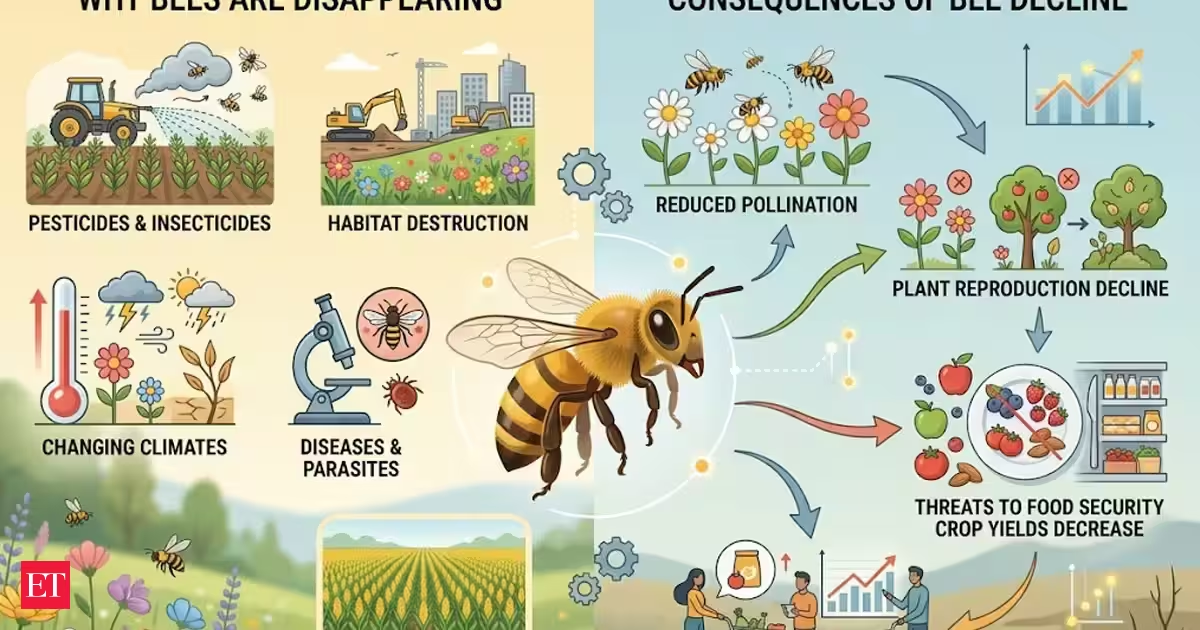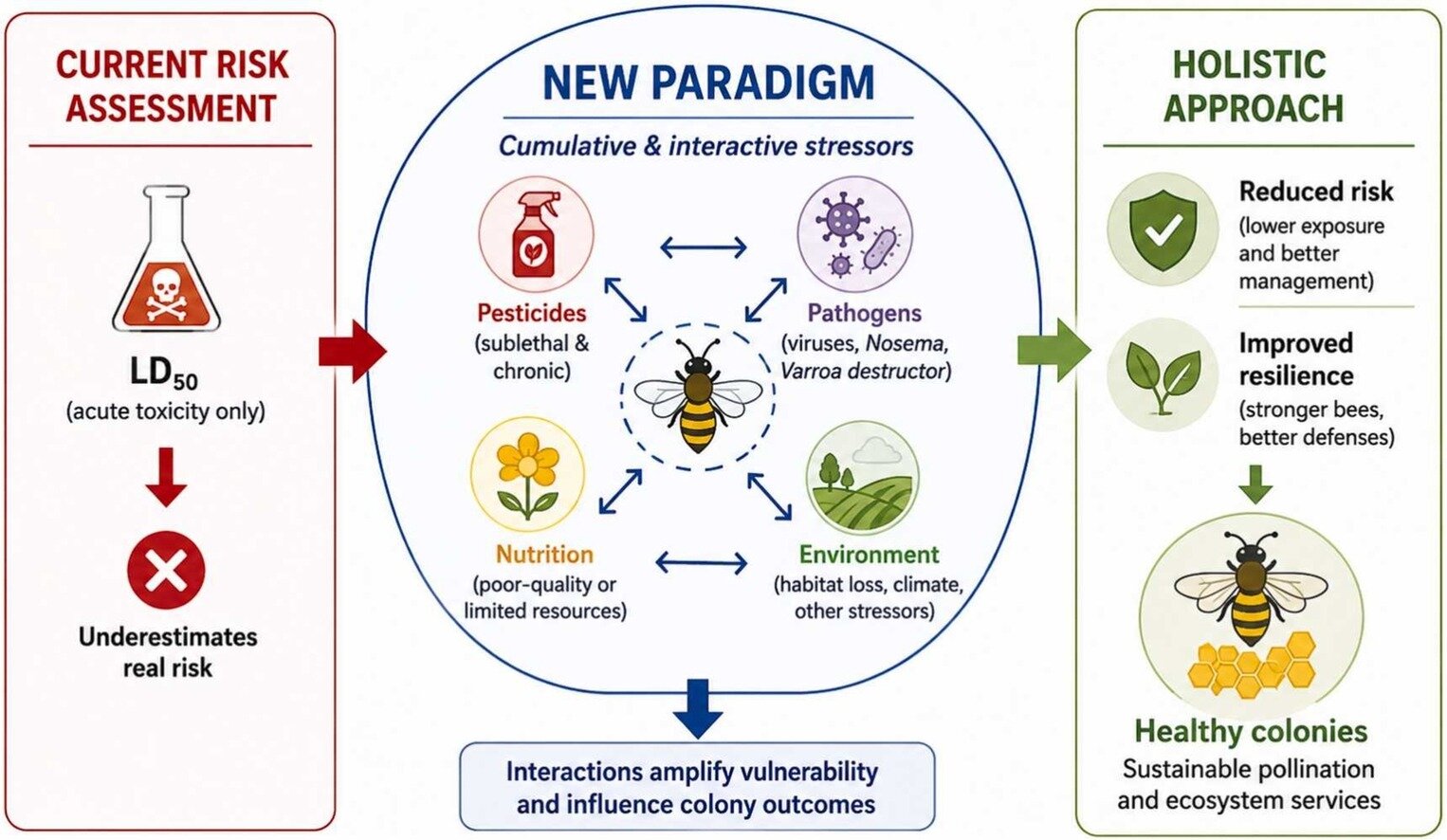
Graphical Abstract. Credit: Environmental Toxicology and Pharmacology (2026). DOI: 10.1016/j.etap.2026.105142
Honey bees (Apis mellifera) are widely known as essential pollinators, but researchers using a "One Health" approach have also identified them as biological sentinels of environmental health. Honey bees continuously interact with their surrounding environment through the collection of nectar, pollen and water and can therefore be exposed to contaminants present in agricultural and natural ecosystems. Their health may consequently provide valuable information about environmental pressures affecting biodiversity and ecosystem functioning.
Through an international and interdisciplinary collaboration at the interface of veterinary medicine, biomedical research and translational science, researchers working with the Sbarro Health Research Organization (SHRO) have published a review in the journal Environmental Toxicology and Pharmacology highlighting the importance of bees as a sentinel species. In particular, this review examines how pesticide exposure, particularly when combined with nutritional, biological and environmental stressors, can affect bee physiology, behavior, immunity, reproduction and gut microbiota, potentially compromising the resilience of entire colonies.