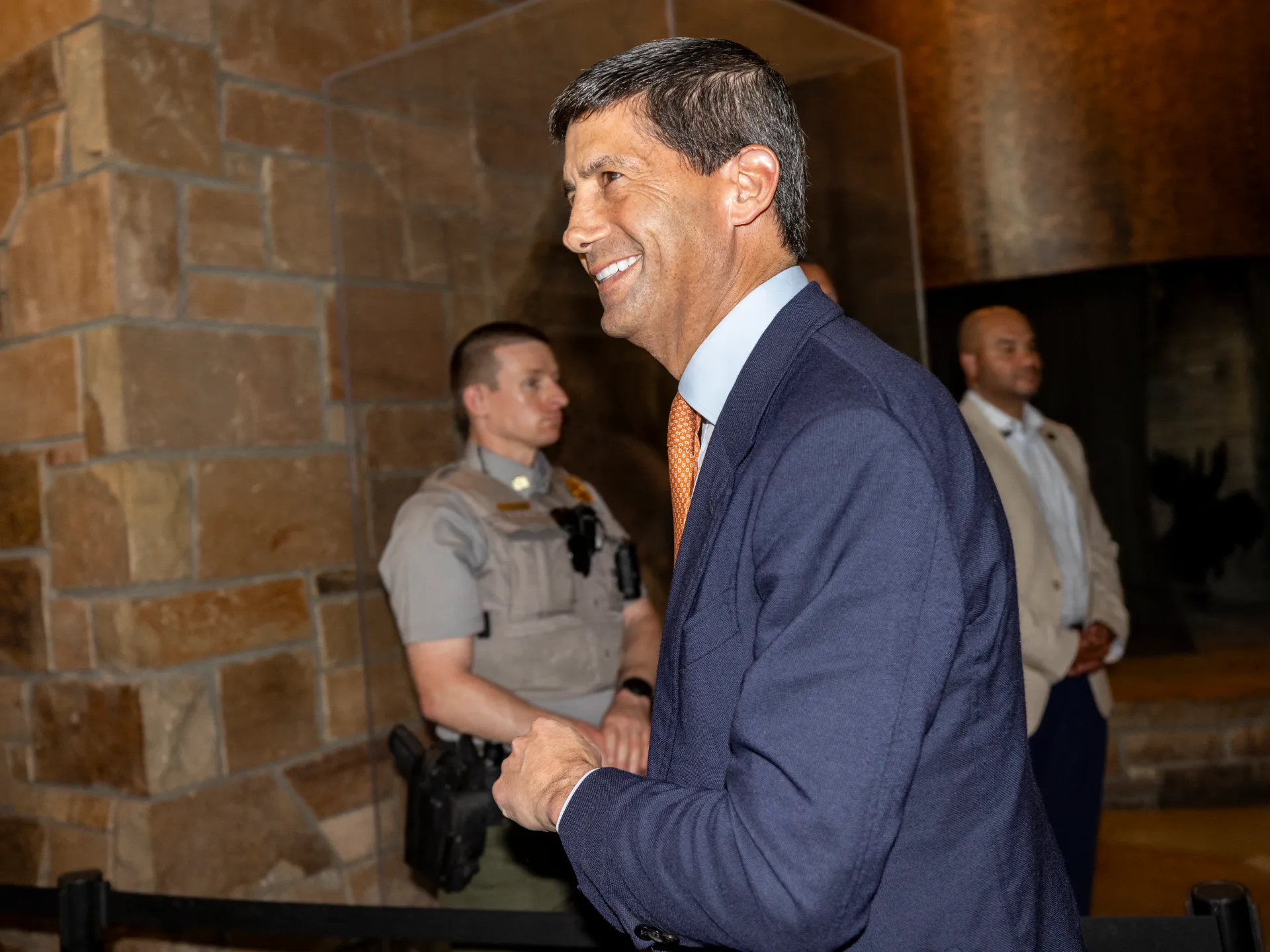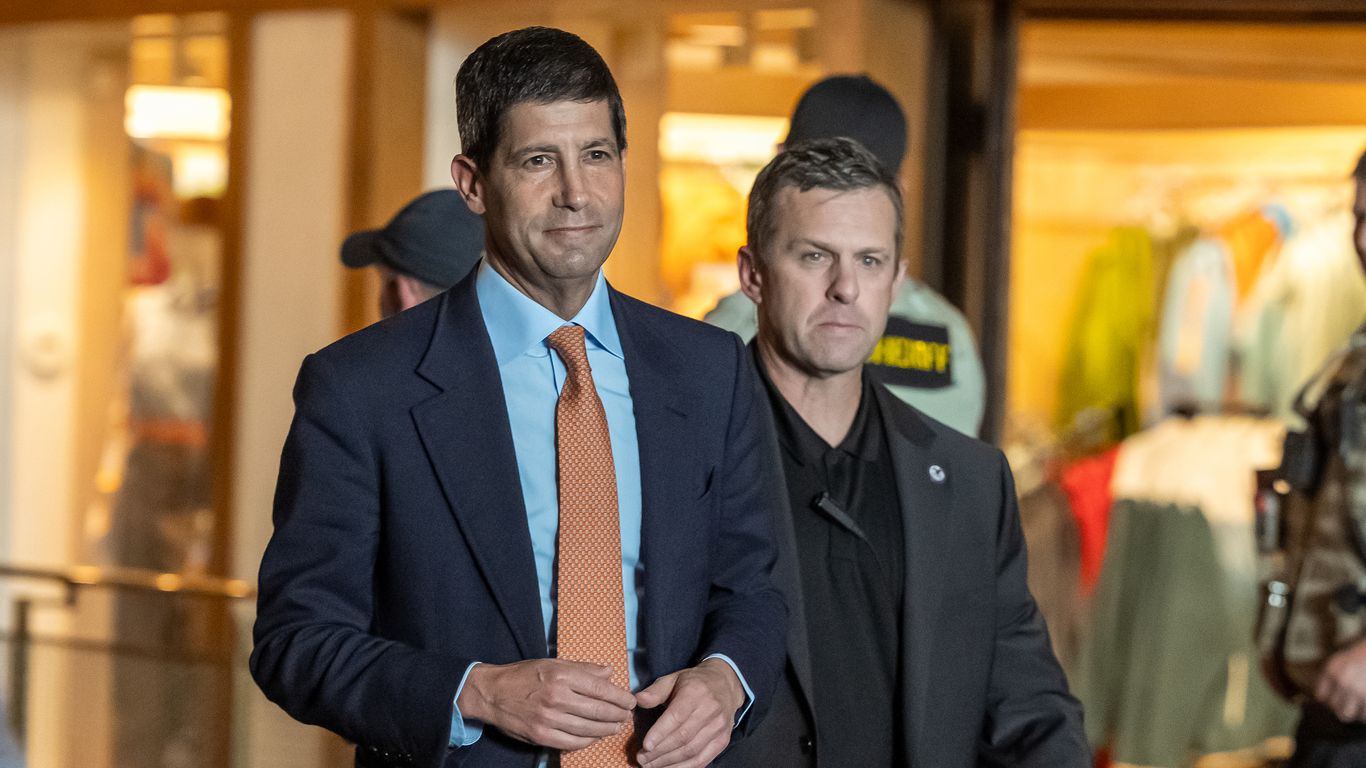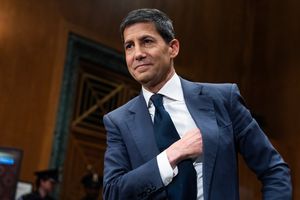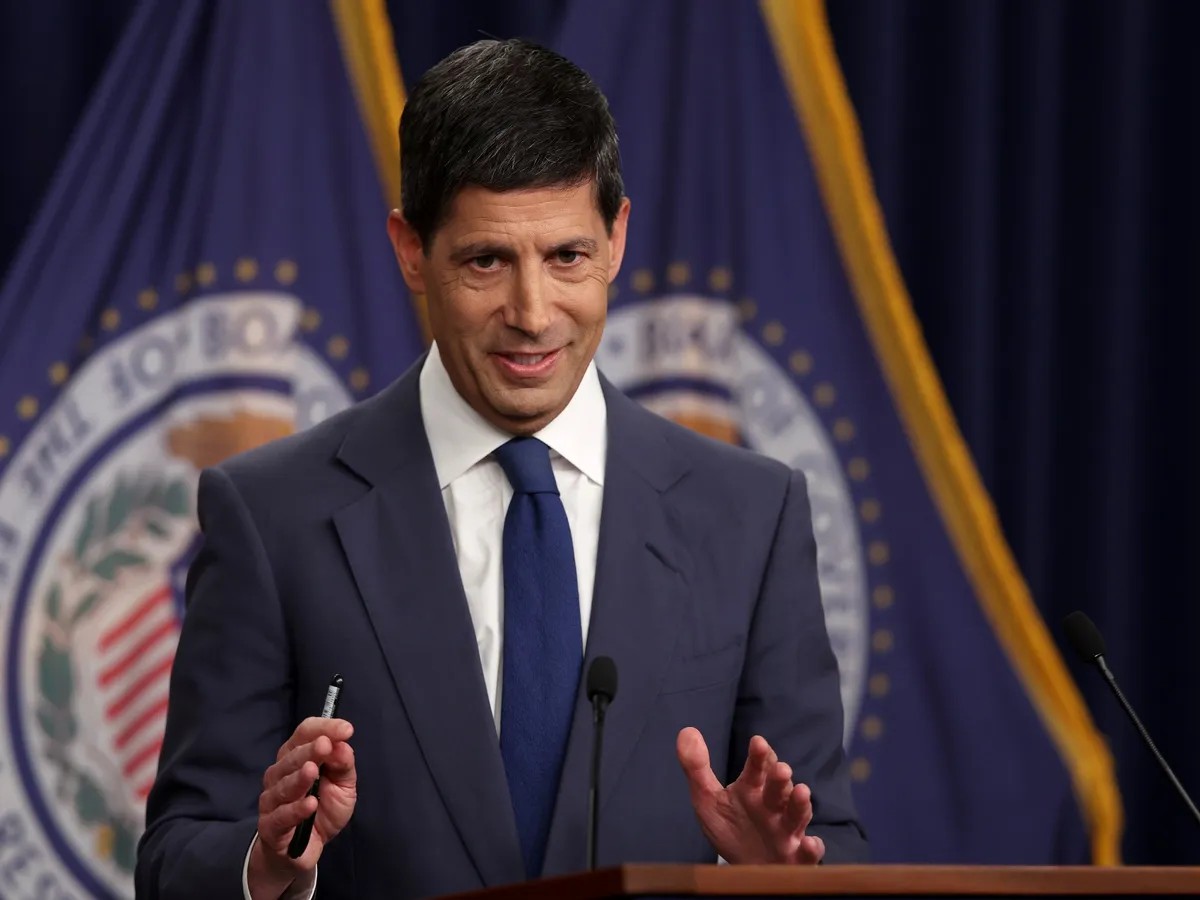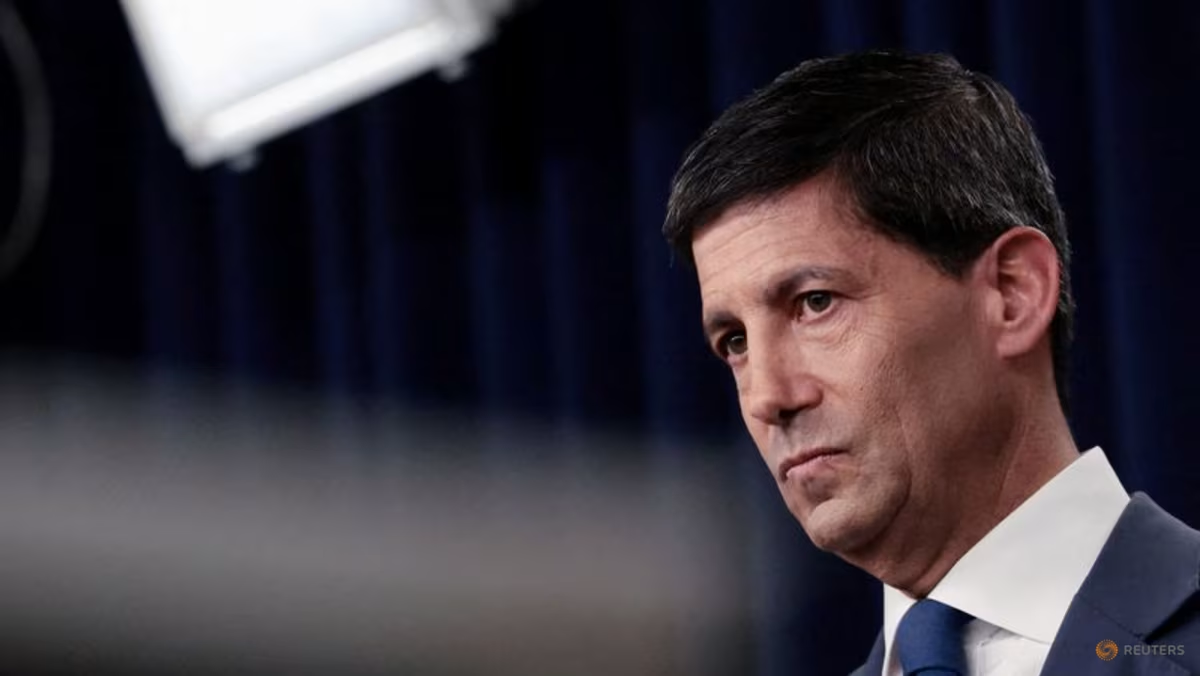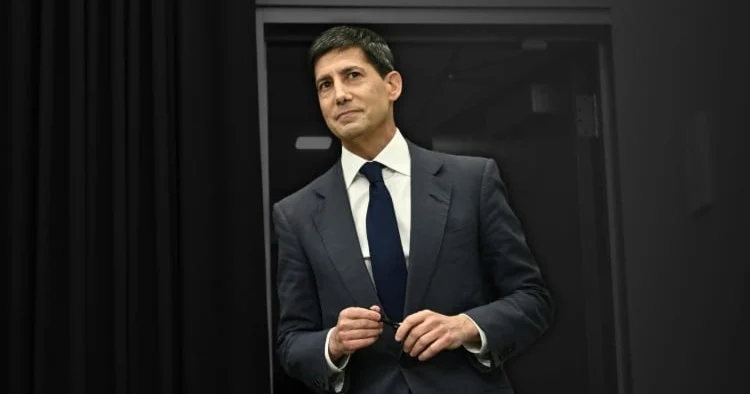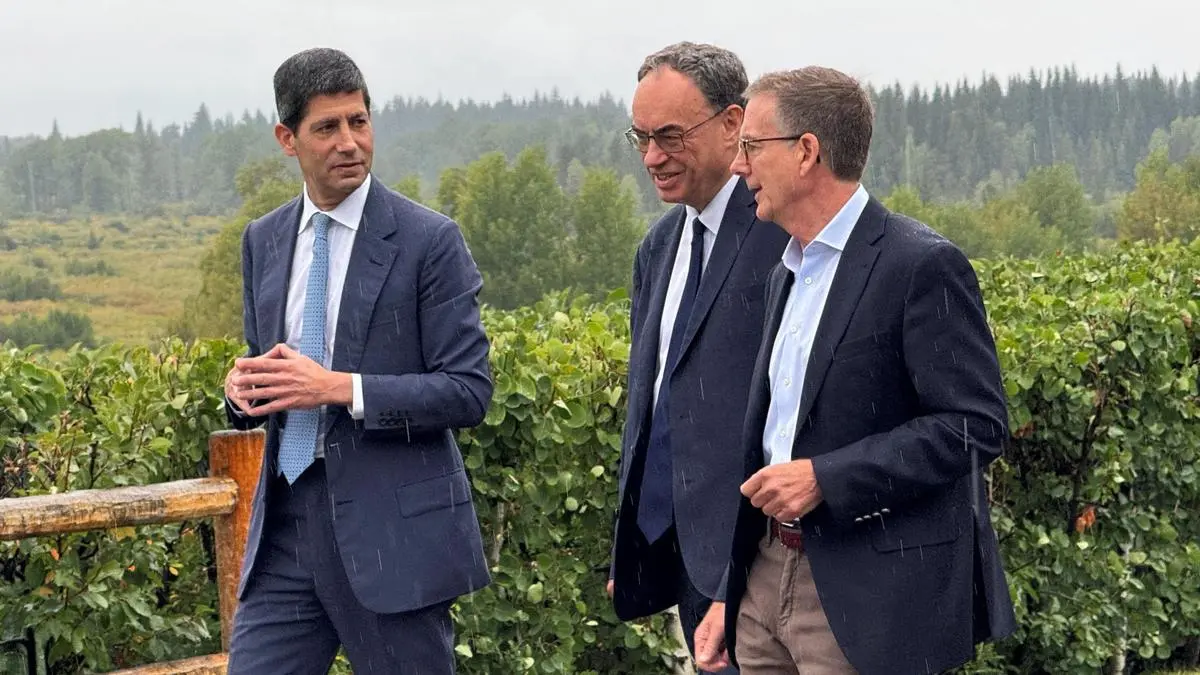
U.S. Federal Reserve Chairman Kevin Warsh takes a break in the rain with Bank of Canada Governor Tiff Macklem and Bank of England Governor Andrew Bailey during the Kansas City Fed’s annual economic symposium, in Jackson Hole, Wyoming, U.S., August 28, 2026.
| Photo Credit:
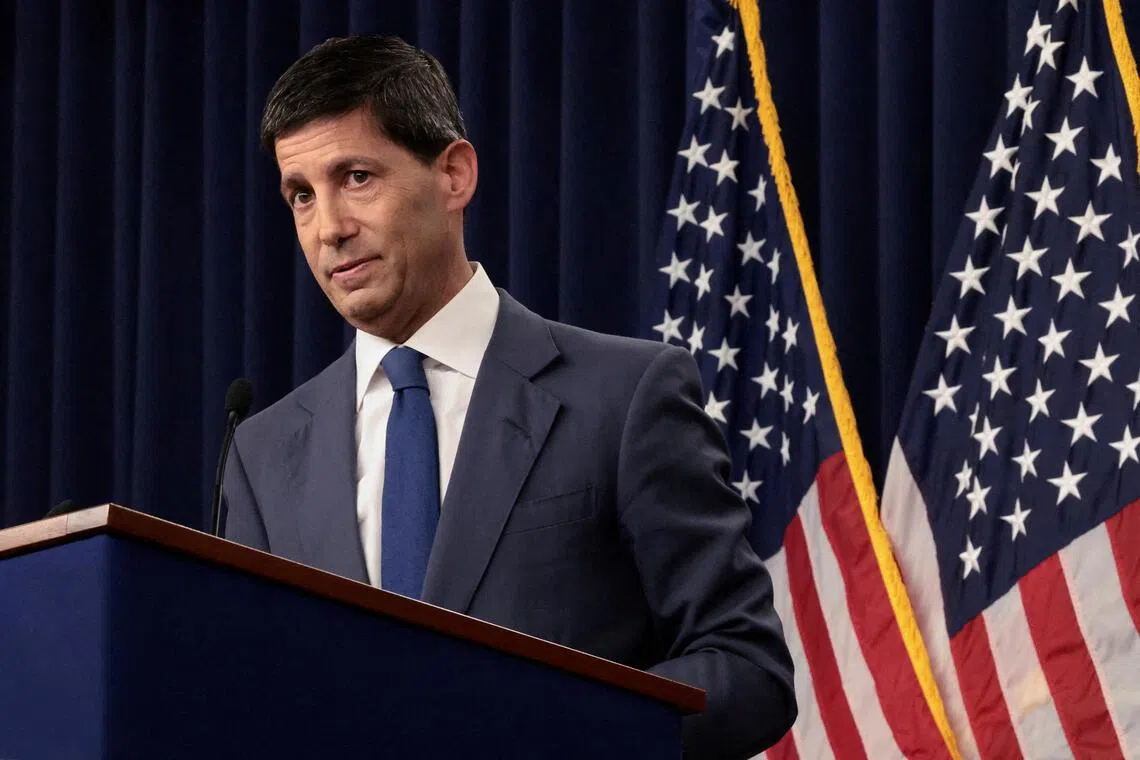
Federal Reserve Chairman Kevin Warsh warned inflation isn’t meaningfully slowing and said policymakers must be confident that it is, otherwise the central bank has “work to do.”In a sweeping speech, his first since becoming chairman of the central bank in May, Warsh reiterated that policymakers will return inflation to their 2% goal, which he said is a firm and fixed target.“Here is my standard: We must be confident that underlying inflation is moving to our objective, clearly and at sufficient speed. Otherwise, we have work to do. That’s our job,” Warsh said at the Fed’s annual conference in Jackson Hole, Wyoming, on Friday.Warsh warns inflation remains a concernWarsh added that financial conditions are not currently restrictive and interest rates are the Fed’s “predominant tool” for achieving its mandate, though he stopped short of signaling he would support an interest-rate hike when Fed officials gather in September.“I stand here today committed to a discipline, not to a decision,” he said.Yields for two-year Treasuries rose by as much as nine basis points to 4.32%, while 30-year yields slipped two basis points to 5.17% — moves that signal an expectation that the Fed may need to raise short-term rates. The implied probability of a rate hike in September rose to above 50%, up from around 36% before the speech, based on federal funds futures.“Chairman Warsh gave the markets what they wanted, which was more detail on his views about the current data, particularly inflation,” said Omair Sharif, president of Inflation Insights LLC. “Of course he did not tip his hand as to any future policy actions. In that sense, this seems like a win-win for Warsh and the markets.”Warsh went on to say that, with inflation running above 2%, the Fed’s predominant focus was now on prices. And he made clear that recent data was not entirely encouraging.“While this summer’s PCE and CPI readings were better than expected, they do not tell me that underlying trends have meaningfully improved,” Warsh said. “Market prices show confidence that we will deliver price stability. And I can assure you, they’re right.”The Fed is due to receive consumer price data for August on Sept. 11, a report that could prove decisive at their next meeting on Sept. 15-16.Richard Clarida, a former Fed vice chair, told Bloomberg Television that every Fed meeting is now “live,” meaning a rate move is possible.If Fed officials don’t see improvement in inflation, he added, “They’re prepared to hike.”New ClarityWarsh’s highly anticipated remarks came amid criticism of his pared-back communications strategy that economists and market participants said lacks clarity on the near-term outlook for the economy and monetary policy. His remarks appeared to address those concerns, going further than he has before in providing his views on the economy and the Fed’s policy priorities under his leadership.“Let’s be equally clear about another aspect of the objective: Price stability is not self-executing, nor is inflation necessarily mean-reverting. It is the Fed’s job to deliver stable prices,” he said.Economists are divided over whether the Fed will need to raise interest rates over coming months in a bid to tame inflation that continues to hover above the central bank’s 2% target.At their July policy meeting, the Fed held interest rates steady. But several officials favored an interest-rate hike and many indicated that policy tightening would be necessary if inflation didn’t decline, minutes of the gathering showed.Warsh was roundly criticized for his performance at a post-meeting press conference, where critics say he failed to articulate a rationale for the committee’s decision to keep rates unchanged. He also avoided any suggestion that the committee may have to raise rates in the coming months and suggested the FOMC’s target for inflation could be altered.Investors reacted by pushing yields on longer-dated bonds to an almost two-decade high, a possible sign of declining confidence in the Fed’s commitment to its 2% inflation target.Warsh defends shift from forward guidanceWarsh used his speech to spell out his earlier shift away from signaling a near-term direction for interest rates, known as forward guidance. That practice, he said, can play a role during a crisis but can otherwise be misleading for households and businesses.He pushed back against calls for him to explicitly spell out his own near-term outlook for policy and said markets need to form their own views on the economy.“I wish our understanding of the economy were so precise as to provide a mechanical, tried-and-true answer,” Warsh said. “But our knowledge just doesn’t extend that far — at least not yet — and the factors most relevant to the proper conduct of monetary policy change over time.”The July vote marked the fifth straight time officials have opted to leave rates unchanged following three cuts in late 2025.Since that decision, new data has broadly pointed to a slowing in economic activity, which would take pressure off the Fed to increase rates. Retail sales fell in July by the most in more than a year and core inflation was subdued. At the same time employers unexpectedly cut jobs in July and hiring in the prior two months was revised lower.More stories like this are available on bloomberg.comPublished on August 28, 2026