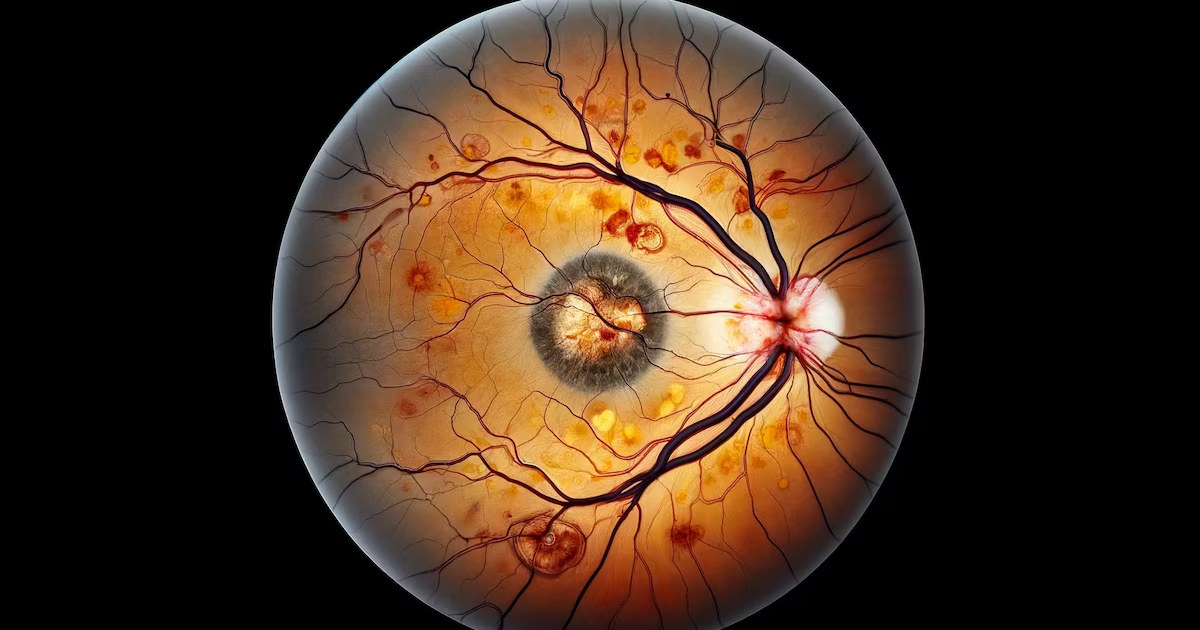
Photoreceptor degeneration is behind several major causes of blindness, including age-related macular degeneration (AMD) and retinitis pigmentosa (RP). Together, these disorders affect about 200 million people worldwide and rank among the leading causes of visual impairment and blindness. Beyond the profound effects on independence and quality of life, vision loss also creates a global economic burden estimated at over US$400 billion per year through healthcare expenses and lost productivity.
In these diseases, the retina's photoreceptor cells, which detect incoming light, gradually deteriorate and die. Yet much of the neural circuitry deeper within the retina can remain intact and capable of functioning. The problem is that, without photoreceptors, these surviving cells no longer receive the light signals needed to send visual information toward the brain.
That remaining retinal circuitry has become an important target for scientists trying to restore light sensitivity. Existing approaches include gene therapy, which is suitable for only a small fraction of patients with particular mutations, and electronic retinal prostheses, which can be invasive, costly, and require significant training. Optogenetics and light-responsive drugs have also entered clinical testing. Light-responsive drugs have produced encouraging safety results, but restoring high-quality vision under ordinary levels of illumination remains difficult.