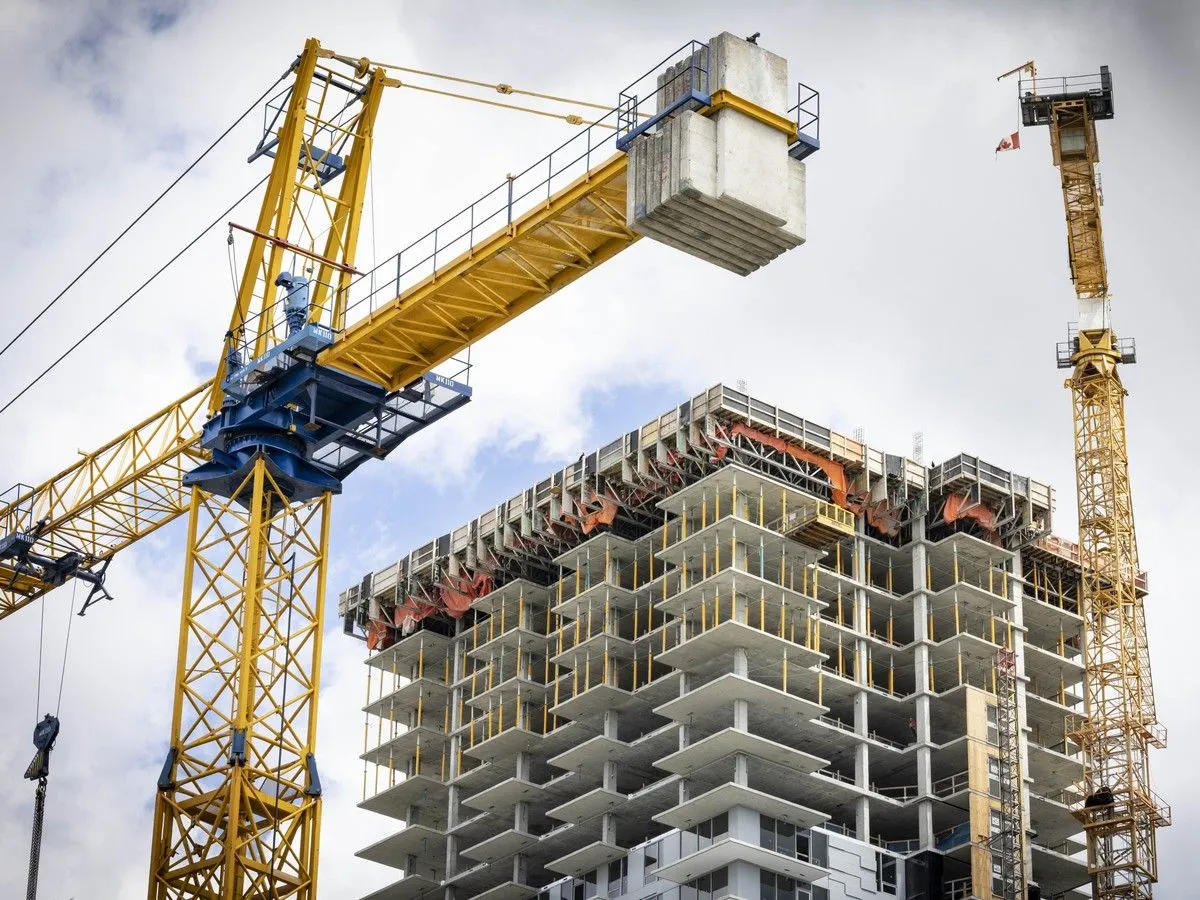
Skip to Content News Archives Economy Energy Oil & Gas Renewables Electric Vehicles Mining Commodities Agriculture Real Estate Mortgages Mortgage Rates Finance Banking Insurance Fintech Cryptocurrency Work Wealth Smart Money Wealth Management Investor Personal Finance Family Finance Retirement Taxes High Net Worth FP Comment Executive Women Puzzmo Newsletters Financial Times Business Essentials More Innovation Information Technology FP500 Podcasts Small Business Lives Told Tails Told Shopping Financial Post Store Obituaries Place a Notice Advertising Advertising With Us Advertising Solutions Postmedia Ad Manager Sponsorship Requests Classifieds Place a Classifieds ad Working Profile Settings My Subscriptions My Offers Newsletters Customer Service FAQ News Economy Energy Mining Real Estate Finance Work Wealth Investor FP Comment Executive Women Puzzmo Newsletters Financial Times Business Essentials HomeNewsB.C.'s construction sector adding up the costs of Canada-U.S. trade warCanadian counter-tariffs could add eight to 10 per cent to construction costs at a time when the industry is already in a fragile stateLast updated 1 hour ago Companies in B.C.'s construction sector are adding up the potential costs of counter tariffs in the Canada-U.S. trade dispute, wondering how many clients will have to put the brakes on projects. Photo by Jason Payne/PostmediaCompanies in B.C.’s construction sector are adding up the potential costs of counter-tariffs in the Canada-U.S. trade dispute, wondering how many clients will have to put the brakes on projects.Subscribe now to read the latest news in your city and across Canada.Exclusive articles from Barbara Shecter, Joe O'Connor, Gabriel Friedman, and others.Daily content from Financial Times, the world's leading global business publication.Unlimited online access to read articles from Financial Post, National Post and 15 news sites across Canada with one account.National Post ePaper, an electronic replica of the print edition to view on any device, share and comment on.Daily puzzles, including the New York Times Crossword.Subscribe now to read the latest news in your city and across Canada.Exclusive articles from Barbara Shecter, Joe O'Connor, Gabriel Friedman and others.Daily content from Financial Times, the world's leading global business publication.Unlimited online access to read articles from Financial Post, National Post and 15 news sites across Canada with one account.National Post ePaper, an electronic replica of the print edition to view on any device, share and comment on.Daily puzzles, including the New York Times Crossword.Create an account or sign in to continue with your reading experience.Access articles from across Canada with one account.Share your thoughts and join the conversation in the comments.Enjoy additional articles per month.Get email updates from your favourite authors.Create an account or sign in to continue with your reading experience.Access articles from across Canada with one accountShare your thoughts and join the conversation in the commentsEnjoy additional articles per monthGet email updates from your favourite authorsSign In or Create an AccountorCanada on Tuesday released its dollar-for-dollar schedule of counter-tariffs due to take effect Sept. 8 in response to U.S. President Donald Trump’s sweeping Section 338 tariffs on some $28 billion of Canadian exports.The Independent Contractors and Business Association estimates the schedule, which includes 400 lines that hit steel, aluminum and wood products used in building materials, have the potential to add eight to 10 per cent to the cost of construction. Increases are “obviously going to affect the desire for people to even do projects,” said John Ramos, owner of B.C. firm DBD Westcoast Construction.Breaking business news, incisive views, must-reads and market signals. Weekdays by 9 a.m.By signing up you consent to receive the above newsletter from Postmedia Network Inc.A welcome email is on its way. If you don't see it, please check your junk folder.The next issue of Posthaste will soon be in your inbox.We encountered an issue signing you up. Please try againRamos said his company’s contracts include a clause warning clients they won’t be able to accommodate cost escalations over three per cent, so “if it goes beyond a reasonable increase, we’re going to have to pass that on to the client.”“Clients who are waiting for permits or designing, they may just put the brakes on the projects as a whole,” he added.The counter-tariff schedule, which stretches to 18 pages on the Finance Department website, includes 400 items that go into construction inputs like structural steel, bolts and fasteners, aluminum window frames, light fixtures and laminated veneer lumber.Ottawa’s intent was to surgically target tariffs on items where Canadian consumers and businesses have alternatives, but when it comes to steel and aluminum, alternatives aren’t easily interchangeable, according to Jordan Bateman, vice-president of communication and advocacy for the Independent Contractors and Business Association.“We’ve spent decades building this very integrated supply chain network with the United States,” Bateman said. “Now we’ve got to completely rebuild it as quickly as possible and find different sources.”Some of the alternatives won’t be Canadian, Bateman added, so “it’s going to take time, it’s going to take a lot of paperwork.”Jeannine Martin, president of the Vancouver Regional Construction Association, said the construction sector is a net importer of materials and the new tariffs will be added to existing levies on top of other cost increases such as the addition of the PST to professional services due to kick in in October.“The increased costs from tariffs is going to negatively impact an already fragile situation,” Martin said in an email.Bateman said that the trade war is happening at a time when the economy was already struggling “and where certainly building costs were already much higher than anyone’s comfortable with.”He added that the tariff factor is something municipalities need to take into account as B.C. enters its municipal election cycle, with a lot of candidates promising needed infrastructure projects.At Metro Vancouver, a spokesperson said the regional district has maintained a cross-department team to monitor tariff impacts since early 2025 to track how its capital projects might be hit by levies.Spokesman Greg Valou, in an email response to Postmedia News questions, said Metro “is pursuing all available opportunities to minimize financial impacts on ratepayers, including seeking relief through the federal government’s remission program.”Bateman said that from the economic perspective ICBA members didn’t want to see retaliatory tariffs, but “like a lot of Canadians, we’re torn.”When you “put on the political hat, this guy is trying to bring Canada to its knees (and) trying to wildly exceed what should be in any trade agreement, and all bets are off,” Bateman said.So, he added, there is an understanding that Canada had to respond, “but we should be clear-eyed about it.”Ramos was more blunt about his assessment that Prime Minister Mark Carney’s government has handled negotiations poorly.“I really hope that these guys wake up, like our government wakes up and decides they’re going to go back to the table,” Ramos said. “Because anybody that has any reasonable common sense, if you’ve got a big client who’s your bread-and-butter, you’re going to do everything you can within your own power to keep that client and keep them happy.“I mean, I’m not saying let them walk all over you, but I’m just saying within reason.”Bateman said companies can’t hope that cooler heads will prevail in the relationship and that talks will resume.The Independent Contractors and Business Association’s advice is for companies to start reviewing the suppliers in their contracts to determine where materials are coming from and when they’re U.S. suppliers, to be certain about the country of origin. That can make a difference.“It would be easy to close your eyes and just hope for the best,” Bateman said. “But on Sept. 8, the bill’s going to come due, you’d better do some legwork and prepare.”Even if there is a delay, he added that companies will at least be certain about the country of origin on material from U.S. suppliers and whether they have alternative suppliers.“You’ve got to have contingency plans,” Bateman said. Join the Conversation This website uses cookies to personalize your content (including ads), and allows us to analyze our traffic. Read more about cookies here. By continuing to use our site, you agree to our Terms of Use and Privacy Policy.
B.C.'s construction sector adding up the costs of Canada-U.S. trade war
Independent Contractors and Business Association estimates Canadian counter tariffs could add eight to 10 per cent to construction costs.
1,322 words~6 min read