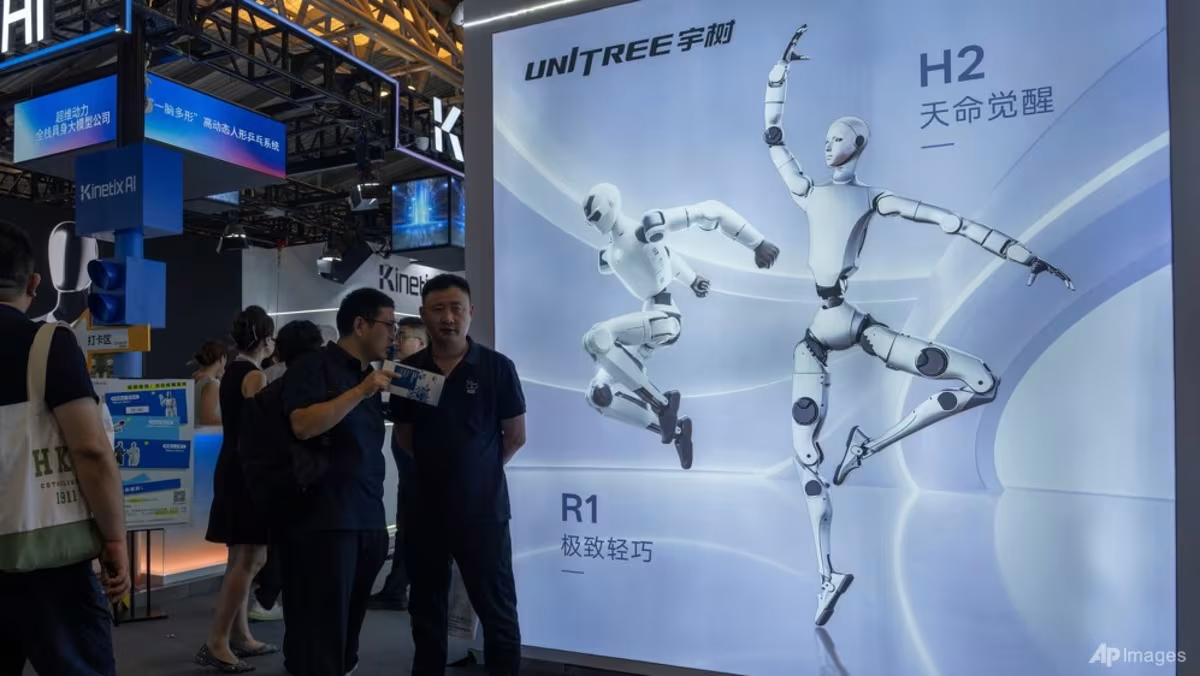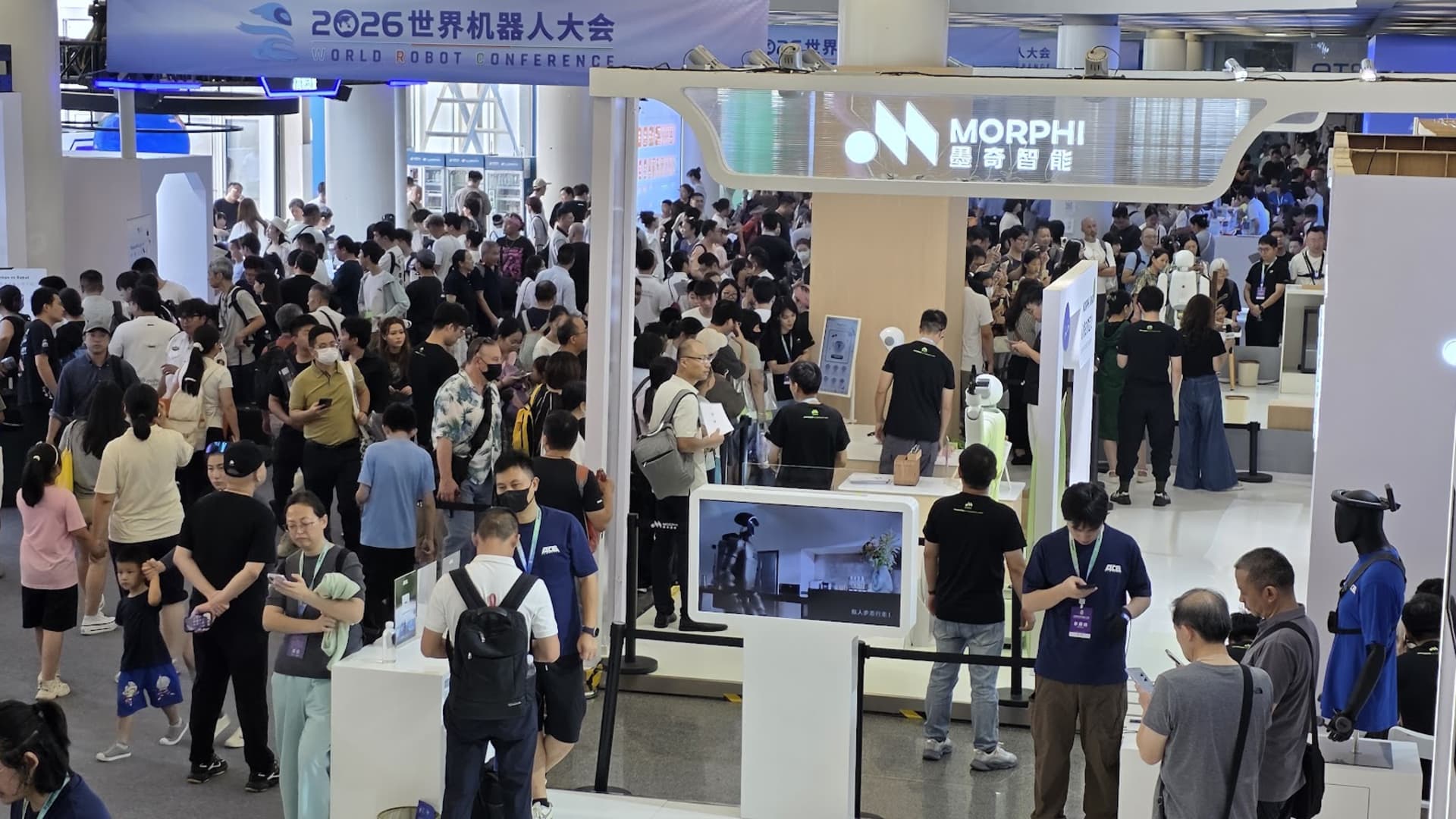
Gordon Saft is the Publisher of Rest of World. Last week, he returned to New York from a trip to China with a delegation of leaders from across media, technology, public policy, and finance to gain a deeper understanding of the AI and robotics industries.
On my first morning in Beijing, before joining a delegation trip on China’s AI and robotics industries, I visited an exhibition by the Belgian-born conceptual artist Carsten Höller, called “Two.” Visitors enter through one of two doors, assigned at random. One half of the space is a full-color replica of the other rendered entirely in black and white. Walking through it, everything felt familiar yet slightly off all at once.
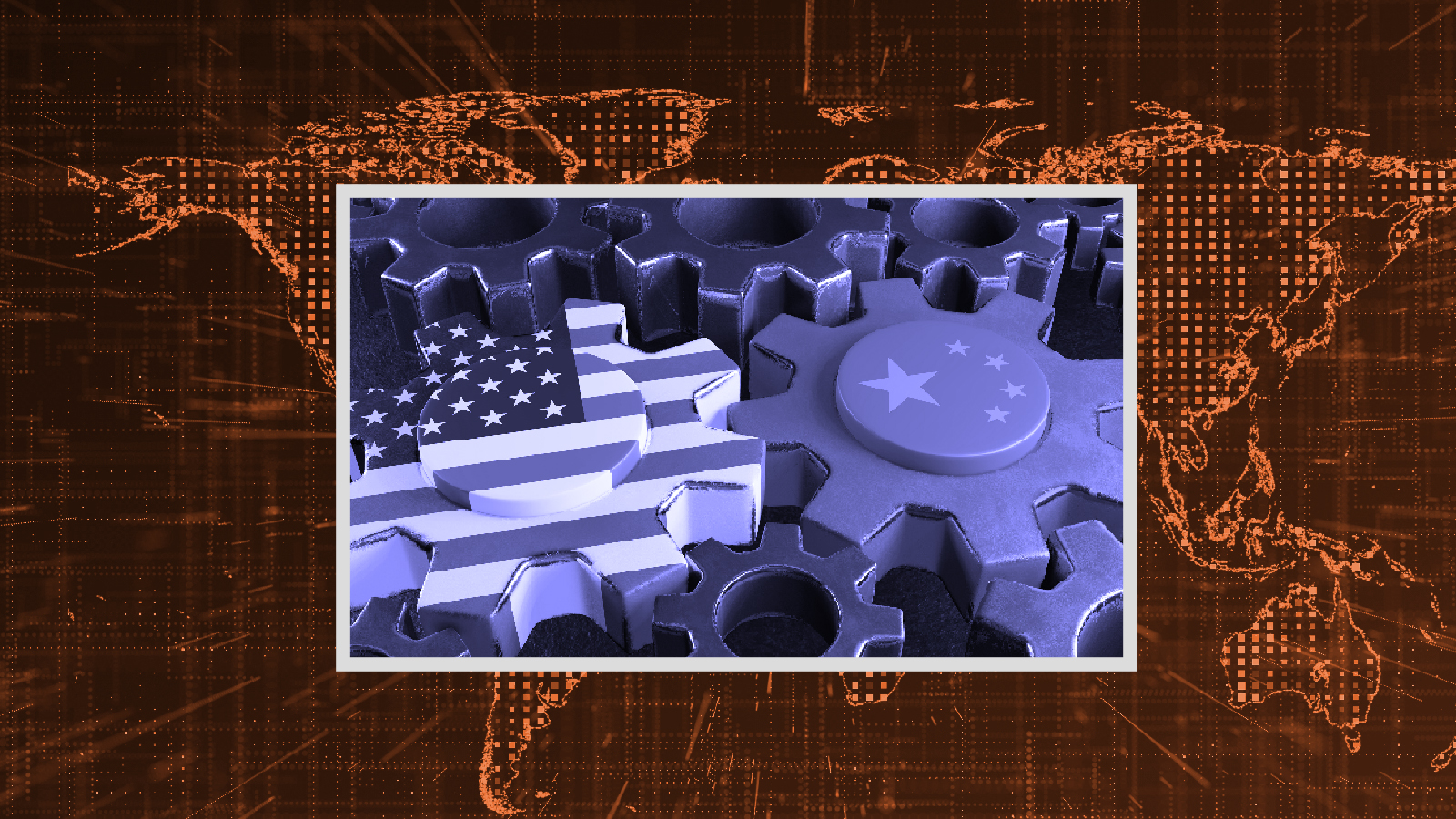
The debate over AI in the U.S. has long felt oppositional and binary: open versus closed, diffusion versus frontier, LLMs versus world models. Underneath it is a bigger framing that treats the U.S. and China as two competing models for how AI should be built and deployed, racing toward different futures. I wanted to understand if this held up on the ground, 18 months after DeepSeek’s launch reshaped open-source AI.
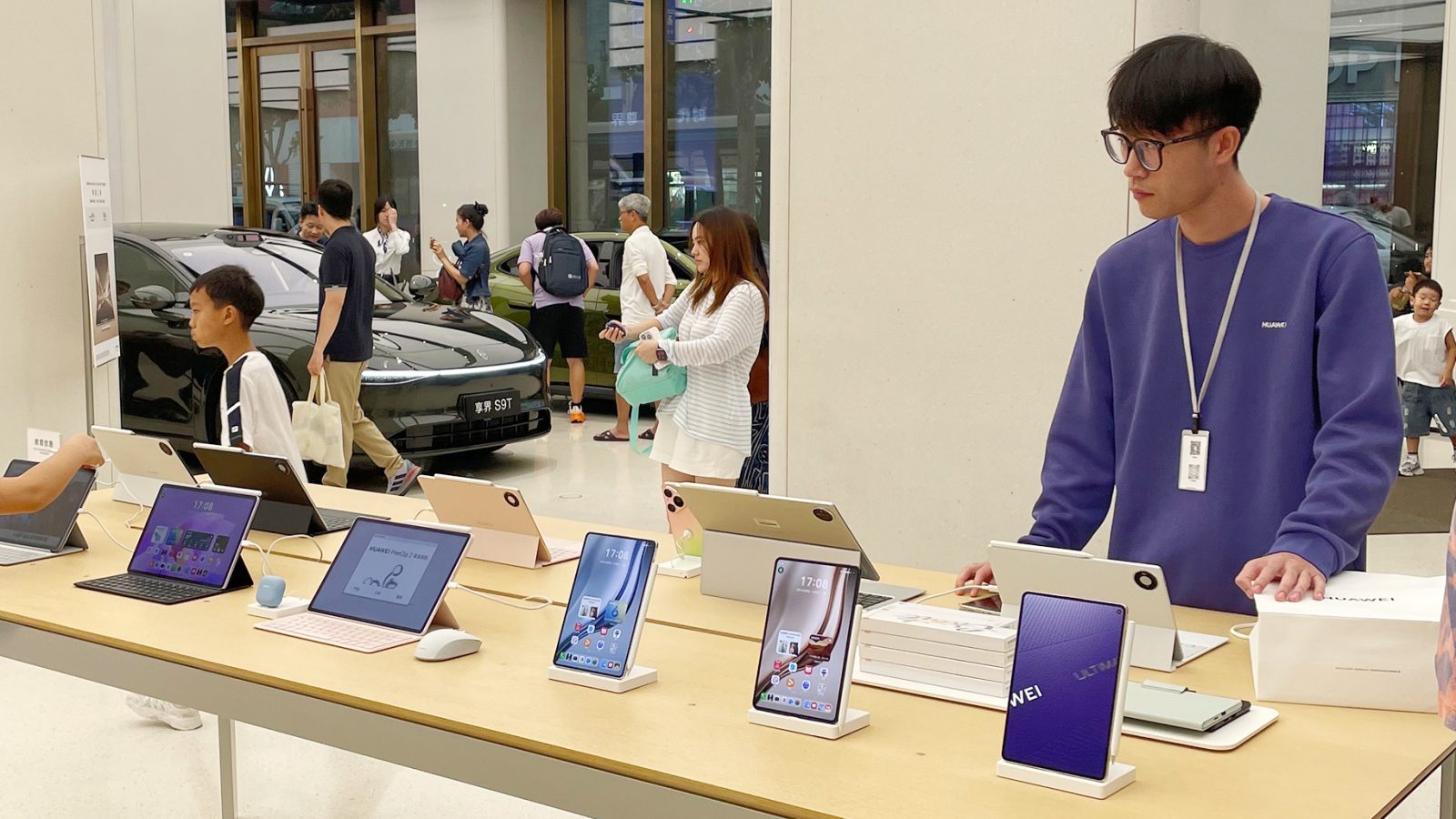
The institutions and politics diverge significantly, and the technology carries risks neither country can wave away. I expected the differences to be what struck me. Instead, it was the similarities.