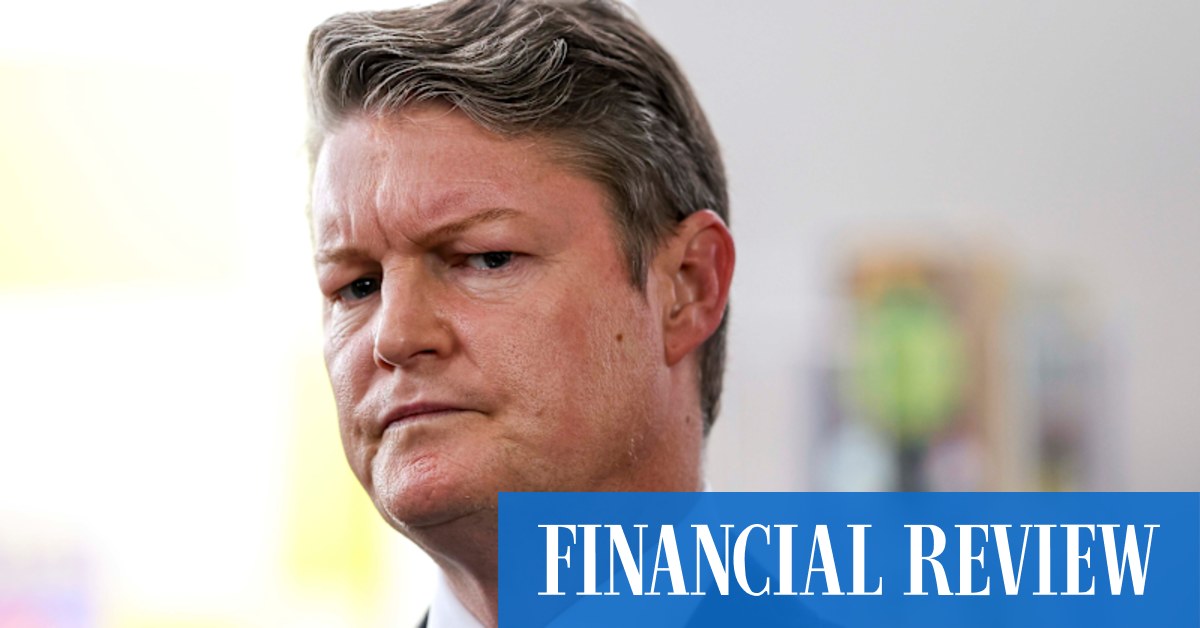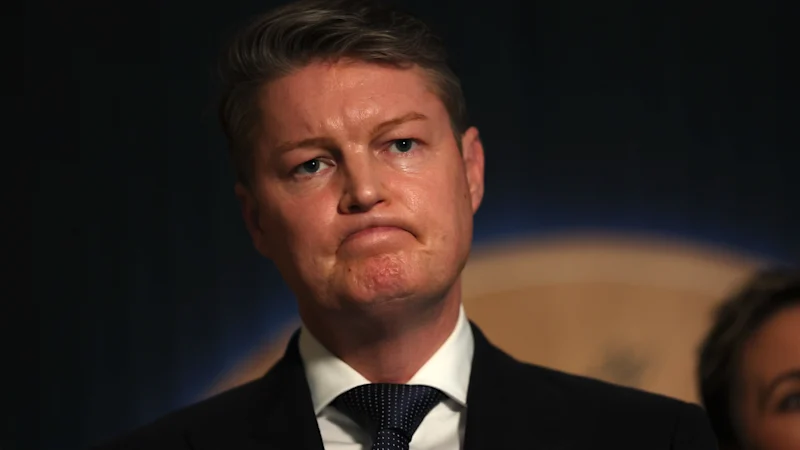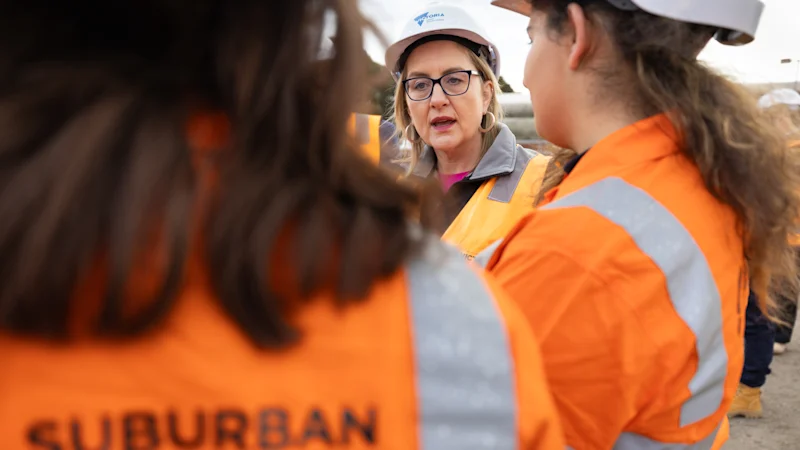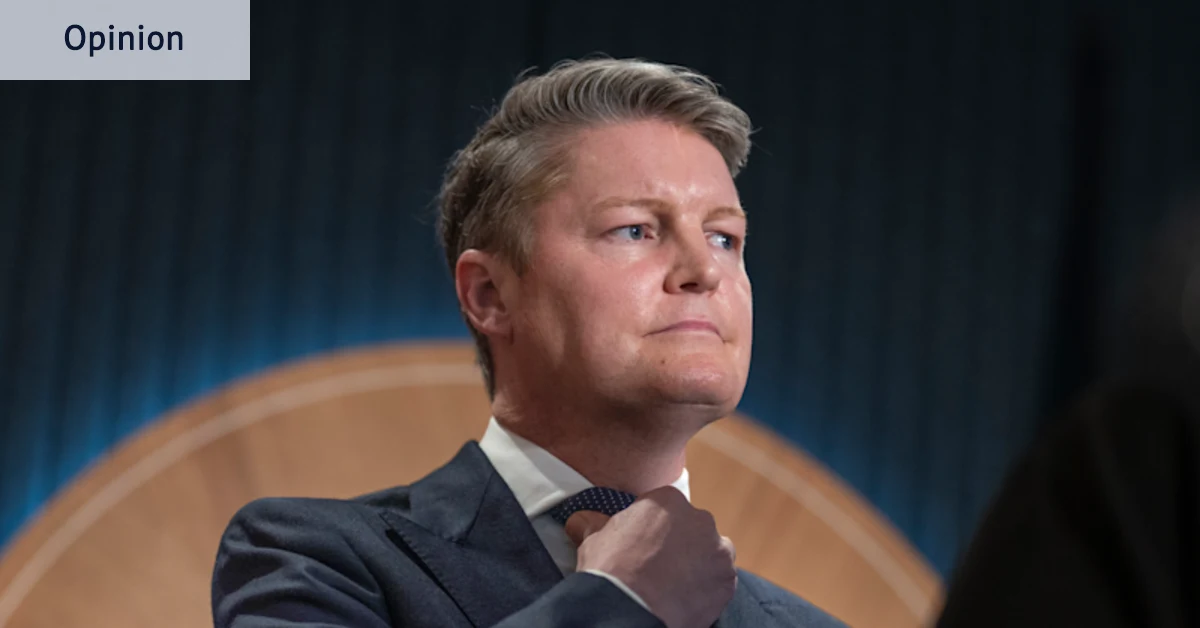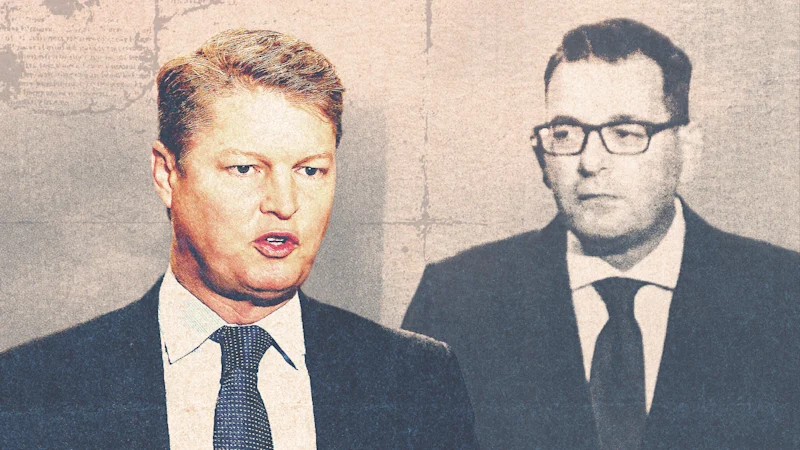
Ben Carroll was sitting in his Bali hotel room on a family holiday when he received a call from a journalist seeking confirmation on a big story – that the Melbourne Airport Rail Link, a major infrastructure project close to Carroll’s heart, had been shelved.Carroll was adamant the Herald Sun reporter had gotten the wrong end of the stick. “You’re completely wrong,” he told him. “I’m the public transport minister. It goes through my electorate. We took this to the 2022 election. I would know about it.”The following day, the paper duly splashed with the news that the project had been mothballed, ostensibly due to concerns about the state’s rising debt. Carroll was furious.He was later informed, through a three-way telephone conversation with then treasurer Tim Pallas and deputy premier Jacinta Allan, that the decision had indeed been made, in secret and without his knowledge, by the Expenditure Review Committee, a meeting of four senior ministers chaired by Daniel Andrews.Then-premier Jacinta Allan with Ben Carroll in May.Eddie JimIt was a Saturday morning in April 2023, in the final months of the Andrews government. Two days later, Carroll was back at work in his usual spot around the cabinet table and still steaming. Andrews, sensing the heat rising from his minister, wrote a message on a sticky note and passed it to Carroll.“We’ve got the sequence (at last) right on MARL,” it read.More than three years later, Carroll still has the note pinned above his desk as a reminder of how not to govern.The story is well known among the new premier’s trusted circle, two of whom relayed it to The Age, both for what it says about the secretive, highly centralised way in which Andrews ran the state, and Carroll’s determination to do things differently if he ever got the chance.It also helps explain why Carroll was genuinely outraged when he this week discovered, through the meticulous reporting of the Victorian Auditor General’s Office, the full, malodorous history of the Rail Improvement Charge (RIC), a hidden levy on public transport users that has sat on the state’s books – or rather, off book – since the start of last year.The auditor-general’s report was tabled in parliament on Wednesday, when Carroll was in Sydney for a meeting of national cabinet. He was briefed on its contents but reserved judgement until he read the full report. That happened the next morning when he rose early, printed off its 170 pages at home and scoured it cover to cover.A short time later, he drove into parliament and announced that he was scrapping the RIC and apologised for the entire episode. “There was no transparency on the creation and implementation of this charge,” he said.The RIC, a 1 per cent levy on top of all public transport fares conceived as a new revenue source to finance the Suburban Rail Loop, came into force on January 1 last year and was forecast to funnel $8 billion into government coffers over the next 36 years.Its sudden death, so shortly after the belated news of its birth, punches a hole in the government’s capacity to service its debt splurge on major infrastructure and raises further doubts about the financial viability of the state’s largest transport construction project, the SRL.The auditor-general’s report – an audit to determine whether the SRL East, the first stage of the 90-kilometre Suburban Rail Loop, is progressing within the government’s stated time frame and budget – does more than trace the history of a curious little tax.Through its forensic account, and The Age’s subsequent conversations with ministers, MPs and bureaucrats who were not authorised to speak publicly, it opens a window on a much deeper problem – the culture of secrecy and control that infected the Andrews and Allan governments.The question it raises for voters in the lead up to the state election is whether they believe that Carroll and his November running mate, Deputy Premier Gabrielle Williams, are genuinely committed to greater transparency in government or whether, as long-serving members of the previous administrations, they were part of the problem.Carroll and Gabrielle Williams took charge of the state government last month.Jason SouthCarroll and Williams have known of the rail charge, though not its full history, since 2024. “There are multiple occasions where the RIC was discussed involving both of them,” one former minister said. “At what point does it stop being incompetence and start to be willful blindness?”Auditor-General Andrew Greaves’s report reveals the charge was conceived five years ago by Pallas and Andrews, in the depths of the COVID crisis, to prop up the investment and business case for the SRL. It was kept secret from all but a small club of senior ministers and departmental officials.The rail loop business case was published in August 2021, the same month which, according to Greaves, the government first approved a plan to use 60 per cent of RIC revenue – an estimated $4.8 billion between 2025 and 2062 – to repay borrowings for the SRL.More accurately, this is when the plan was approved by the Expenditure Review Committee chaired by Andrews. The other members of the committee were treasurer Pallas, the then minister for the SRL Jacinta Allan and James Merlino, the deputy premier who would go on to chair the Suburban Rail Loop Authority. The decision never went to full cabinet.This is consistent with how Andrews governed. His approach, one borrowed by British Labour luminary Tony Blair, was to elevate a series of subcommittees, all of which he chaired, into discreet, executive forums that operated at arms’ length from cabinet.Sometimes decisions made by subcommittees were reported back to the cabinet, but often they weren’t. Ministers would sometimes be invited to present to subcommittees on matter relating to their portfolio responsibilities, but not always.One former departmental official who sat in on the meetings of one subcommittee said that once a decision was taken, the next order of business would be working out how to tell the minister responsible for overseeing it. Carroll was not alone in learning about a big decision impacting his portfolio on the front page of a newspaper.Decisions of the Andrews government were often not considered by his full cabinet.Jason SouthIn August 2021, when Andrews and Pallas were nutting out the Rail Improvement Charge, Carroll was the minister for public transport but none the wiser that a new tax on fares was being developed. “I was not part of the creation,” he said this week. Other government ministers told The Age they first heard of the charge when the auditor-general’s report splashed like a brick into the Spring Street pond.“The scales fell from my eyes today,” one current minister said after the report was tabled. Another explained: “You’ve got to remember there was a practice in that previous term of government of putting decisions through the smallest possible collectives of ministers. That was a practice that was started by Daniel and it was continued by Jacinta. What it led to was a complete lack of visibility of policy by the broader cabinet.”The Suburban Rail Loop, a project conceived in secret by private consultants with the knowledge of some of the government’s most senior transport officials, was a product of this culture. The Suburban Rail Loop Authority, the statutory authority created in 2019 to oversee the project, is renowned for the distance it keeps between itself and government departments that overlap with its work.Greaves identifies this problem in his report. He refers to a previously unpublished government review of the authority, which in 2024 raised concerns about “issues with trust, co-operation, information flows and role clarify between the SRLA and central agencies.” Put simply, people on different sides of the SRL wall did not talk to each other.One example of this was a decision taken by the SRLA board to order a pause in negotiations with construction firms over cost over-runs. The board didn’t bother to seek approval from the government for this decision on the management of the state’s largest infrastructure project. A recurring symptom of an unaccountable culture is the frustration expressed by ministerial and departmental staff who tried to get information out of the authority.Two days before the auditor-general’s report was tabled, Carroll announced his intention to wind up the SRLA and fold its functions into another government agency.The report found that secrecy surrounding the new levy extended to the federal government, despite Canberra being a major funder of the rail loop. Greaves notes that in June last year, when the Victorian government shared its financing strategy for the SRL with the federal government, the documents contained no mention of the levy, despite it being the “largest single revenue-raising measure” associated with the project.This takes us to the most confusing – and contested – part of the RIC story.The business case for the SRL, which included a nominal cost of $34.5 billion, assumed a three-way split between state government funding, federal government funding and value capture, a well-established concept where private interests who benefit most from a project are taxed a portion of those financial gains to help pay for it. As recently as December 2023, by which time Allan had taken over as premier from Andrews, the government was still banking on the RIC to provide the lion’s share of value capture.In 2024, as the circle of ministers who knew about secret tax started to grow, the government’s thinking about the RIC appears to have changed. Williams, as the minister responsible for public transport, became aware of the tax. Harriet Shing, the new minister for the SRL, was brought into the loop. Carroll, a year into his tenure as deputy premier, was belatedly added to the Budget and Finance Committee of cabinet – the renamed Expenditure Review Committee (ERC) – and gained visibility over the tax.Carroll became aware of the secret rail improvement levy in 2024.Justin McManusThere are differing accounts of what conversations took place about the RIC, but it is clear that some ministers didn’t support siphoning off 60 per cent of the revenue to the SRL. Instead, they wanted the new revenue to benefit the broader public transport system. By the end of 2024, this is where the government had landed, with Department of Treasury officials adjusting the RIC to direct whatever money it generated into the existing Public Transport Fund, along with all other fare revenue.There was a sliding door moment, as Christmas was approaching in 2024, when the government could have come clean on the levy. Although the tax was conceived to prop up the business case of the SRL and remained, in the view of the auditor-general, intrinsically linked to the project until this week’s decision to scrap it, there was no reason for the government to keep it secret.A tiny impost on public transport fares to provide for a better public transport system, if announced in these terms, would have been wholly uncontroversial. The perfect time to announce the RIC arrived on the morning of 20 December 2024, 12 days before it came into effect.Gabrielle Williams, the minister responsible for public transport, had invited journalists to the entrance to Anzac Station to spruik the benefits of the soon-to-be-completed Metro Tunnel. The press conference coincided with the government publishing the details of its public transport fare increase for the following year. Williams had been briefed, in preparation for the press conference, to expect questions about the RIC.To her surprise, those questions never came.Williams this week said it was not until she read the auditor-general’s report that she realised that RIC had not been announced along with the fare hikes. If there was a decision made by someone else that day to keep the levy secret, she wasn’t aware of it.Depending on who you talk to within the Victorian government and the weight you put on the auditor-general’s report, this was a cock-up or further evidence of a conspiracy to conceal a tax.Either way, it ensured the RIC remained an unexploded ordinance, buried deep within the Victorian government, all but forgotten by the people who worked to keep it secret.Start the day with a summary of the day’s most important and interesting stories, analysis and insights. Sign up for our Morning Edition newsletter.
Secret public transport tax: Inside the hidden $8b SRL levy that infuriated Ben Carroll and exposed Labor’s culture of secrecy
Three years ago, Daniel Andrews slipped Ben Carroll a note during a cabinet meeting. The new premier keeps it as a reminder of how not to govern.
2,029 words~9 min read