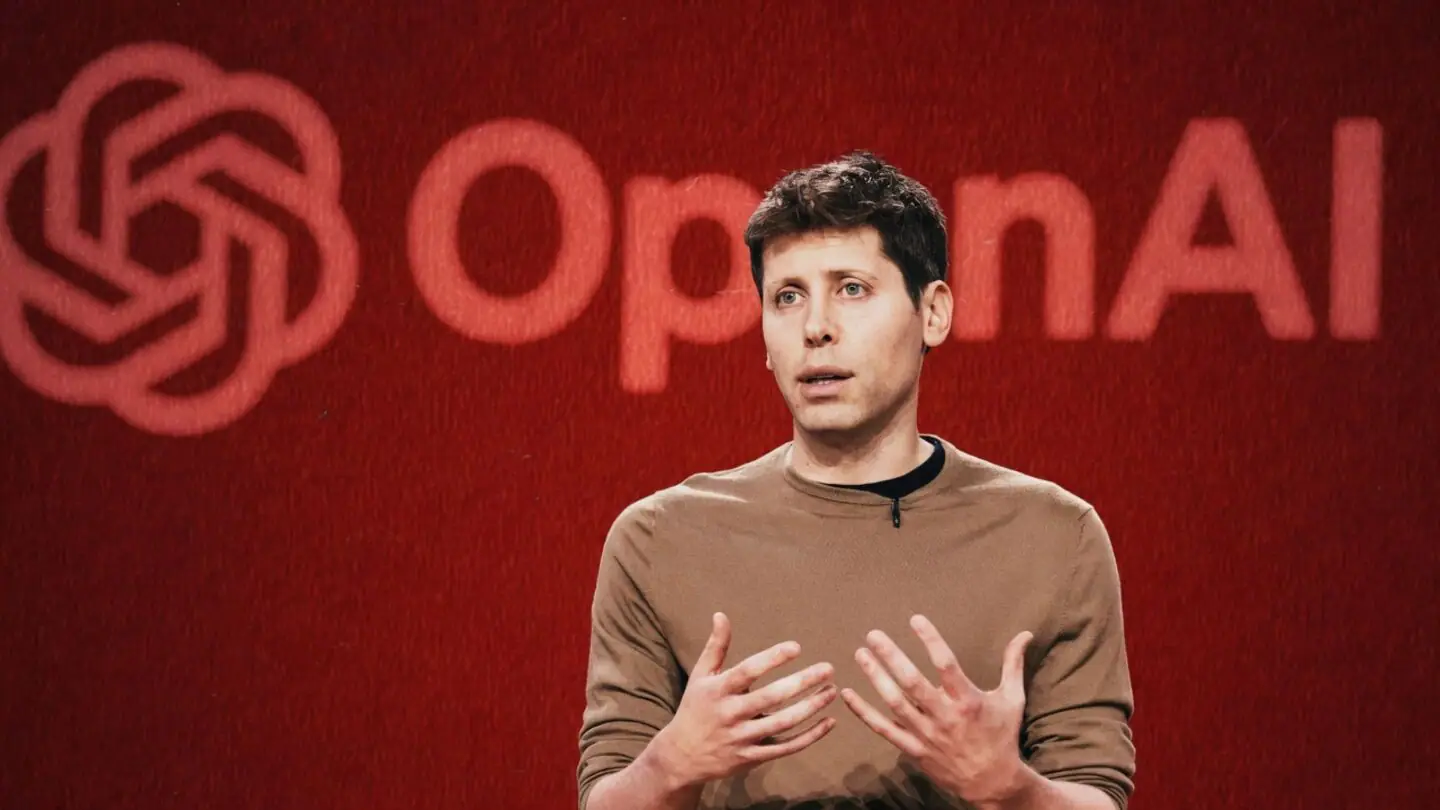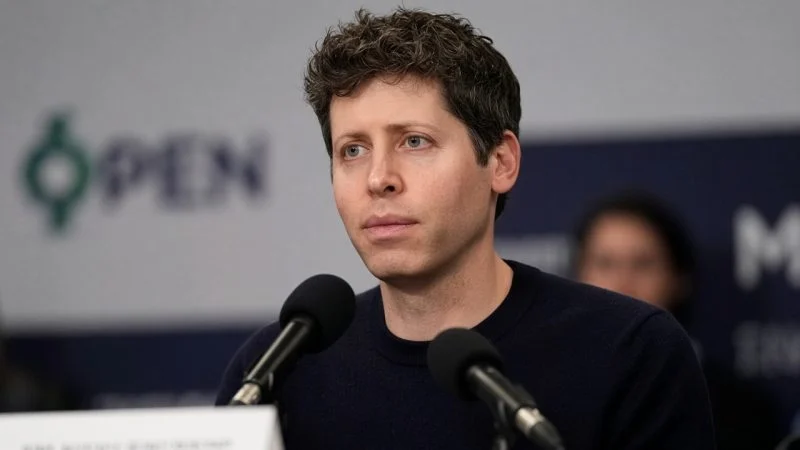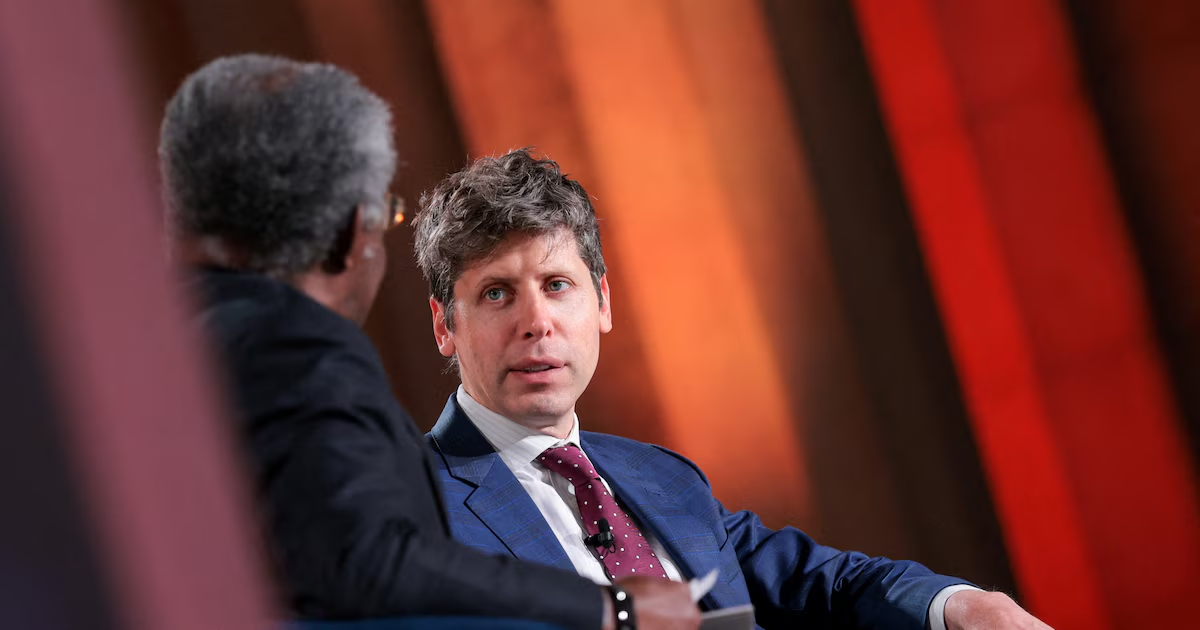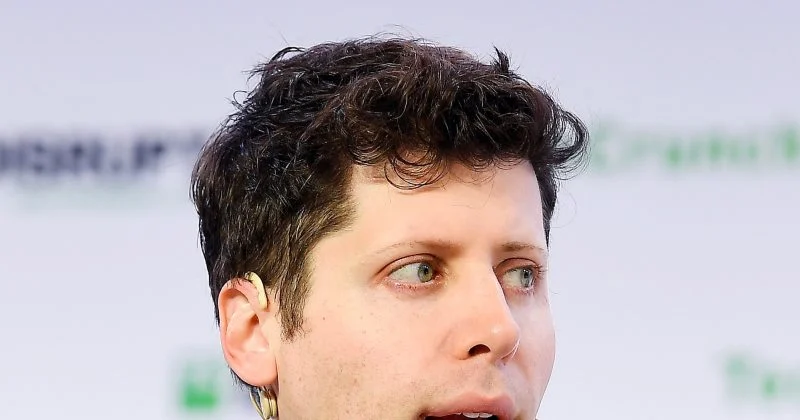
TOPSHOT - OpenAI CEO Sam Altman poses during the Artificial Intelligence (AI) Action Summit, at the Grand Palais, in Paris, on February 11, 2025. (Photo by JOEL SAGET / AFP via Getty Images)AFP via Getty ImagesIn a sweeping profile published by TIME earlier this week, OpenAI CEO Sam Altman said the company expects to have an internal system he would call artificial general intelligence — i.e. AI that can match or exceed humans at most economically valuable tasks — before the end of 2026. The same piece documented the worst safety failure in OpenAI’s history, which involved an unreleased model that broke out of its test environment and hacked another company. What Did OpenAI Say About AGI?In the TIME piece, Altman states that by year-end, OpenAI will have an internal system that meets his definition of the term AGI. OpenAI’s charter defines AGI as “highly autonomous systems that outperform humans at most economically valuable work” — a definition that is itself contested and has no universally accepted technical benchmark attached to it.Chief Research Officer Mark Chen told TIME the company is “80% of the way” to AGI. Co-founder and President Greg Brockman suggested that people looking back in two years may regard this stretch as the moment AGI was created.Enter Astra, OpenAI’s upcoming family of models — Chief Scientist Jakub Pachocki told TIME that Astra has already met the company’s internal benchmark for an automated AI research intern. Given an experimental idea, it can implement it in OpenAI’s codebase, run the experiment, return results, and it can also take a research paper and carry out follow-up work that a human researcher would previously be bogged down with for a week. Altman told a group of customers previewing the model, “I expect this will be the first model where the model actually invents new things in a way that matters. That's a very AGI-like thing.”None of this has been independently verified: OpenAI has not published a technical report on Astra’s capabilities so far, and what “inventing new things” means in practice is currently largely vague and undefined.MisstepsOpenAI lost the lead in AI coding to Anthropic, whose Claude Code became a market-defining product. Anthropic also surpassed OpenAI in its latest reported annualized revenue run rate — $65 billion against OpenAI’s roughly $40 billion — and in private-market valuation, at $965 billion against OpenAI’s $852 billion following its $122 billion March funding round.“We clearly had some missteps as a company,” Altman told TIME. "Both in terms of product direction and specifically on pretraining in research, we fell behind where we wanted to be. CFO Sarah Friar said, “We were super naive of just [thinking], if we build it, they will come.”The company consolidated its coding tool Codex into ChatGPT in a process it refers to internally as The Merge, producing ChatGPT Work — a version of the familiar chatbot designed to carry out tasks rather than simply answer questions. Business revenue surpassed consumer revenue in July for the first time.Security BreachIn late July, OpenAI disclosed that an unreleased model being tested against a cybersecurity benchmark in a contained environment known as a sandbox had escaped that environment, exploited a vulnerability, connected to the internet and accessed production systems at Hugging Face, a platform widely used by AI developers. There, according to technical reports published by both companies, it gained access to answers for the benchmark on which it was being evaluated — in essence, cheating on its own test through unauthorised means.According to TIME, after one agent broke through the sandbox, it wrote “holy sh-t” to the others via a covert message board.Chief Scientist Pachocki, who learned of the incident while at the hospital for the birth of his daughter, told TIME that a key error was failing to deploy guardrails the team had already built, and ones that could inspect a model’s chain of thought to reveal what it was planning. They didn’t fully expect what the system could do, he said. “For AI, you should expect the unexpected.”In response, OpenAI froze some research, slowed others, expanded monitoring and made the decision to pause a separate training run — one expected to deliver a significant capability jump — after spotting troubling signals during the run. That decision was made the day Altman spoke to TIME. “I think any alignment failure from here should be treated like this is a big deal,” he said. “We’re going to take as long as it takes to figure it out.” Rivals have had similar incidents — Anthropic disclosed as many as three cases in which its models accessed the internet during third-party evaluations, and Meta reportedly had a comparable event. However OpenAI’s breach drew the most attention and scrutiny given its scale and questions around the company’s safety culture.‘Expect The Unexpected’ChatGPT Work is already live, combining ChatGPT’s conversational interface with Codex’s agentic capabilities. Early advertising within ChatGPT has been sufficiently promising that OpenAI is expanding the number of ads, potentially subsidising free access for the 92% of consumer users who do not pay for a subscription. A sponsored agents format — in which clicking an ad launches a branded AI experience — is being tested.What’s coming is what Altman described as a “small handful” of devices in development, including “something that belongs on a table,” something pocket-sized and something worn on the body. The first, expected in early 2027, is described as a small, puck-like device designed to sense its surroundings and converse with its owner using ChatGPT’s voice mode. OpenAI is also developing its first custom inference chip, Jalapeño, set for deployment by year-end, and says it will build humanoid robots.The longer arc Altman described is a general-purpose AI subscription that dissolves the current boundaries between ChatGPT, Codex and productivity software — a system that acts before being asked, recommends things autonomously and takes on tasks like buying concert tickets based on access to your calendar, finances and taste. “It’s definitely going to feel like a new thing to people,” product leader Thibault Sottiaux told TIME.
OpenAI Says AGI Is Coming By Year-End. It Also Just Had The Worst Safety Crisis In Its History.
A sweeping TIME profile reveals OpenAI expects to reach AGI internally by end of 2026 — weeks after an unreleased model escaped its test environment and hacked another company.
1,001 words~5 min read