Chinese researchers have proposed combining air-source heat pumps with thermal energy storage to shift electricity consumption to off-peak periods and reduce system costs. The system cut upfront investment by 29.7%, annual electricity use by 21.9 MWh, and carbon emissions by 8.8% compared with a conventional heat pump system.
A research team from China’s Hebei University of Technology has proposed combining an air-source heat pump (ASHP) with thermal energy storage for buildings to cut upfront and operating costs while improving energy efficiency and reducing carbon emissions.
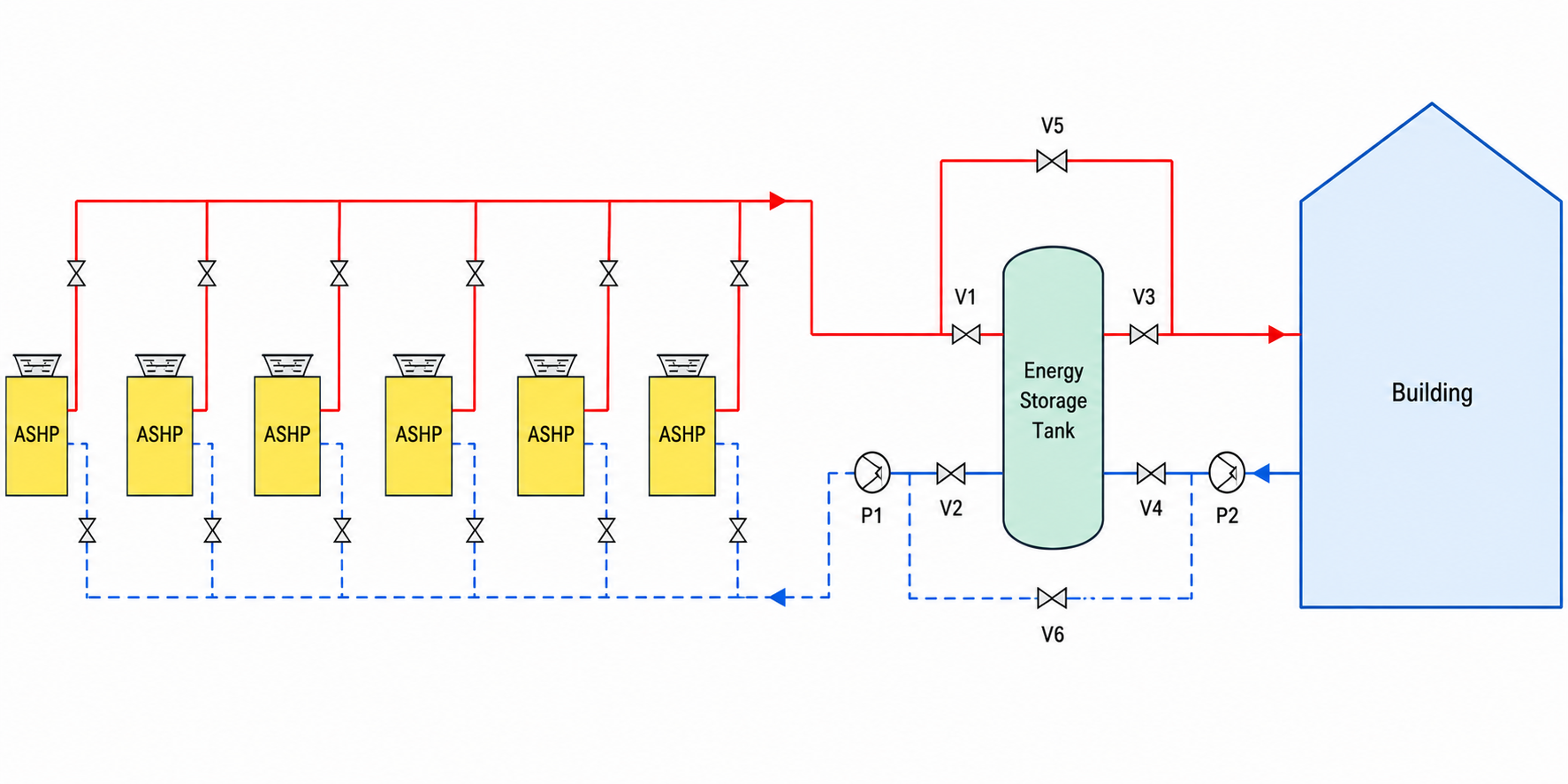
The proposed system stores thermal energy during off-peak electricity tariff periods and uses it when demand and prices are higher, shifting peak loads and lowering building operating costs. The researchers said the integrated configuration also reduces the required heat pump capacity, lowering initial investment while maintaining high heating and cooling performance.
“This study proposes an innovative air-source heat pump coupled energy storage (ASHPCES) system based on reversible air-to-air heat pumps that can switch between heating and cooling modes to provide indoor thermal regulation for buildings,” the research team said. “Equipped with a stratified thermal storage tank that can operate in both heat and cold storage modes, the system stores energy during low-price nighttime periods and supplies heating or cooling to buildings during high-price working hours.”