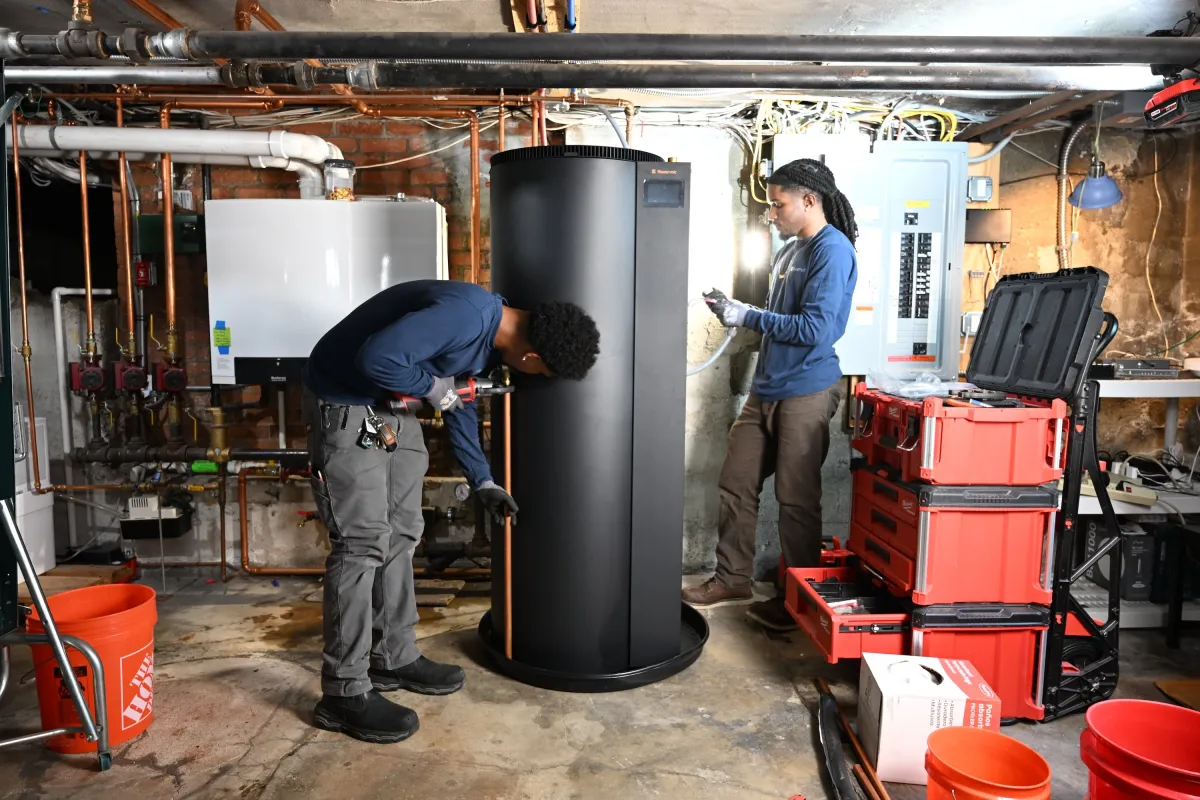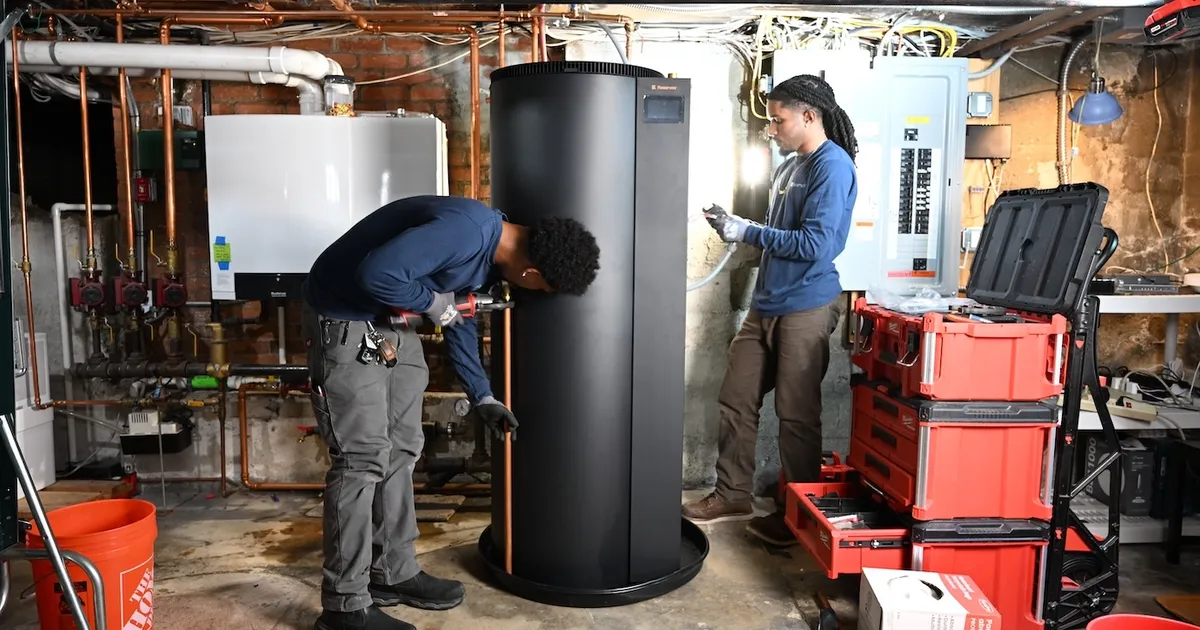
“The biggest barrier is cost,” said Noah Gabriel, senior project manager at the institute. Consider the difference in two products from leading manufacturer Rheem: A 50-gallon heat-pump water heater has a list price of $1,699, while a highly rated electric-resistance model retails for just $799. The installation cost for a heat-pump version can be comparable to that for conventional systems, adding another $1,000 to $4,000 or more, depending on factors like tank size, a home’s electrical readiness, and local labor costs.
President Donald Trump and the Republican-led Congress have made transitioning to heat-pump water heaters more expensive. Last year, they eliminated a Biden-era federal tax credit that offered households a discount of up $2,000 on the appliance.
Some states, cities, and utilities continue to offer rebates on heat-pump water heaters — from $150 to a whopping $4,000. Meanwhile, though, manufacturers have been coming out with new models and features that could help make their products more affordable.
Although heat-pump water heaters typically plug into a 240-volt outlet, a few big brands — Rheem, A.O. Smith, and GE Appliances — now produce versions that conveniently use a normal 120-volt socket. They’re less powerful, but these options can work well for households of one to four people that would otherwise have to upgrade their electrical system. Last year, GE became the first to offer a product with a flexible voltage, which experts say could make emergency replacements much easier.