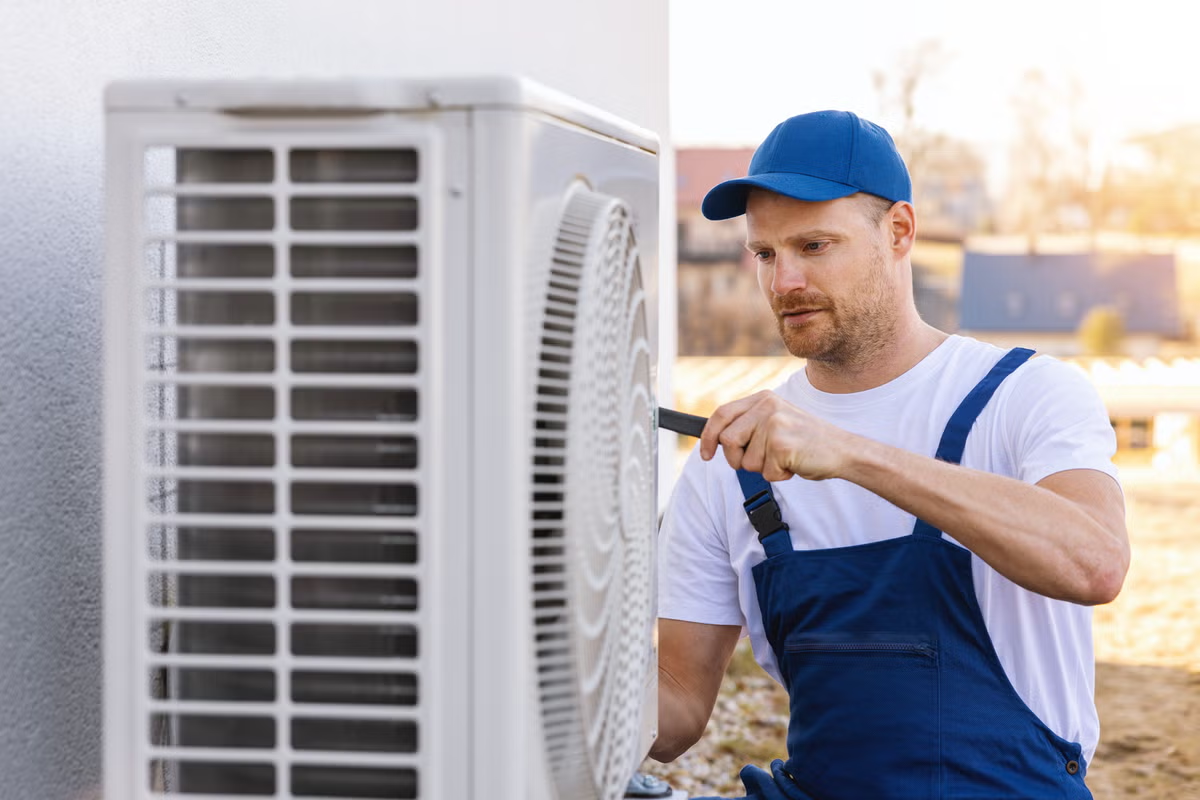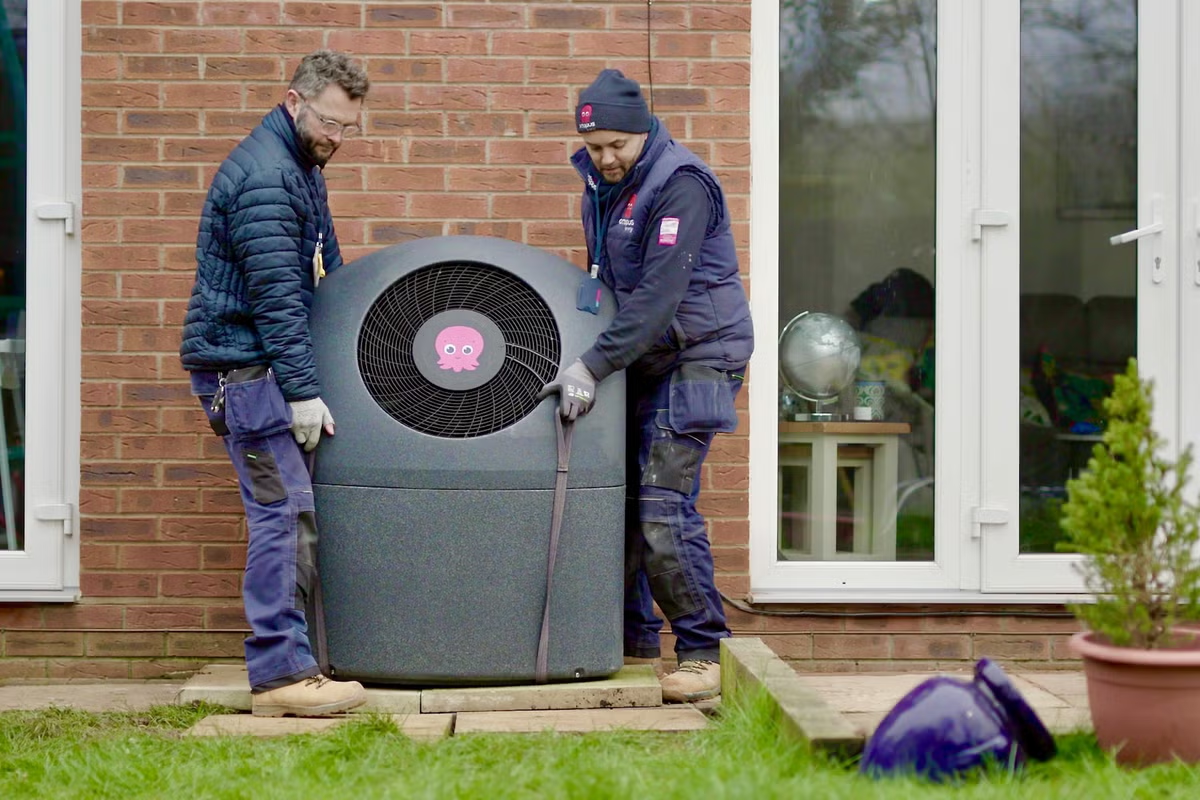
For many households, the biggest question about heat pumps isn’t whether they work, but whether they’re actually affordable. Heat pumps are often presented as one of the main alternatives to gas boilers, but the upfront cost can still feel like a barrier, particularly for homes that need extra work before installation.In 2026, however, the picture is starting to change. Heat pumps are becoming cheaper because grants, smarter installation methods, improved efficiency and better-suited tariffs are all beginning to change the real cost of switching.That’s not to say that every home will get a low-cost installation. The final price still depends on the size and design of your property, the existing heating system, whether radiators need upgrading, and how much work is required to make the system run efficiently. But for many buyers, the cost calculation is finally becoming more encouraging.Why heat pump costs could keep fallingPhil Steele, future technologies evangelist at Octopus Energy, says the cost of heat pump technology is likely to continue to fall as production increases.“I think we’ll continue to see the cost of the technology come down,” he says. “As heat pump numbers rise in the UK and globally, manufacturers can improve production lines, increase capacity and buy components in larger volumes. That should make the technology cheaper to produce over time.”Steele compares this with what has happened in the solar panel market, where costs have fallen significantly as manufacturing has scaled up. Heat pumps may not follow exactly the same path, but the principle is similar: the more the market grows, the more opportunity there is to reduce manufacturing costs.For buyers, this signals that the heat pump market is still maturing. And as more homes switch, manufacturers, installers and energy suppliers have more incentive to simplify the process, improve products and cut unnecessary costs from installations.The installed price matters more than the unit priceWhen comparing heat pump costs, it’s important to look beyond the price of the outdoor unit. A heat pump installation can include a hot water cylinder, new controls, electrical work, pipework changes and, in some cases, radiator upgrades.This is where costs can vary sharply between homes. A smaller, well-insulated property with suitable existing radiators may be much simpler to convert than a larger, older home with higher heat loss.One of the most common concerns people have is whether a heat pump means fitting much larger radiators. Steele says this isn’t always as disruptive as people imagine. Heat pumps often run at lower flow temperatures than gas boilers, so rooms may need radiators that can emit more heat. But that does not necessarily mean a radiator has to take up more wall space.“If you’ve got a single-pane radiator, if you add the second one, you’ve effectively almost doubled the heat output of it,” Steele explains. In practice, replacing a single-panel radiator with a double-panel version can increase the output while keeping a similar footprint on the wall.That can help avoid some of the disruption buyers may fear, such as moving pipework or redecorating. However, the right solution depends on a room-by-room heat-loss calculation, which a good installer should carry out before recommending a system.Better heat pumps could mean fewer home upgradesAnother reason installation costs may come down is that heat pumps are becoming more capable at higher temperatures.Older assumptions about heat pumps often focused on low-temperature systems, which work best when a home is well insulated and fitted with radiators or underfloor heating designed for lower flow temperatures. But as heat pumps become more efficient at higher temperatures, some homes may need fewer changes to their existing heating system.Steele says this could reduce installation costs over time. “The change of radiators is because heat pumps tend to work more at lower temperatures,” he says. “But as we support higher temperatures, maybe you don’t need to change them, so that will keep bringing the cost down.”That doesn’t mean buyers should ignore system design. A heat pump still needs to be sized correctly and installed properly. But it does suggest that the technology is becoming more adaptable for UK homes, which could help bring down the total cost of switching.Software and controls are improving tooContrary to popular belief, heat pump efficiency doesn’t rely solely on the hardware. Steele says firmware updates can also help improve performance by fine-tuning how your system’s components work together.A heat pump includes a compressor, fan, pump, valves and controls. By adjusting how these parts operate, manufacturers can “eke out some more efficiency”, he says. Steele compares it to driving a car in the right gear: the system can be tuned so it doesn’t always have to work flat out.For buyers, that means a modern heat pump isn’t just a static piece of equipment. Its performance can be influenced by software and how well the system is commissioned. A cheaper installation is only part of the equation; the heat pump also needs to run efficiently over the long term.Grants are still central to the 2026 heat pump cost calculationFor most buyers, the biggest immediate reduction in upfront cost still comes from government support.The Boiler Upgrade Scheme offers £7,500 towards the cost and installation of an air-to-water, ground source or water source heat pump. It also offers £2,500 towards residential air-to-air heat pumps. From 21 July 2026 until 31 March 2027, eligible off-gas-grid homes can receive £9,000 towards an air-to-water or ground source heat pump.This means the price households pay can be substantially lower than the headline cost of the installation. Octopus Energy says its typical heat pump installation price is £4,459 after the £7,500 Boiler Upgrade Scheme grant, based on its median post-survey quoted price between 1 September 2025 and 28 February 2026.Now, that figure won’t apply to every home. Some properties will cost more, especially if they need more extensive upgrades, but it gives buyers a useful benchmark. The most meaningful number is the post-survey, post-grant installed price, not a broad average.Heat pump running costs are part of affordabilityThe cost of a heat pump, of course, doesn’t end with installation. Buyers also need to consider how much it will cost to run.Heat pumps use electricity, so running costs depend partly on the gap between gas and electricity prices. They also depend on the efficiency of the heat pump and whether the household is on a suitable tariff.Steele says heat pump owners are often better off moving away from a standard flexible tariff and on to a tariff designed around heat pump use. The Octopus Cosy tariff, for example, offers cheaper periods that can be used to preheat the home or hot water.He adds that the affordability of a heat pump is more than just the upfront bill. A well-designed system, used with the right tariff and heating habits, can improve the long-term financial case.New technology could change the equation againSteele also points to emerging technologies that could alter heat pump costs in less obvious ways. One example is Heata, a distributed data centre system that sits near a hot water tank and uses waste heat from computing to provide hot water.This isn’t mainstream for most households, but it shows how the economics of home heating may evolve. If another technology can provide hot water cheaply or even free to the homeowner, a heat pump can focus more on space heating, where it may operate more efficiently.As Steele explains, there are even “more technologies that haven’t been invented yet” that will likely reduce the cost of installation or electricity in unexpected ways.What buyers should ask before choosing a heat pumpAnyone considering a heat pump in 2026 should ask for a detailed quote that explains exactly what is included. That should cover the heat pump itself, hot water cylinder, radiators, controls, pipework, electrical work, commissioning and aftercare.It’s also worth asking what flow temperature the system is designed around, whether any radiator changes are needed, what seasonal efficiency the installer expects, and whether a smart tariff could help reduce running costs.Heat pumps are becoming more affordable, but not in one simple way. The unit cost may fall as manufacturing scales up, while installation costs could come down as systems become more efficient and easier to fit. Grants are reducing the upfront price for eligible households, and smart tariffs can improve the running-cost case.The result is a more promising market for buyers, but also one where the devil is in the details. The cheapest heat pump isn’t necessarily the best option. A well-designed system, properly installed and matched to the right tariff, is what will determine whether a heat pump delivers value over the years ahead.
Are heat pumps finally becoming more affordable?
Here’s what buyers should know before getting a quote
1,422 words~6 min read