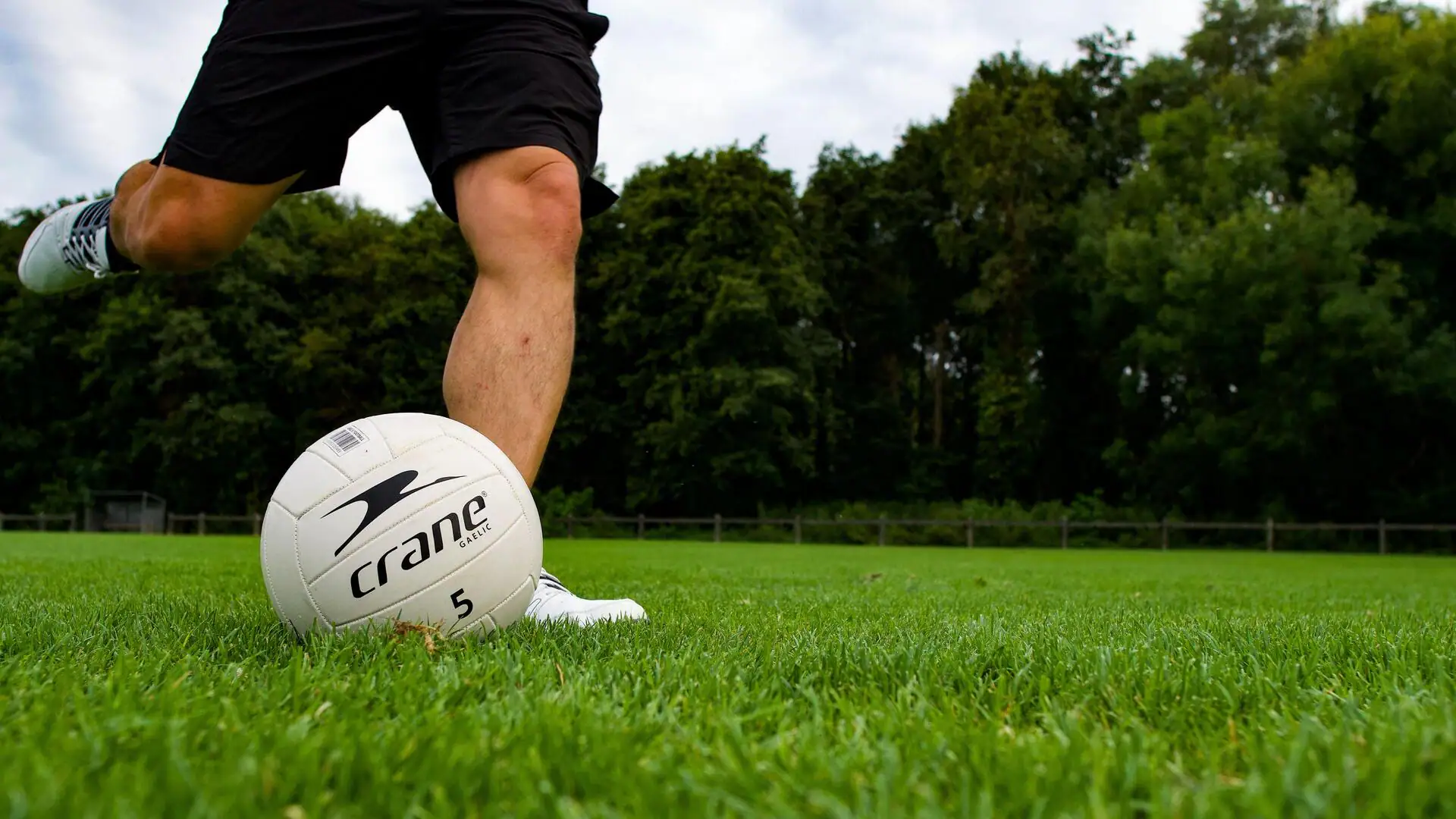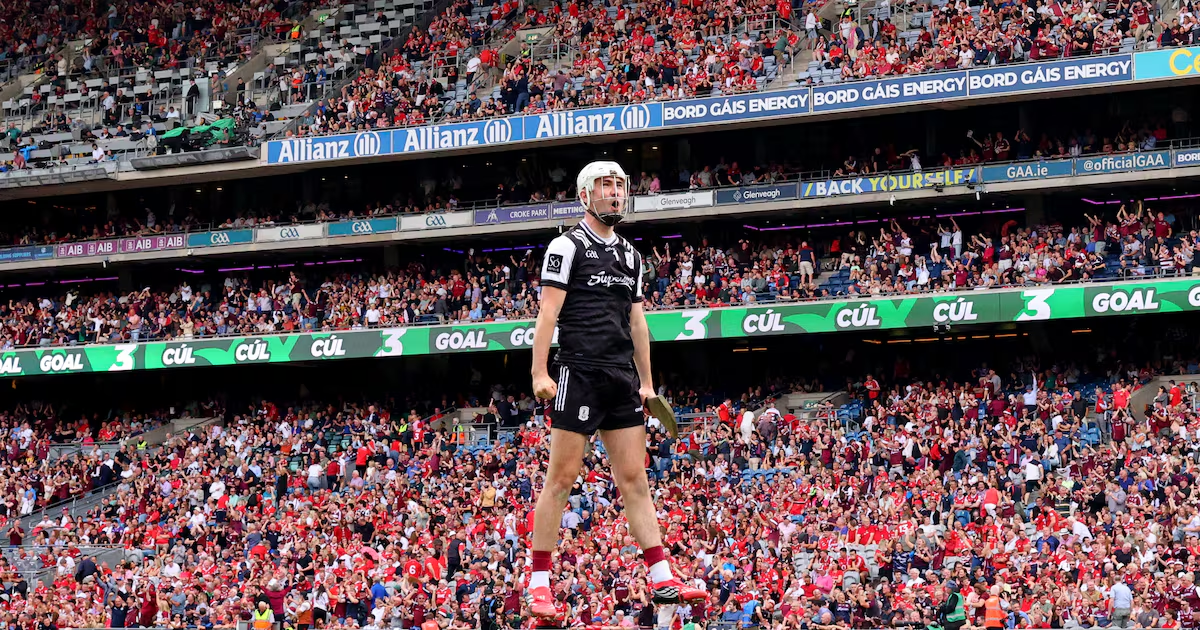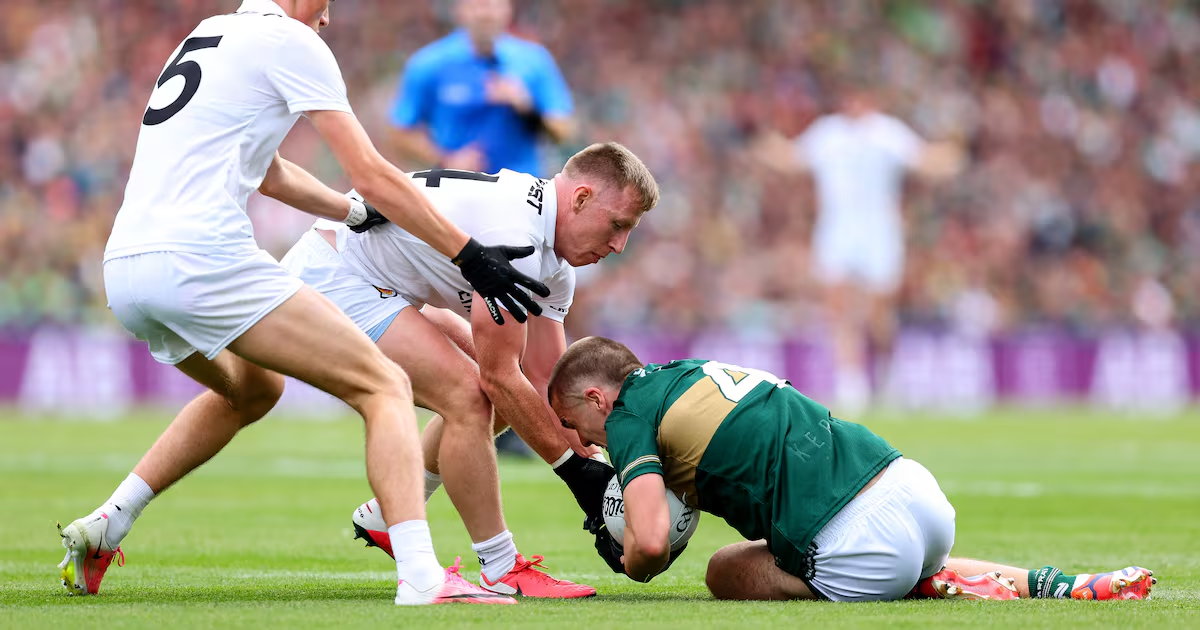
St Patrick’s Day morning 2010 lives in the memory. A day spent on a pitch by the river in Galway. A day of enlightenment. As a 21-year-old occasional attendee of NUIG, I needed a distraction to avoid a day of partying that would have left me in no fit state to help Sligo face Cavan in the National Football League that weekend. While on the field, a thought occurred: how was I in my third year on an intercounty panel and nobody had ever asked why I never used my right hand to handpass? More pertinently, how had I never asked myself?Over the previous winter, in search of ‘high performance’, I had reluctantly adopted the suggested nutrition plan of management. Brown rice flakes, fried potatoes and boiled chicken. A bowl of Corn flakes submerged in water was the recommended indulgence. Energy levels plummeted, but “stick with it to be a better footballer” was the mantra. Hindsight is foresight for fools.Corn flakes were counted, but other – arguably more important – areas were being neglected. Such as, when was the last time I had a structured skills session built into my weekly training schedule? Outside of pre-training shots at the posts from the sideline, crossbar challenges or an occasional ad hoc session recklessly belting a bag of balls around, the answer was never. I was blind to this basic skill deficit. I had been held back by the stupidity of not thinking for myself, due to a cocktail of youthful naivety and earnestly chasing what the coaches measured. Nobody came to me in the years that I played under numerous managers at club, school, college or county level. I blame none of them. Broadly speaking, coaching culture at that time was . . . evolving. Organisation, fitness, sharing of experience and robust cajoling pervaded.I got my notepad out. A detailed plan was drawn up to work on skills. I now see that it was flawed – that’s hindsight again. I went with repetition, blind repetition. The informed coaches of 2026 would be appalled at this innocent fool’s 2010 plan. Hours spent, or wasted, trying to be a little better. It involved hundreds of hand passes – 400 with the right hand and 100 with the left. It was similar with foot kicks – 200 with the left foot, 100 with the right. Laces inside, outside the boot and the auld punt. Again and again and again. At home, at the pitch, in a squash court. With a tennis ball, with an O’Neills. Hopping and soloing remain foundational elements of Gaelic football, but they are rarely experimented with by teams. File photograph: James Crombie/Inpho A modern coach might well tell you that closed sessions are less beneficial than applying skills in game scenarios. Again, hindsight. My Paddy’s Day afternoon in Galway was spent at the pitch in Dangan. A few hundred metres upstream from The Spanish Arch craic, my can of footballing enlightenment was cracked open. The strength and conditioning (S&C) work in 2010 was prescribed, in minute detail. Bespoke expertise was provided and, if you asked, more tweaks were available to aid towards being fitter, faster, more powerful.Adherence to the S&C programme was monitored by management, in theory. Attendance was definitely monitored, anyway. Some horses, often the most in need of water, will pull ridiculous stunts to avoid drinking the water they have been brought to. S&C work can be measured. And adults love a measure. Every physical marker, tracked and compared across squads. Easily measured and easier still to use as a stick, a carrot or a deflection from coaching shortcomings. The more informed counties got a head start on S&C. Bicep building that would have you in good shape for Love Island was on the agenda. It was complemented with prehab, speed, power and strength work to boost robustness and sharpen all physical edges. The impact on the pitch was so big that every county did what they always do – copy the team that has won. The role got professionalised, rightly so. Counties now have qualified S&C coaches as employees working with players and coaches at all ages to develop better athletes – and to keep up with their neighbours. But 15-20 years of focus on S&C means the margins here are gone. The baselines for future intercounty players are established from secondary school up. Any county not giving their players this platform is wilfully negligent. Professionalising the process has worked. With those margins closed, the county looking to close the gap on the winners needs to crack open a can of enlightenment.Strength and conditioning has come as far as it can in top-level Gaelic football, leaving the gains to be made by nurturing young players' skills. Photograph: Bryan Keane/Inpho So what next? Professionalise the dummy solo! Or at the very least make sure that a corner back with the ball in hand can dazzle a would-be tackler with four options – fistpassing off two hands and kicking off two feet. Countrywide, a few unique coaches are likely adept at identifying gaps in skillsets, but most intercounty squads will have players (supremely conditioned ones) who have never been helped to identify the gaps in their skillset. And have never been given guidance on how to improve those skillsets, and were never measured on their progress. Skills are hard to measure, but not immeasurable.It is not unusual to hear pundits, podcasters and pains lament the absence of high fielding, long kicking, dummy solos, blocks, dinks, chips and flicks from the game. Despite an improved game post the new FRC rules, step back and look – we are still leaving many more of these moments unseen by not professionalising the process of upskilling our players. Some brave and ambitious county will innovate rather than mindlessly copy. They will be the first to eat up the huge margins left untouched. They will employ a skills coach to educate club, school and intercounty coaches on how to optimally nurture players, from the age of four to 40, with a new high bar of skills. The impact of this in one, five and 10 years will be the seed of many special memories created by celebrating breakthrough wins. The “Mayo press” is now a thing. The glory of victory will see the Mayo press blindly copied across the country, to varying degrees of success. The Mayo press would have spent another winter in their House of Pain if all those pressed Kerry men were comfortable performing all the skills on both sides. This winter, the Kerry players need to show the maturity and self-awareness to address their skills. This winter, a county can employ a skills coach to transform how their players master the manipulation of an O’Neills. Act now or forever copy, and be forever trying to catch up. ♦ Neil Ewing played intercounty football for Sligo between 2008 and 2021.
Copycat culture among counties leaves Gaelic football skills stuck in the past
The county that chooses to truly innovate, instead of perfecting the ‘Mayo press’, can yield a rich harvest
1,149 words~5 min read