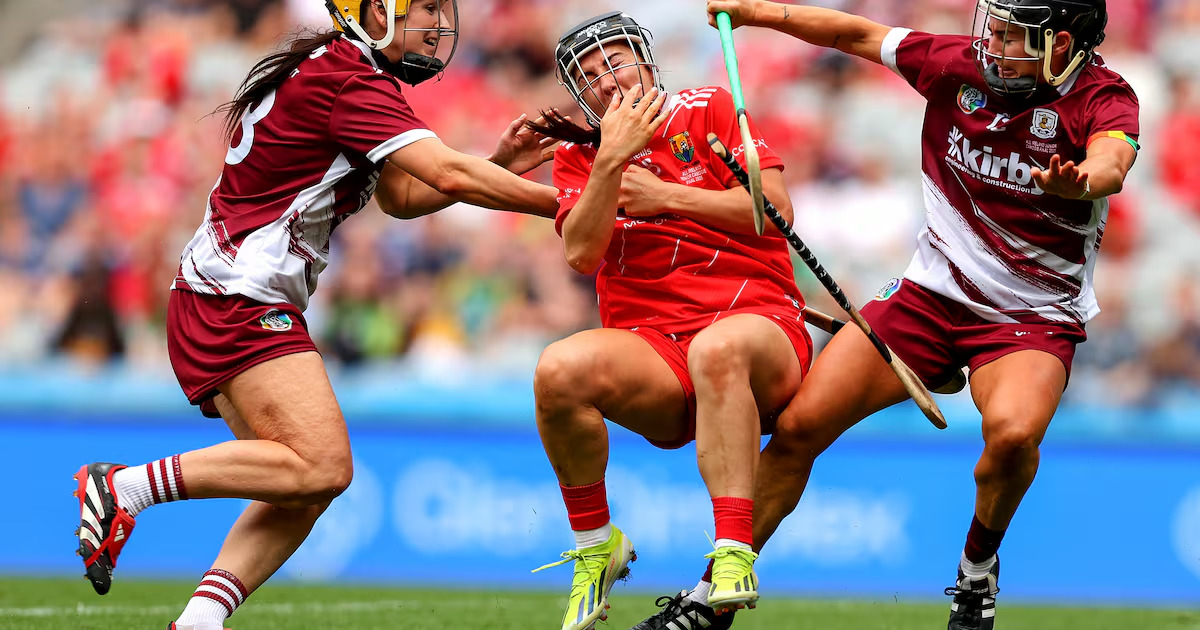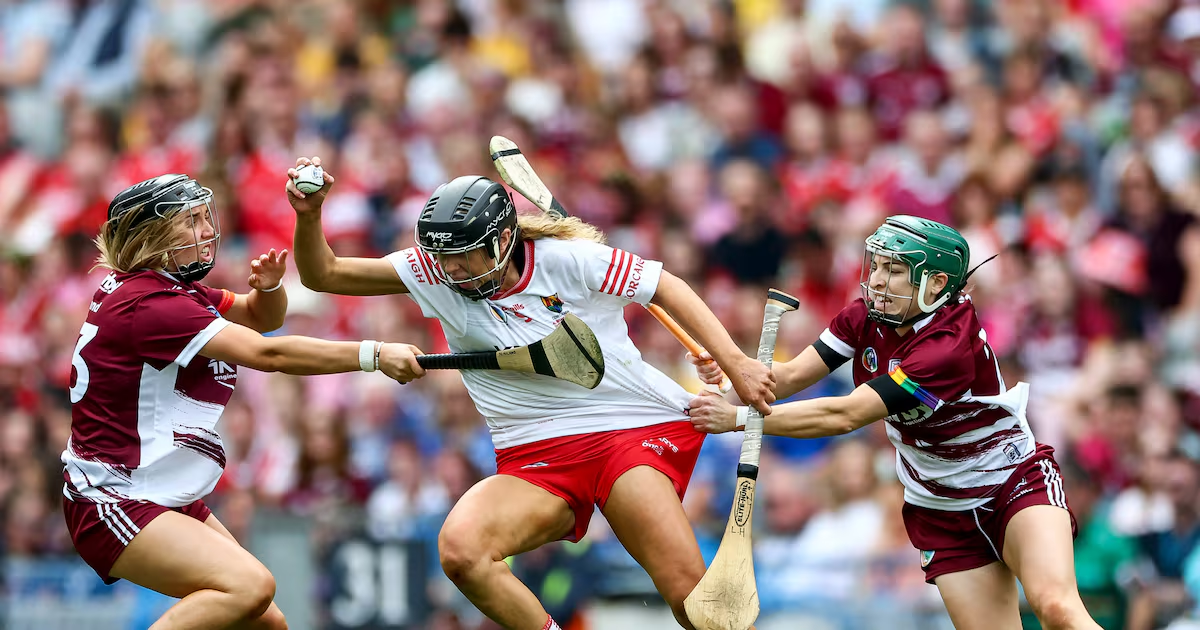
I spent an idyllic few days with friends on Clare Island in May of 2018. The sun shone, the food was good ... and there was a Galway/Mayo Connacht championship game in Castlebar to catch on the way home too. Ordinarily none of my travelling companions would have had much of an interest in heading to MacHale Park, but this was an easy one to sell.In the FBD league game between the two teams in January of that year, Galway won the game by a point, despite finishing with 12 men. They played each other in the league the following month in Salthill, and Paul Conroy, Diarmuid O’Connor and Cillian O’Connor all got sent off in a really spiky affair, with Galway winning again against a Mayo team that had lost the previous two All-Ireland finals.So this was no ordinary Galway/Mayo championship game. One hundred and thirty years of rivalry might not have enticed my football-agnostic friends to attend, but the idea of a dust-up or two proved irresistible, and they were not alone. There was a massive crowd in Castlebar, almost 30,000 people, and we had to split up just to find a seat. Fireworks were guaranteed.And then ... the game started. It was a turkey, an all-time flop. Galway won 1-12 to 0-12 courtesy of a Johnny Heaney goal in injury-time, but it was one of the dullest games ever played. There was another red card after 20 minutes, for Diarmuid O’Connor again, but rather than sparking a fiery contest, it actually saw both teams retreat even further into caution. Both teams had obviously prioritised discipline, and one slip ended up deciding a really terrible game. It was so bad, I often return to it when I think of what the Football Review Committee has done for the game in the last couple of years.One of the friends I dragged along to Castlebar is a big boxing fan, so was particularly susceptible to the “these two straight-up don’t like each other” narrative, an often unreliable metric.We’d heard the same in the run-up to last Sunday’s All-Ireland senior camogie final between Galway and Cork, but we needn’t have worried. If both teams had pre-game discussions about maintaining discipline, then those calls were emphatically ignored. The first quarter in particular was full-blooded to the point of recklessness.Watching Niamh Mallon and Laura Hayes whaling away at each other in that opening period of the game was wild. They threw themselves into absolutely everything – and that bravery prematurely ended Mallon’s game, as she had to leave the field after 18 minutes, injured trying to execute a full-length diving tackle.Galway’s Carrie Dolan comes up against Izzy O'Regan and Méabh Murphy of Cork during the All-Ireland senior camogie final. Photograph: Grace Halton/Inpho Hayes thrived in the physical exchanges, while Galway’s other midfielder Carrie Dolan was lucky to still be on the pitch after two challenges that were on the edge of legality. The tackling calmed down after the first quarter, but the physicality never dipped.It’s a long way from the free-taking contests that a succession of recent camogie finals had devolved into. Along with the country’s women’s footballers, camogie players have been crying out for increased physicality in the game. Having been granted extra leeway by dint of rule changes in both codes, players have embraced it, and camogie has definitively entered its “let it flow” era, to borrow a Premier League phrase.There’s probably a happy medium between letting the game flow, and not punishing obvious fouls, but that is not a thought experiment that too many hurling folk have bothered themselves with over the years. If players repeatedly foul throughout a game, then the blame eventually transfers on to the referee for continually blowing their whistle, rather than asking for more discipline on the part of the players, an insane turn of events that we nevertheless see repeated ad nauseam.Either way, the third instalment of the Galway/Cork rivalry on All-Ireland final day delivered in spades, much as it did last year when it was by a distance the best senior final of the four played on consecutive weekends. The intense interest in the rivalry was demonstrated by the crowd of more than 33,000, which not alone exceeded the crowd for the football final, but which set an all-time record for a standalone camogie final.[ Camogie stars rise to the All-Ireland occasion – both players and punditsOpens in new window ]When you consider the distance both counties’ fans had to travel, and the extent to which both counties were fighting on different fronts in men’s and women’s Gaelic sports this year, it’s a hell of an achievement. It also speaks to a proper, organically-created “camogie crowd”, an opinion backed up by the 10,000 people who attended the semi-final double-header in Thurles two weeks ago, which in ways is just as impressive.Something Vikki Wall said to me after the football final stayed with me as I heard Brian Molloy last week urging those people who were so vocal on the skorts issue last summer to come out and put their bums on seats for women’s sport. As Vikki intimated, people don’t want to be shamed into attending a sporting event, and in the final analysis, it’s not a strategy with legs. “Go, because you’ll feel like you missed out if you don’t”, is a far more positive and effective message than telling people they should go to games out of a sense of duty.That truth was borne out in Sunday’s final attendance. Here are two teams that produce the goods. That’s all the encouragement people need.
Ciarán Murphy: Plenty of tackling sees camogie enter the ‘let it flow’ era
Sunday’s All-Ireland senior final between Galway and Cork drew record crowds and delivered in spades
932 words~4 min read