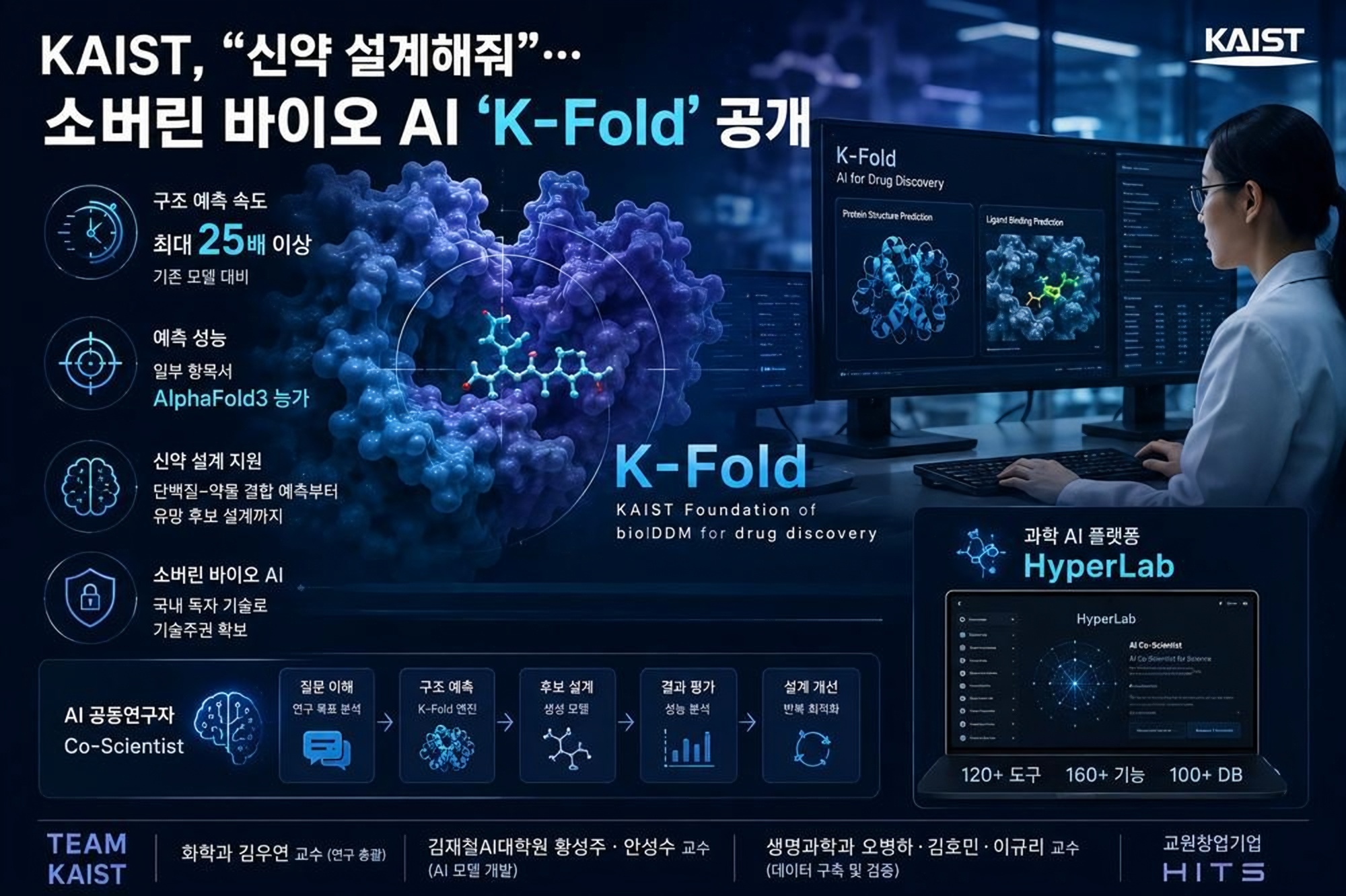
KAIST said Friday it developed K-Fold, a biomolecular AI model that predicts protein structures and drug binding to speed new drug development with homegrown technology. The KAIST-led Team KAIST built it under a Ministry of Science and ICT project for field-specific AI foundation models. KAIST President Bae Chung-sik said the work highlights sovereign AI and national competitiveness. The team said K-Fold can also model interactions with proteins, DNA and RNA, and runs up to 25 times faster than comparable models.
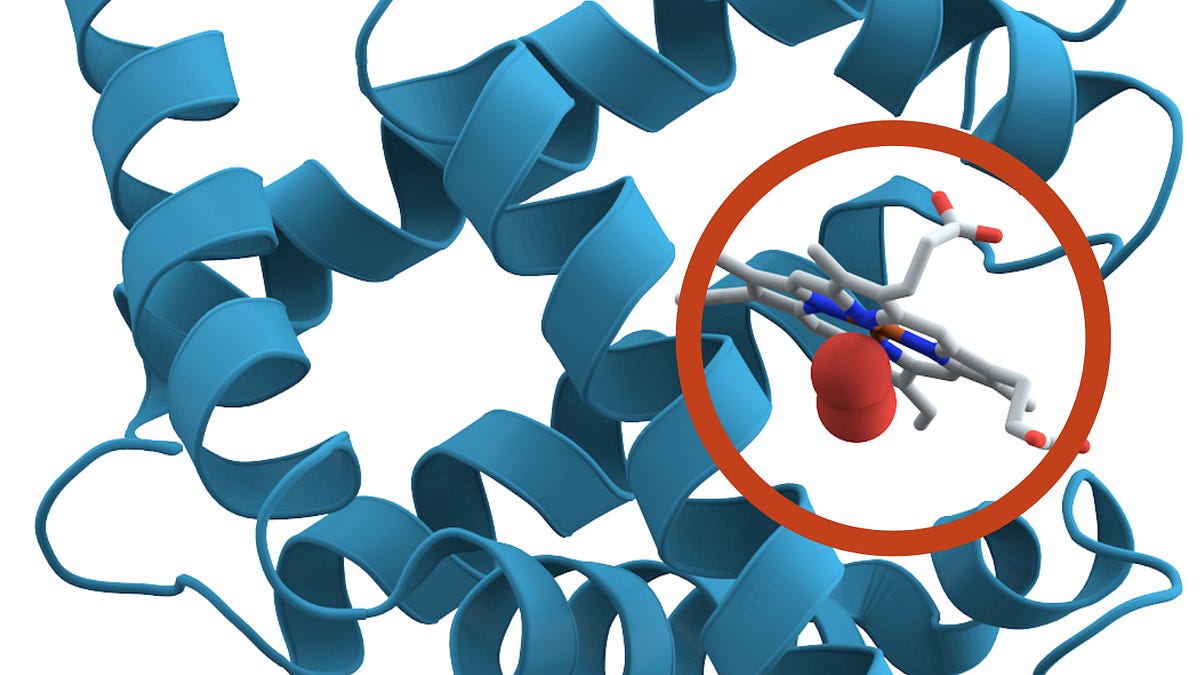
A promotional image of Korea Advanced Institute of Science and Technology's (KAIST) new biomolecular AI model "K-Fold" / Courtesy of KAIST
Researchers at the Korea Advanced Institute of Science and Technology (KAIST) said Friday they have developed a biomolecular artificial intelligence (AI) model, called K-Fold, that predicts protein structures and how drug candidates bind to them, with the aim of speeding up new drug development using homegrown technology.
The model was built by a KAIST-led group called Team KAIST as part of a project run by Korea's Ministry of Science and ICT to develop AI foundation models specialized by field. KAIST President Bae Chung-sik said the project reflects the importance of "sovereign AI" — a country's ability to develop and control its own core technology — for national competitiveness in the AI era.