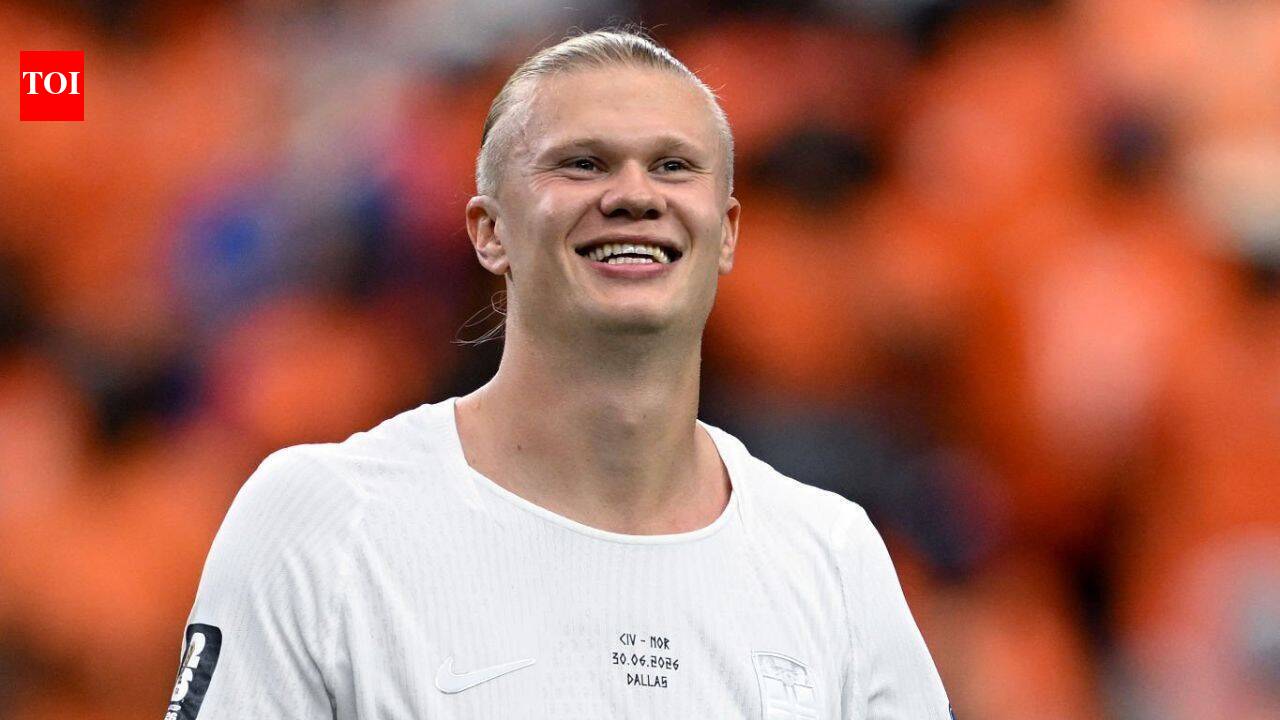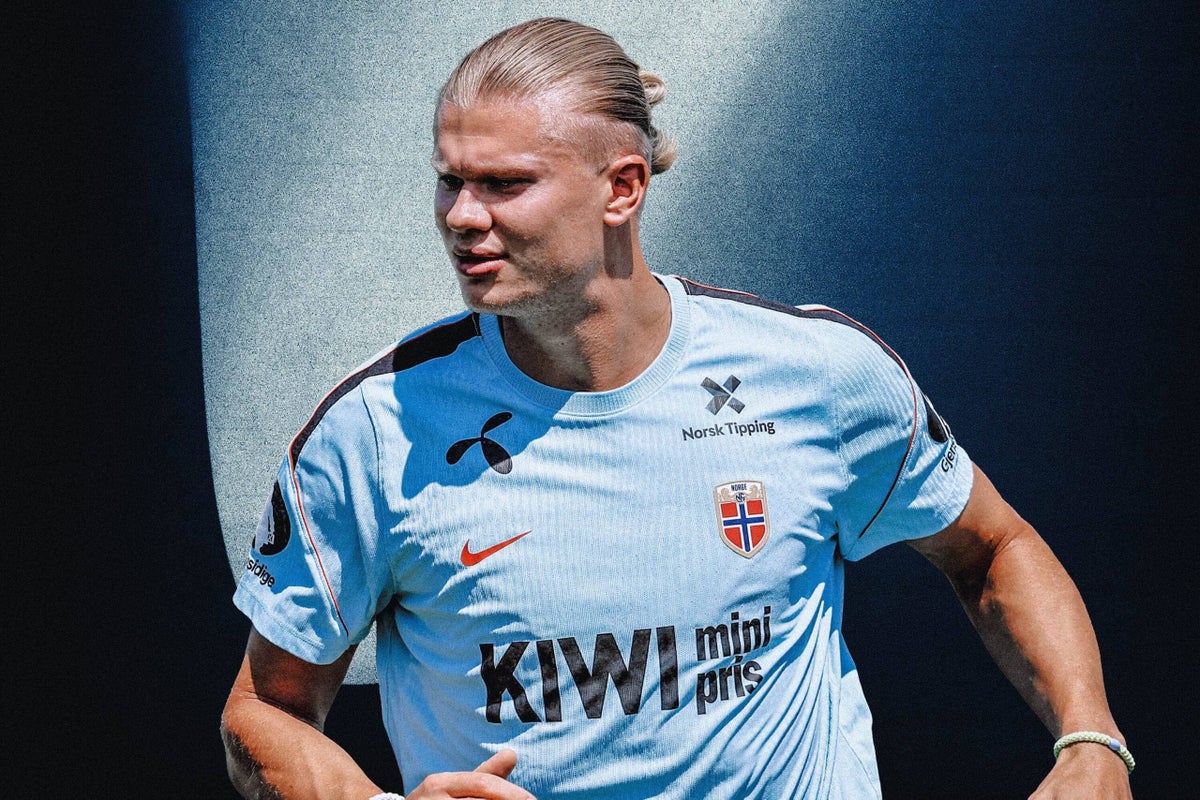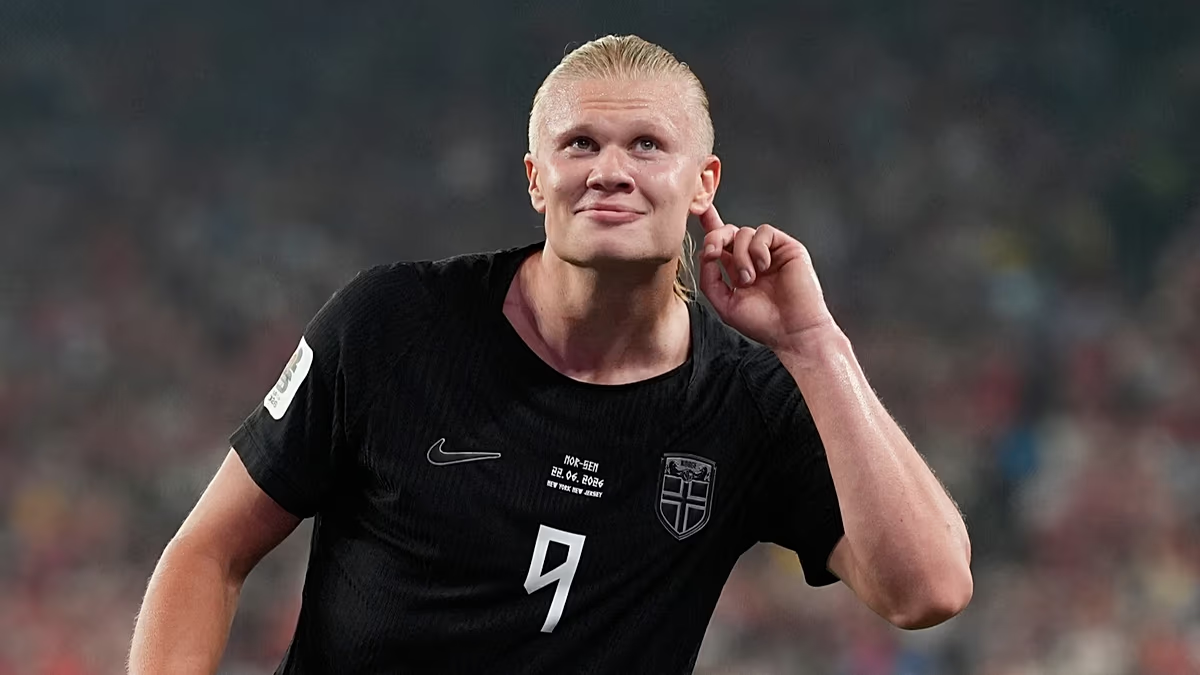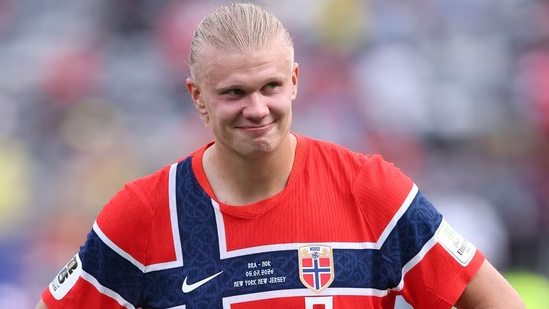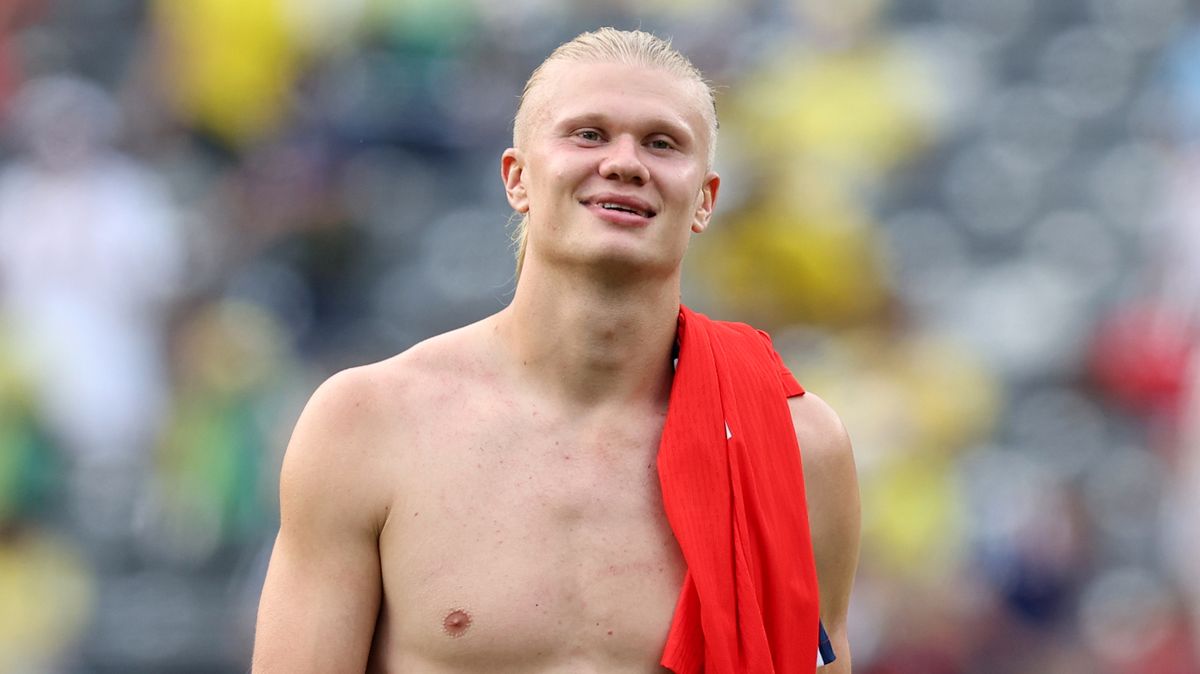
It is a summer evening in Sicily, at a glamorous private party one week after the recent World Cup. Jennifer Lopez is just finishing her set as Erling Haaland turns to the camera, his face filling the screen.Usually, when his face is this close to the lens, the Norwegian is bellowing in celebration, hands shaking the tripod. Here, though still shouting to be heard over Lopez, Haaland is displaying more of a vulnerable side.“As an introvert, I’m a little overstimulated,” he yells. “But it’s still nice. I’m still happy.”Over the past year, despite that introversion, football’s top striker has invited the world into his life through a succession of vlogs on YouTube — a transformative period in which, alongside Kylian Mbappe, he was the star of the 2026 World Cup in North America.There, a new audience discovered his trademark celebration — he scored seven goals in five appearances — eyes closed, arms out, sitting in the lotus pose. Meditation is just one aspect of Haaland’s exhaustive routine. Mentality is key to his success.Haaland celebrates after scoring against Iraq at the World Cup (Buda Mendes/Getty Images)“If you tell yourself you’re tired, you’re going to be tired,” he says in another video, exercising on a crosstrainer in a hypoxic chamber. “But if you tell yourself you’re not that tired, you’re not that tired. It’s simple. Our bodies can handle so much more than we think. It’s all psychological. A lot is in the mind.”And so what is in that mind of his — powering the routine habits that, as a collective, form the remarkable? The Athletic spoke to several of Haaland’s former coaches, some speaking anonymously so they could discuss his development candidly, and psychologists to find out.Haaland spies that Manchester City’s gym is empty. “That’s good,” he says.Introverts are not unusual in elite sport — NBA star Kawhi Leonard and tennis player Iga Swiatek are two high-profile examples — but they are unexpected, especially given the alpha mentality nominally associated with the Premier League’s most prolific goalscorer.“There’s a stereotype of the striker; this George Best-type character who’s outgoing and social and has that swagger,” says Marc Sagal, a sports psychologist who has worked with City, Liverpool and the England men’s football team.“That’s true some of the time, but introversion is more common than we might think among elite athletes, and certainly among footballers. One of the things that pulls players away from a certain level of professionalism is socialisation, right? The desire to be out with people. But great footballers are made by honing their craft, and there’s a certain amount of discipline that it takes to be able to do that.”This is not to say Haaland only likes to be alone — he is a key social member of small groups, with his friendship with international team-mate Sander Berge a major dimension of this summer’s vlogs.(Xu Zijian/Xinhua via Getty Images)“He was never an introvert in the group, but maybe in a new environment,” says Alf Ingve Berntsen, who coached Haaland from the age of eight to 16. “But remember, Bryne (the town of 13,000 people in southern Norway where Haaland grew up) is a small place. When you’ve been training, you’re seeing the same kids you see at school. It’s just familiar faces.”“He was much more comfortable with a smaller group of friends than a bigger one,” adds another former coach. “So he’d never come in and be the big alpha. But it probably also has to do with how he gets his energy — he now seems to have learned to be in the limelight, because he has to, but his nature is not to be the centre of attention.”For Sagal, introversion and extroversion do not exist in separate dimensions; rather, he thinks of the two as different energies which can be present in the same individual.Haaland’s behaviour at the World Cup is a perfect example, flitting from highly sociable moments, such as dragging his Norway team-mates to a Dallas store to buy cowboy hats — “They complain when I order this, but when I score the goals, then they zip it up” — to quieter moments of introspection.“Football is a very sociable life,” says Sagal. “You’re around team-mates, coaches, and travelling all the time. It can be difficult. But the advantage of introversion is that you do not need to rely on others to refuel, there’s an element that you retain control of your own restoration — especially at the level Haaland is at.”That recovery is visible throughout Haaland’s life. His videos are a journey through stretches, supplements, raw milk and infrared lights. Kyle Walker, a former team-mate at City, joked on his own podcast that Haaland was “high maintenance”.“Because I play so many games, I need to do the stretching,” Haaland says in one video of his routine, performed alone in City’s gym after training. “I don’t have to. But I know my body — that I should do it. You don’t have to do it, you don’t have to eat healthy, I could eat unhealthy every day if I want to, but that doesn’t mean I will.
Inside the freshly-shaved head of Erling Haaland: ‘His strength is not seeing everything in black or white’
The Athletic spoke to psychologists and some of Haaland's former coaches to discover what powers the mind of a remarkable striker
2,254 words~10 min read