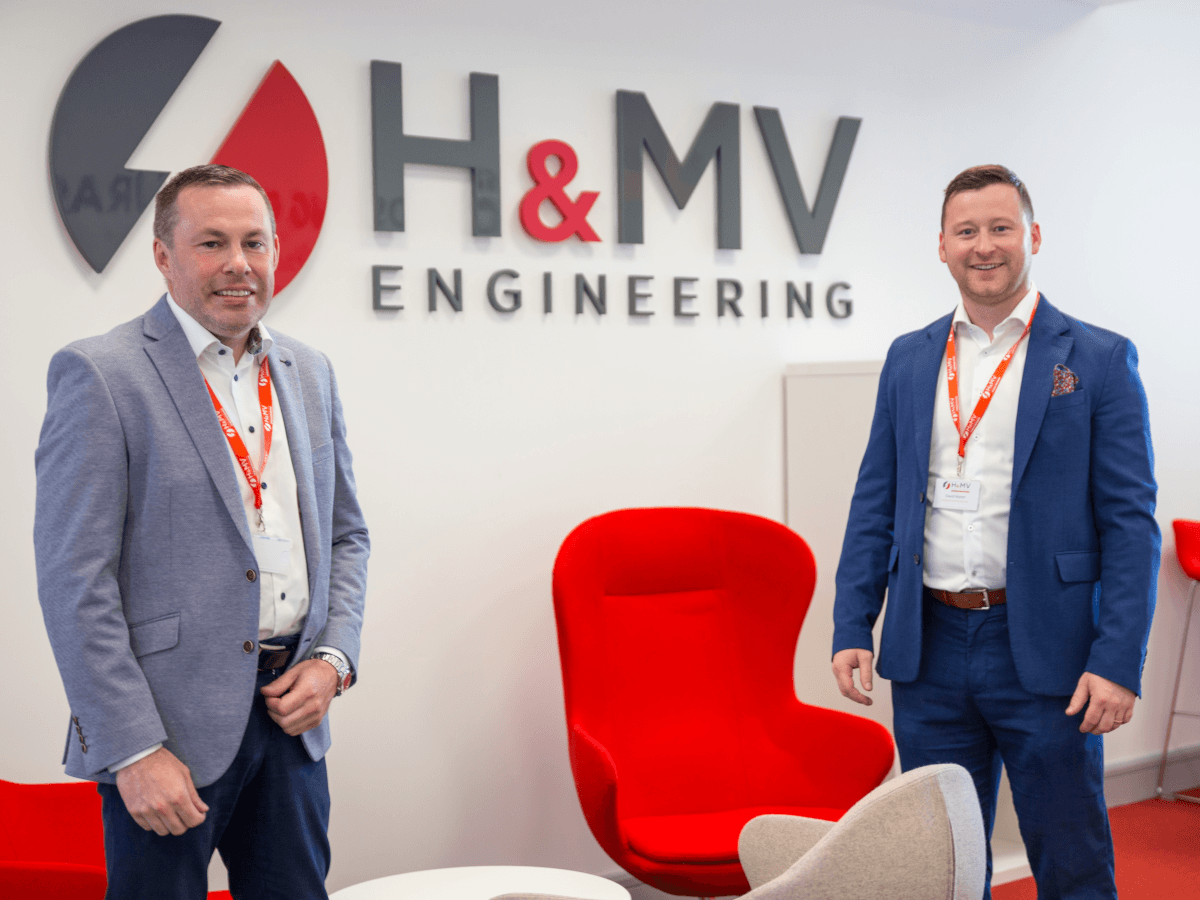
On a single day this month unconnected deals valued two relatively low-key Irish companies at €2.3 billion.Private equity players Exponent, Apollo, Pantheon and SQ Capital invested €750 million in Limerick-based high voltage equipment specialist, H&MV, valuing it at €1.4 billion. Meanwhile, Irish building materials group Kingspan said it would pay up to €900 million for electrical switch maker BMC Manufacturing.Both are part of a growing cohort of Irish companies supplying the global data centre business which is booming as high-tech giants Meta, Google, chip maker Nvidia and others race to build the infrastructure needed for artificial intelligence (AI).These multinationals and their backers could pump up to $3 trillion into AI development in the next three years, says Tom Parlon, chairman of the Irish Data Centre Suppliers’ Alliance, a group established to represent the industry here and abroad.While he stresses that the Republic itself is “right now attracting none of that investment”, he points out that his members are working on big digital infrastructure projects in Britain, Europe, the US and Middle East.Irish firms do not just design and build the centres, they fit them out with everything from switches to sprinkler systems. Mostly they began working for the industry here and then “followed the clients” as demand moved to other jurisdictions when the Government hit the pause button on such developments.Some of the businesses involved here are well-known, including Kingspan and civil engineering group, Mercury. But many others, including BMC and H&MV, tend to fly under the public’s radar because they have modest roots or work in specialised fields.Typically, data centres account for substantial and growing chunks of these businesses’ output, but many also work for other industries.C&W O’Brien Architects, whose projects include the world’s tallest data centre in Amsterdam, continues to design homes and hotels for its Irish clients, according to its managing director Arthur O’Brien.Digital infrastructure now accounts for more than 30 per cent of its revenue. “Data centres have been growing, and growing fast, particularly over the last six to seven years,” he says. Irish companies built close ties with data centre developers here and then moved abroad with those clients as demand for centres emerged elsewhere. Photograph: Naoise Culhane The Dublin firm first got involved when these facilities were small boxes tucked away in industrial estates. Then they got bigger, going to 100 mega watts (MW) – data centres are measured according to electricity consumption as this determines computing power – 400MW and then 1,000MW. By then controversy had stalled building in Ireland so the firm was working abroad. C&W O’Brien Architects now has offices in Europe and the Middle East, and it is handling several US projects.We have a genuinely world-class supply chain ecosystem here, and it’s something we need to better recognise when we talk about what benefits data centres bring to Ireland— Tom ParlonThat reflects much of the industry’s experience. Liam Linehan, business development director of STS, which provides electrical, engineering and fit-out to data centres across Europe and the Middle East, explains that the mostly US-based multinationals that hired Irish companies to build data centres here took those contractors with them as they moved.“You follow the client wherever they are going,” he says. “When they went to Europe, we got the opportunity to tender for projects in Europe; when they went to the Middle East, we got the opportunity to tender for projects in the Middle East.”Linehan notes that the industry is still growing rapidly across Europe “particularly Germany and the Nordics”. There is little sign of it slowing as “more and more” developers begin projects.O’Brien calculates that growth could continue for another five years, even stretch to 10, although he concedes that it is harder to tell what will happen the further he looks into the future.While Parlon’s members work on projects virtually everywhere in Europe, he says there is little evidence of that growth in their home country. “We have a genuinely world-class supply chain ecosystem here, and it’s something we need to better recognise when we talk about what benefits data centres bring to Ireland,” he argues.[ Kingspan sees ‘strong’ order intake after tough start to year for constructionOpens in new window ]For his alliance, a debate focused solely on data centres’ sustainability and electricity demand misses this point. A squeeze on power supplies sparked a row over data centre demand. Consequently, plans for new facilities here dried up. Energy industry watchdog the Commission for the Regulation of Utilities (CRU) has since published new rules demanding that future centres supply electricity to the grid when it is needed and draw 80 per cent of power from renewables.O’Brien says this has resulted in “some small green shoots” of recovery. His firm is now working on potential new projects here that include provisions to meet commission’s requirements.Linehan brands problems in the Irish electricity system “embarrassing”. He maintains that the Republic will need to work at convincing high-tech companies and data centre developers to return. But opposition to data centres is not limited to here. Similar rows have broken out in Europe while public fears about their likely impact on electricity supplies is an issue in early rounds of the US midterms. So far, voters seem to favour “anti” candidates.Could this threaten growth? O’Brien argues that opposition acts as a useful brake in any context, so the Irish moratorium could end up delivering longer-term benefits. He also believes that other jurisdictions could adopt a similar approach to the CRU.That would mean data centres could become eight- to 10-year projects. “But the data centre industry can handle that,” he says, while agreeing that it is still a long time to tie up capital.The capital committed to the industry could itself pose a risk, as large proportions of that money is borrowed. Some observers have compared the AI boom to a gold rush, or the first wave of railroad investment in the 19th century, which ended in a stock market crash.But industry figures argue that developers take most of the risk while paying Irish suppliers upfront for the products and services they provide, shielding them from the worst should any bubbles burst. As one puts it: “The best way to make money in a gold rush is to sell shovels”.Big namesKingspan’s Advnsys subsidiary earned €1.6 billion revenue from providing cooling and ventilation to data centres globally last year. It was valued at up to €6 billion when the Cavan-based insulation and building materials group weighed a possible flotation of the business, which it later decided against.Its acquisition of low voltage switch manufacturer, BMC Manufacturing, which is poised for a move to the US will allow Advnsys to double the revenues it earns from supplying each project, Kingspan chief executive Gene Murtagh told investors after announcing the deal.Fellow Irish construction materials giant, CRH, supplies everything from water, energy and communications infrastructure, down to asphalt for road surfaces to data centres.CRH spotted the opportunity several years ago and hired specialist salespeople to deal directly with the data companies themselves, according to chief executive Jim Mintern. “We are active right now on around 200 data centres across the US,” he said.Among private companies, Mercury Engineering earned €1.7 billion revenues from its data centre business last year, most of which came from its European operations. The Irish civil engineering group began working on these facilities here when the tech industry began locating them in the Republic.Mercury’s last annual review, published in March, bills it as the “leading player in the European data centre sector”.Sicon Ltd, owner of builder Sisk, lists data as one of the industries that the group serves, both here and elsewhere in Europe. Sisk expects data centres to account for one fifth of revenues this year. Recent figures show the company turned over €2.6 billion in 2025.Another well-known Irish construction name with a significant European presence, Jones Engineering, also flags data centres as a key part of its business. Revenues at the business broke the €1 billion mark earlier this decade, aided by growth in digital infrastructure.AI is driving growth in data centre construction. Photograph: iStock Growth outside IrelandDublin-based C&W O’Brien Architects has opened a London “data centre hub” as revenues from the industry continue growing, according to its managing director, Arthur O’Brien. Data centres now contribute more than 30 per cent of its turnover, a figure poised to reach the “early 40s”, he notes.Along with London, the firm has offices in other locations, including Spanish capital Madrid, Lyons in France and Dubai in the United Arab Emirates. It is working on projects right across Europe and the Middle East.More recently the firm began work on a project in Colorado in the US hopes it will be “starting on nine more in the States and Canada in over the next 12 months”, O’Brien says.AI is driving growth in construction, creating demand for design, O’Brien explains. Employment at the firm is heading for more than 100, with 70 in Dublin, 15 rising to 20 in London, and three to four in the other offices.[ Computing giants ‘pivoting away’ from ‘constrained’ Dublin as data centre hubOpens in new window ]C&W O’Brien began working on data centres when the tech industry first started building them here. Growth has really taken off in the past six to seven years, its managing director says, but that is mostly outside Ireland, as development stalled here earlier in the decade.However, O’Brien says the firm recently began working on a small number of proposed projects destined for the “island of Ireland”.Waterford-headquartered STS worked as an electrical contractor on its first data centre in 2010, says its business development director, Liam Linehan. Since then, it has expanded into mechanical, electrical and piping supplies and the added fit-out, which includes ceilings and internal walls, he explains.Linehan calculates that digital projects across Europe and the Middle East contributed 40 per cent to last year’s €370 million revenues. STS expects to turn over €400 million this year.Its business development director believes data centres’ share of revenues could rise to 55 to 60 per cent as the digital industry continues growing, while expansion in pharmaceuticals, its other key area of activity, slows. [ Cliff Taylor: Ireland is caught in a data centre trap and there’s no easy way outOpens in new window ]Owned by €4 billion German giant, Dussmann, whose operations span technical, engineering and other services, STS has three Irish offices, along with bases in a list of European countries that includes Britain, Germany, France, Sweden, Spain, as well as Bahrain in the Middle East. The company employs 1,750 people.STS has considered a move to the US, according to Linehan. “But we would need to do a lot of restructuring in the business to do it, or buy a company over there,” he cautions. STS grew its data centre business as the sector swelled here. Clients first sought electrical contracting, then asked if the firm could provide mechanical, electrical and piping and then fit-out, allowing it to expand into each area. When those customers began moving abroad, they offered the Irish business the opportunity to bid for work in overseas jurisdictions.DealsIn January, US multinational Jabil completed its €630 million acquisition of Stamullen, Co Meath-based Hanley Energy, a deal struck last year.Hanley designs and sells equipment that manages electricity supplies to data centres from the grid to the IT systems themselves. The company employs 850 people and operates across 34 regions.Jabil is a New York-listed multinational whose businesses include data centre infrastructure. It earned almost $30 billion revenue last year.In April, US-based APi bought Mullingar Co Westmeath-headquartered Writech, which supplies fire sprinklers, for an undisclosed figure said to be in the hundreds of millions of euro. Writech lists data centres among the industries it serves.This month Dublin-listed Kingspan agreed to pay €850 million, potentially rising to €900 million, for BMC, a firm that makes low-voltage switches and power distribution equipment to data centres.[ Who are BMC: the low profile Meath business that landed a €900m pay day?Opens in new window ]Founded in Co Meath 35 years ago by chairman Brendan Meehan, BMC earned profits of €50,000 in 2021 and employed 60 people. Last year it earned €22.5 million while it now employs 212 staff. It plans to add a further 500 to that and expand into the US.Private equity firms Exponent, Apollo, Pantheon and SQ Capital invested €750 million in high-voltage equipment specialist, H&MV, valuing it at €1.4 billion. That was a follow-on investment in the Irish business, which will open a US office next month.
Data centre boom turns many niche specialist businesses into multimillion-euro industry players
Irish companies began working for the industry here and followed the clients as demand moved abroad
2,078 words~9 min read