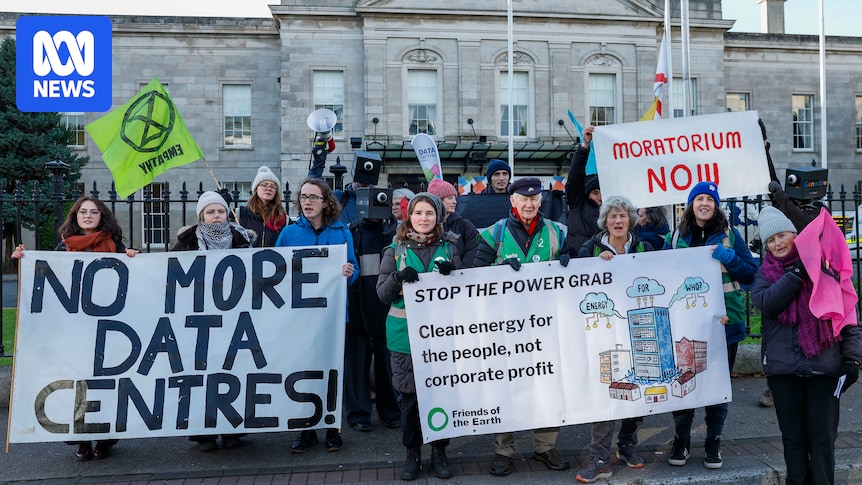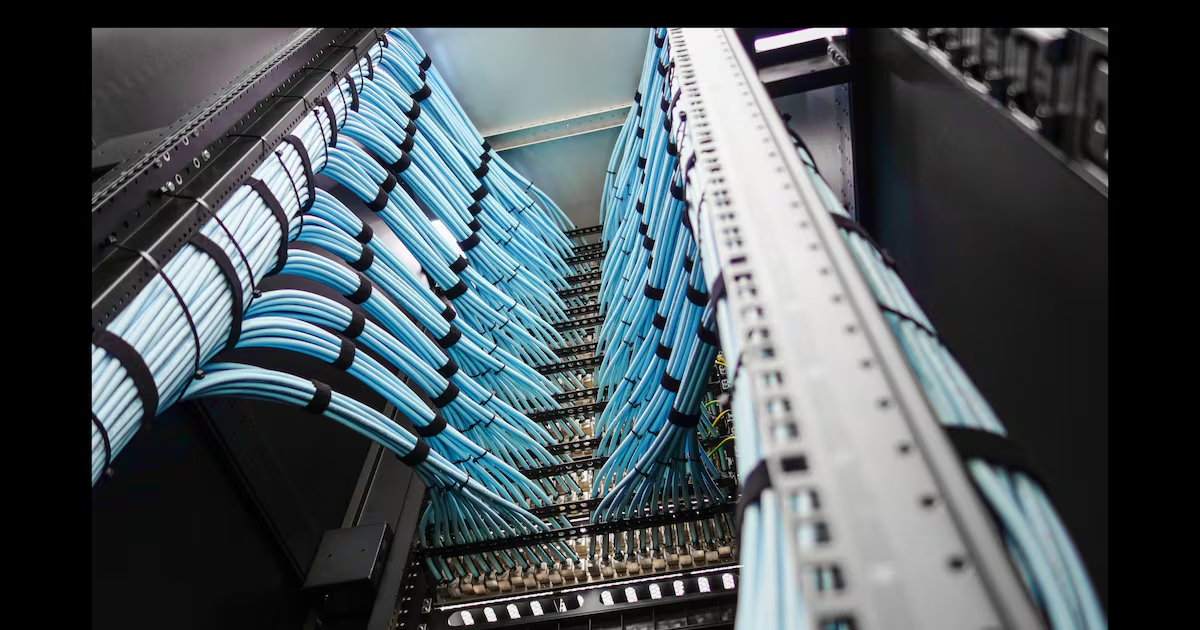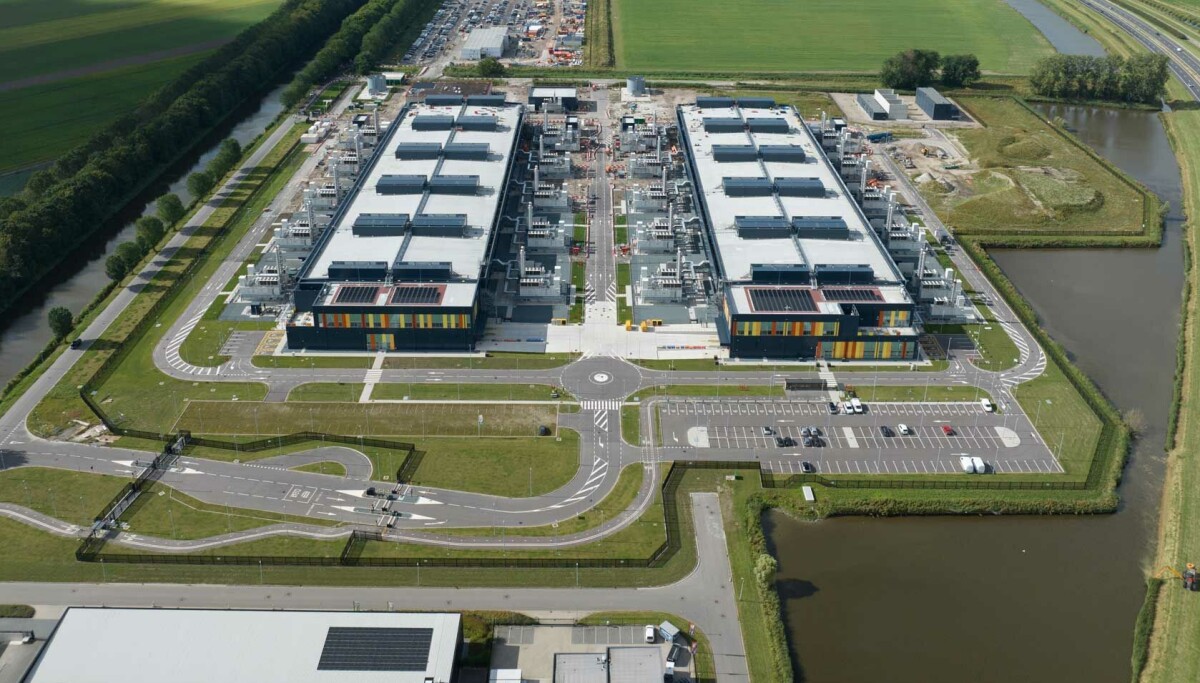
While the world has been obsessing about artificial intelligence (AI) and the massive amounts of money being ploughed into the data centres needed to sustain it, the phenomenon has been quietly transforming Ireland’s construction sector.Dublin-based John Paul Construction – traditionally a builder of commercial and residential properties – has added data-centre specialist to its business model. “In 2020, the organisation made a conscious decision to pursue a diversification strategy,” says chief executive Liam Kenny, “with data centres being identified as one of the key growth drivers.” Approximately 40 per cent of its revenue is now concentrated in the sector, with the vast bulk of it coming from European projects.“Right now, we’re delivering a number of large-scale projects in the UK and Germany and are keeping an eye on other high-potential markets,” says Kenny. “Our hope is that the Irish data-centre market will also regain sustainable momentum in the coming years.” “Irish contracting firms were early on this,” says Dermot O’Leary, chief economist with Goodbody. “Some of these firms have built up the skills and relationships needed to construct these data centres and are following their customers around Europe – and beyond in some cases.“There is a wider ecosystem around it. It’s a new export for Ireland, if you like.”Other large construction firms here, like Dublin-based Sisk and the Limerick-headquartered Kirby, have been helping to build hyperscale data centres across northern Europe for over 10 years. Sisk has worked on projects in Sweden, Denmark and the Netherlands. Likewise, Kirby lists several contracts in the Nordics.Smaller Irish suppliers have been pulled along in the wake of the investment flowing down from the “hyperscalers”. Meath-based Clad Pad has been in existence for just over two years, but is eyeing a turnover this year of €10 million off the back of data centre build-outs. It provides cladding protection and says its product is the only one of its kind.“There is no specific cladding protection on the market. Data centres were using off-the-shelf products that were not designed for what they were using them for,” says chief executive Eythan Kellett.Like the big contractors, Clad Pad has seen most of its business come from projects elsewhere in Europe where data centres tend to be clustered together in a way that is not common in Ireland.Its chief operating officer, Terence McGivern, says that while the company’s focus has been largely on the Continent, this is changing.“We’re in discussions with two large data centres in Dublin; it’s definitely starting to liven up again,” he says. “We’ve had more Irish contractors contacting us about projects that are based in Ireland. “It certainly feels like there’s a resurgence in the sector. It’s very recent, just over the last six months.”Clad Pad, like other suppliers and contractors, is closely watching what comes next in Ireland. From 2021 until early this year, an effective moratorium had been in place on new data-centre connections to the national grid. Their rapid expansion in the years up to that had led to a massive increase in the demand for electricity – and worries about how sustainable a continued build-out would be.The United Nations recently published a report highlighting Ireland’s experience with data centres as a “cautionary tale” about runaway energy consumption.Data centres place a significant strain on Ireland's electricity grid. File Photograph: Naoise Culhane But it appears the Government is again pushing data centres as a good thing for the State. Minister for Climate, Energy and the Environment, Darragh O’Brien recently likened the sector here to Germany’s car-manufacturing industry.While the equity and debt markets have gorged on the AI bonanza, the Irish banks have so far sat largely on the sidelines. The big two – AIB and Bank of Ireland – are content to grow their margins by paying relatively little on deposits while profiting from their dominance in the residential mortgage market.But according to one investor in an Irish AI play, the mainstream banks will likely be drawn in.“I think it is inevitable that all credit provisioners will end up, one way or another, involved in this,” says Tim Grant, executive chairman of Dublin’s TensorX. Grant heads up London-based Deus X Capital and the Irish company sits within its portfolio of companies. TensorX buys and runs AI hardware and data-centre capacity across the European Union.“The classic arc or evolution of a credit market for something new like this is playing out: the banks never go there first but they’ll get there,” says Grant. “This will become a case where I can go to a bricks-and-mortar lender in a few years’ time and get the finance I need.”TensorX is currently using data centres in Dublin for its “sovereign AI” infrastructure. The company says this allows clients to operate powerful AI models without their data leaving the EU and in “complete isolation” from the US hyperscalers.According to Grant, this is a key concern of big European corporations who worry about complying with data-retention regulations.He notes, however, that as the company grows, it will likely have to look elsewhere for data-centre capacity given the “headwinds” the sector faces here due to the strain it places on Ireland’s electricity grid.“If you’re at the beginning of a journey, that power element is less important,” he says. “But as we grow, we are going to have to deploy GPUs (processor chips) elsewhere in the EU.”As well as having a very real impact on sectors like construction, the global AI boom has begun to interfere with Ireland’s economic numbers.In its latest annual progress report, the Department of Finance drew attention to how investment in artificial intelligence was showing up in the figures.In a note entitled “Rise of the (modified) machines” – a clear nod to the Terminator movie franchise in which artificial intelligence becomes self-aware and ultimately destroys human civilisation – officials outlined how a key metric was being distorted. So big was the import of microprocessors and servers into Ireland in the last three months of 2025, the Department said it had accounted for a quarter of the increase in modified domestic demand (MDD).The hardware that came in was worth €1.9 billion. Just as important was what went out. Over the course of the year, these sort of AI-related exports totalled €1.45 billion.It all adds another wrinkle to interpreting Ireland’s famously opaque national accounts. MDD, until recently, had been regarded as a fairly good way of gauging the health of Ireland’s domestic economy – as it stripped out volatile things like movement of intellectual property and aircraft leasing. But so concentrated is this specialised equipment coming in from the likes of Taiwan and Vietnam, users should be cautious in viewing the headline MDD figure as a good reflection of what is going on in the “real” economy, the note said.[ Microsoft signs $130bn in data centre leases as it races to meet AI demandOpens in new window ]Since then, the trend has become even more pronounced. Imports of this vital data-centre kit grew to €2.2 billion in the first quarter of this year.The Central Bank, too, has been keeping an eye on the AI investment play here. In its Financial Stability Review, published in May, it noted that global investment was expanding rapidly and projected to reach $800 billion in 2028. While much of the money ploughed in so far had come from profits, it said, further money would likely have to come from a combination of public and private credit.This, the bank suggested, would increase “contagion risks to credit supply and investment”.There are signs, says Dermot O’Leary, that the big US banks have started to benefit from the rush into AI. “It was only very recently that the hyperscalers started to resort to borrowing and that has come through the public markets,” he says.“You look at the most recent sets of results from the banks in the US, deal making is back and tech and AI is a big part of that. The bigger investment banks are certainly, from a public markets perspective through debt and equity, benefiting from this whole theme”.On the face of it, the average Irish household has little direct skin in the AI and data-centre game. Exposure to the so-called Magnificent Seven tech stocks – the ‘hyperscalers’ like Google, Amazon and Microsoft who are plunging trillions of dollars into data centres and AI applications – is mainly limited to pension funds. But the exposure is much higher with Irish-domiciled equity funds. Due to the Irish taxation regime, Dublin has become the go-to place for investors looking to maximise their return on US equities. This is done by putting their money into Exchange Traded Funds (ETFs).The Wall Street titan JP Morgan recently described Ireland as the “de facto ETF domicile of choice” – as it hosts 70 per cent of European funds. These funds have hoovered up the stock of the tech giants, even as concerns persist about the extent of their bets on AI.Just this week, Google’s parent company, Alphabet, revealed that it was increasing its capital spend on AI. Expenditure this year will be around $200 billion. Between it, Meta, Microsoft and Amazon, the four hyperscalers, are expected to spend $725 billion this year alone.The real-world impact of all this money can be seen in the US political mainstream. In advance of the midterm elections there, politicians on both sides of the aisle have embraced concerns about the pace of the data-centre sector’s expansion.[ Computing giants ‘pivoting away’ from ‘constrained’ Dublin as data centre hubOpens in new window ]Recent polling suggests seven out of 10 Americans would object to a data centre being built in their community, with analysts suggesting there is growing popular backlash against AI in general.Opposition politicians here too have consistently raised worries about the extent of the drain on the electricity grid and have accused the Government of pandering to the US tech giants.So where does the Irish data-centre industry now lie in all this?Tom Parlon, a long-time construction lobbyist and former Progressive Democrat politician, is chairman of the Irish Data Centre Supplier Alliance. “While nobody is arguing for unlimited growth in future data-centre development in Ireland,” he says, “we do need a sector that can deliver sustainable growth and facilitate new projects. “This is crucial to ensure Irish firms can stay close to their customers and remain at the forefront of data-centre delivery worldwide.” There will certainly be demand here from the data-centre operators over the coming years, according to industry observers. The recent heatwaves have raised questions about the sustainability of older data centres located in the southern US and large parts of Europe. Those hotter temperatures have driven up the requirement for additional air conditioning and water cooling. In that context, Ireland and other northern Europe states will be seen as desirable locations. In addition, hyperscalers like to store their data as close to their customers as possible. Keeping the tech companies happy is undoubtedly part of the Government’s agenda, given the tens of thousands of well-paid jobs they have created here. How this increased push for data capacity will be managed against the backdrop of strained electricity supply is hard to discern. [ John FitzGerald: We should halt data centre growth in Ireland unless they use 100% green energyOpens in new window ]The two principals at Clad Pad say they are poised to benefit from any new significant build-out here.“There was a massive boom in Ireland and it seems to be taking off again,” says Eythan Kellett. “It is the Irish contractors that are predominantly building across Europe, which is incredible to see. “You might see them building on one data centre in Ireland but they’re working on five across Europe. The reputation and name that Irish contractors now have within the sector is incredible”.
‘The boom is taking off again’: Irish builders at the heart of Europe’s data-centre growth
Concerns about grid capacity have slowed new projects in the sector but construction firms are taking their new expertise abroad
TL;DRAI
Irish builders John Paul Construction, Sisk and Kirby shifted 40% revenue to hyperscale data-centre projects in Europe via AI boom. EU sovereign AI—data within GDPR-compliant borders—reshapes tech stack decisions and reduces US hyperscaler dependency.
1,949 words~9 min read