Story audio is generated using AI
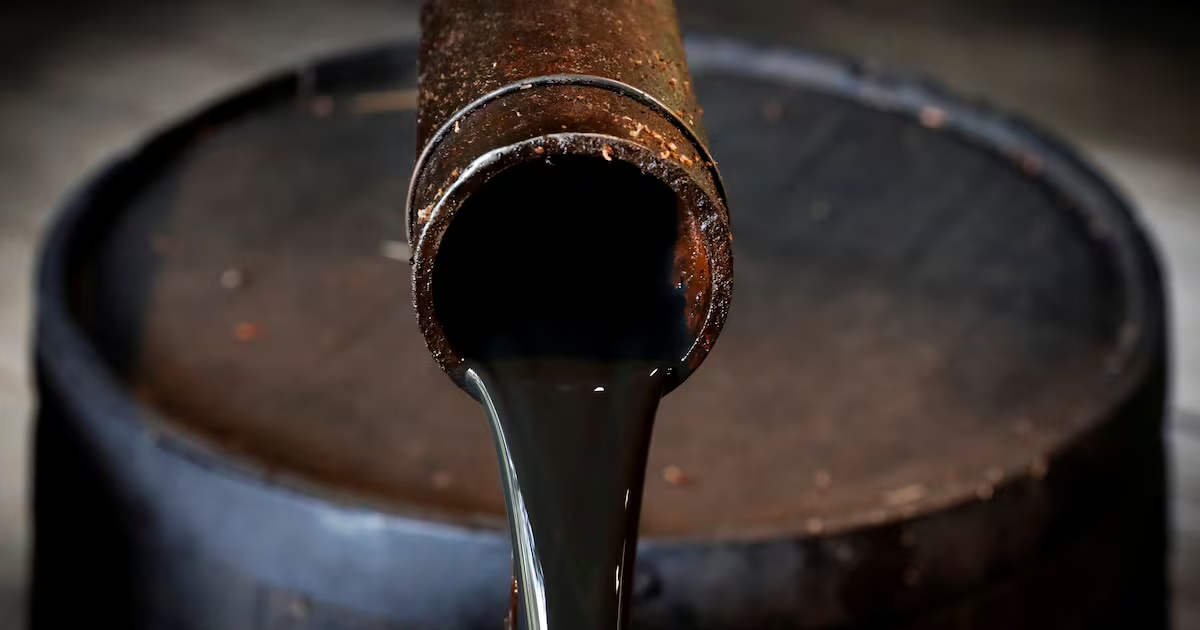
Producer inflation slowed notably as expected in July, as hopes of a resolution to the US-Iran war drove global oil prices lower, translating into a drop in domestic fuel prices, a big input cost at the factory gate.The reprieve could, however, be temporary, as a flare-up in the conflict has kept the oil market volatile, with the cost of South African diesel already rising in August after July’s reduction.Annual producer inflation for final manufactured goods decelerated to 5.7% in July from 7.5%, driven mainly by coke, petroleum, chemical, rubber and plastic products, which recorded a rate of 15.7% and contributed 3.4 percentage points, Stats SA data showed on Thursday.Food products, beverages and tobacco products registered 1.9% and accounted for 0.6 percentage points, while metals, machinery, equipment and computing equipment recorded 3.8%, adding 0.6 percentage points.On a month-on-month basis, the producer price index (PPI) decreased by 1% in July after retreating by 0.1% in June. The main negative contributor was the coke, petroleum, chemical, rubber and plastic products division.Most economists anticipated the slowdown after the retail price of petrol fell by R2.01 a litre in July, while the wholesale price of diesel dropped by R3.59. South Africa adjusts fuel prices monthly, based on changes in international oil prices and the rand/dollar exchange rate as well as other local fuel-related costs and taxes. Local prices lag global movements by about a month. Fuel-related costs have a sizeable weighting in the producer price index.“Despite the cuts in July, fuel prices remain at much higher levels than prior to the [US-Iran] conflict,” economists at Absa said in a note.“Therefore, beyond the direct effects of fuel prices in PPI inflation, we will continue to closely monitor any signs of broadening in price pressures across the different parts and value chains of the manufacturing sector.”Still, the lower inflation rate at the factory gate in July, which mirrored a slowdown in consumer price increases the same month, gives the South African Reserve Bank scope to hold its fire on a second interest rate hike this year at its September policy meeting.The Bank has made clear it will not hesitate to raise its policy rate if it sees evidence of second-round effects from the global oil price shock but left it unchanged at its most recent meeting in July after a 25 basis point increase to 7% in May.The PPI measures annual as well as month-on-month changes in the prices of locally produced commodities, using a sample of producers to compile the indices for final manufactured goods — the headline number — as well as intermediate manufactured goods, electricity and water, mining, and agriculture, forestry and fishing.Annual producer inflation for intermediate manufactured goods was 9.8% in July compared with 12.4% in June, while the index decreased by 1.8% month on month.The annual change in the PPI for electricity and water was 7.5% vs 5.5% in June, and the index was up 5.8% month on month.Producer inflation for the mining segment slowed significantly to 9.9% year on year in July compared with 18.4% in June, and the index decreased by 4.8% month on month.In agriculture, forestry and fishing, the PPI decreased by 4.5% year on year in July after falling by 7.9% in June. Month on month, however, the index increased by 2.4%.Business Day