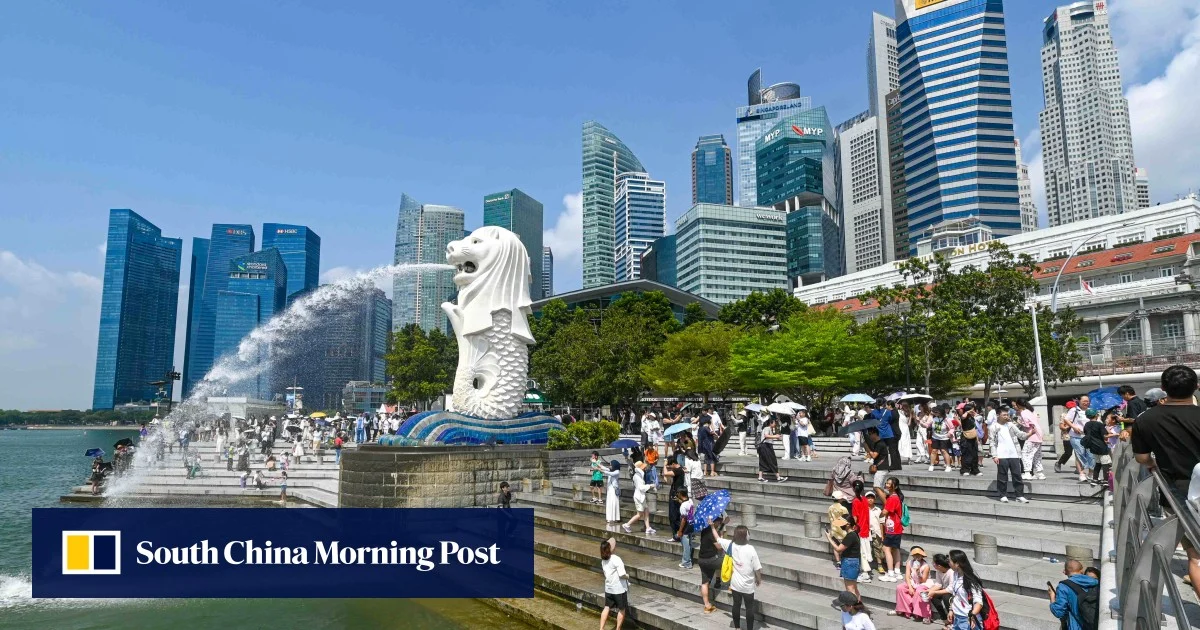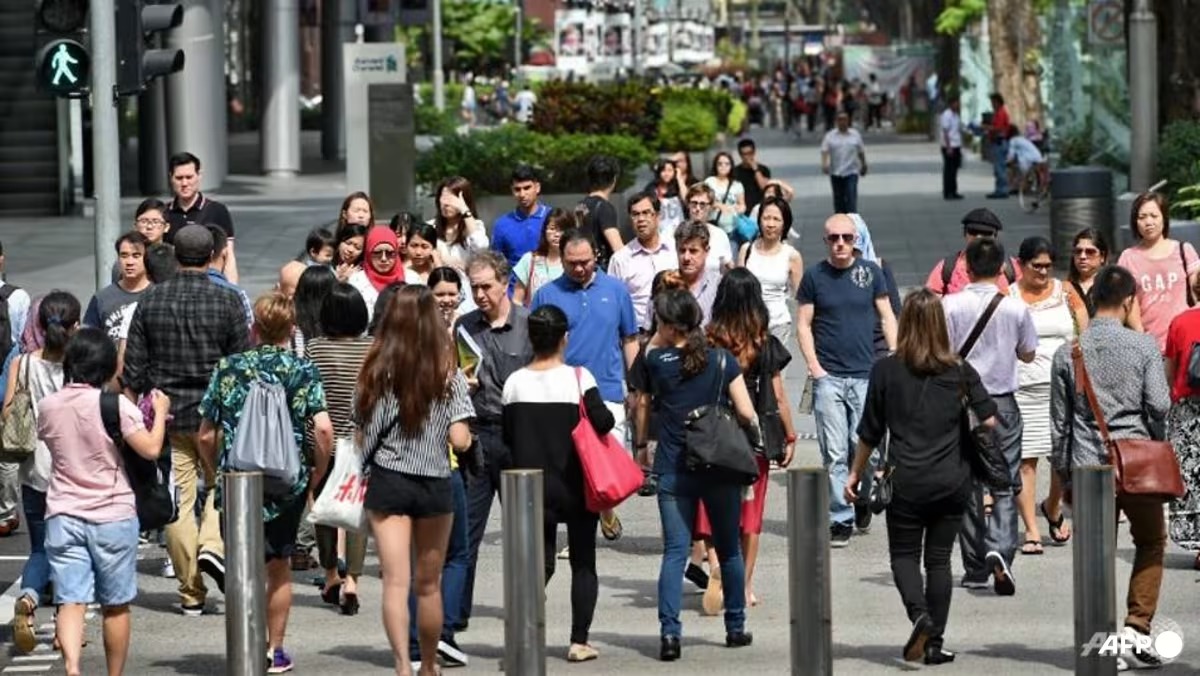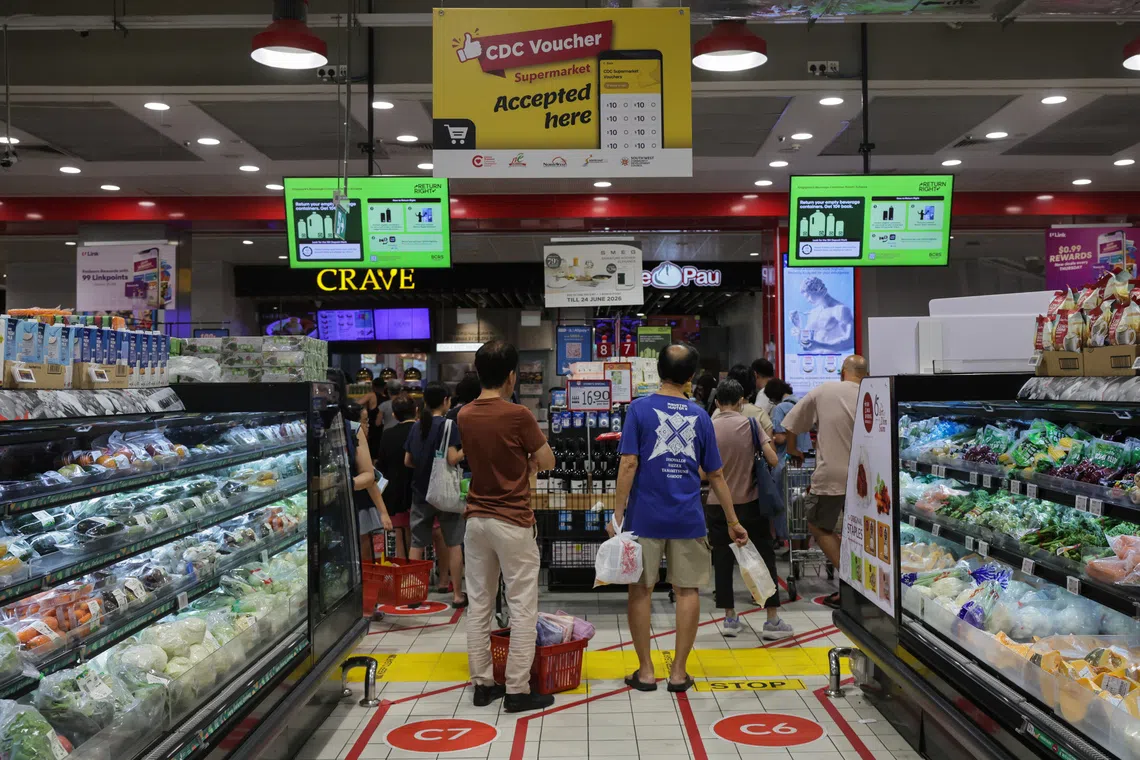
Few economies are as exposed to global price pressures as Singapore. As a small, open and import-dependent economy, it is largely a price taker in global markets. With trade exceeding three times GDP and a high import content in its final demand, global supply shocks are transmitted rapidly and forcefully to local prices, making import costs central to Singapore’s inflation dynamics.
Singapore’s exposure to imported inflation has led to a distinctive monetary policy framework. Rather than targeting an interest rate, the Monetary Authority of Singapore (MAS) uses the exchange rate as its primary policy lever.
The Singapore dollar nominal effective exchange rate, a trade-weighted index of the Singapore dollar against a basket of currencies, operates within a managed basket-band-crawl system. By adjusting the centre and width of the target policy band — including its rate of appreciation or ‘crawl’ — and intervening when necessary, MAS uses exchange rate appreciation to dampen imported price pressures and preserve medium-term price stability. Core inflation in Singapore has averaged about 1.75 per cent since 1990.
Exchange rates are a particularly powerful monetary policy lever in Singapore, passing rapidly through to inflation. Their disinflationary impact is strongest during episodes of high inflation, precisely when it is needed most. By contrast, larger advanced economies typically show little evidence of such non-linearities, reflecting a more limited role of exchange rates in policy transmission.