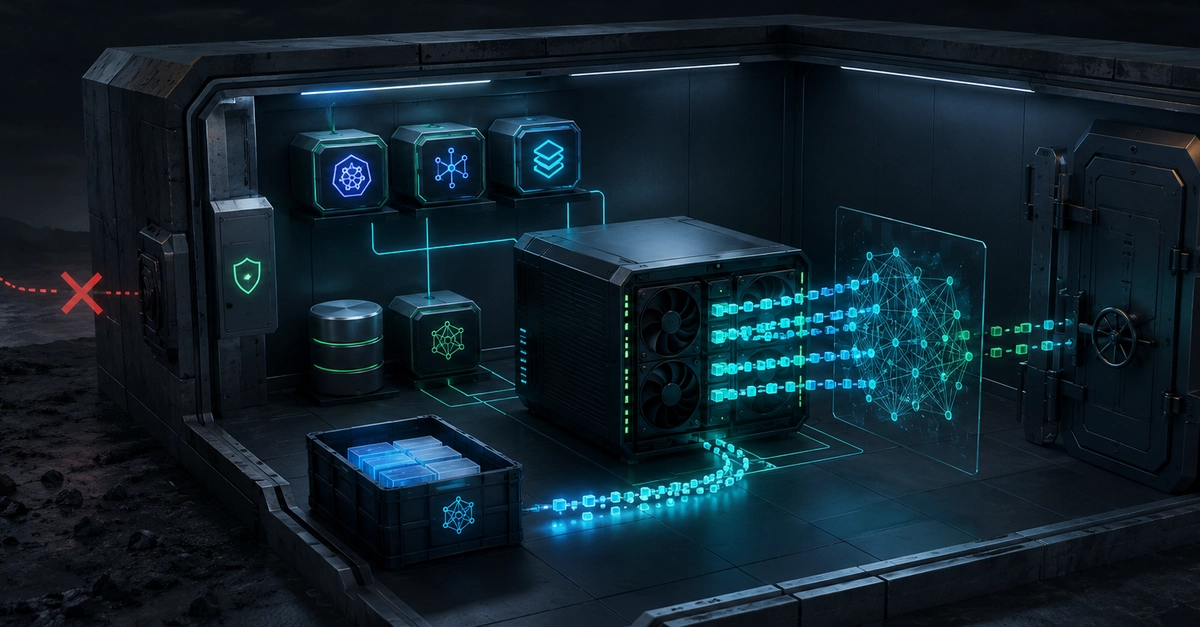
Running Kubernetes in an air-gapped environment is harder than it looks. Kubernetes pulls container images from registries. Control plane components phone home during bootstrap. Node configuration tooling assumes it can reach package repositories. The ecosystem is built around internet connectivity, and peeling that assumption out of a real deployment is tedious enough that most teams avoid it or work around it with expensive and brittle proxy setups.
Spinifex installs without internet access, using a release tarball and pre-staged packages transferred on USB media, and it provides an AWS-compatible EKS implementation so you get managed Kubernetes on hardware that never leaves your network.
What "air-gapped" actually means here
There are different degrees of disconnection, so here is what Spinifex supports and where the constraints are.
The Spinifex platform, covering the AWS gateway, compute, block storage, object storage, networking, and IAM, installs and runs with no internet connectivity at all. Nothing in the install process reaches out to the internet once you've transferred the release tarball and dependencies to the target machine. The --no-telemetry flag on spx admin init prevents the one-shot install telemetry beacon, suppressing even that initial call.