The Illusion of Internal Security
Many organizations treat their Kubernetes cluster like a medieval castle: heavy defenses at the perimeter (ingress/WAF), but completely unprotected on the inside. If an attacker compromises a single container, they often have unfettered lateral access to the entire cluster network.
In this post, I break down how to architect a Zero-Trust Kubernetes Cluster from the ground up, ensuring that every microservice explicitly authenticates and authorizes its peers.
1. Network Policies: The Foundation
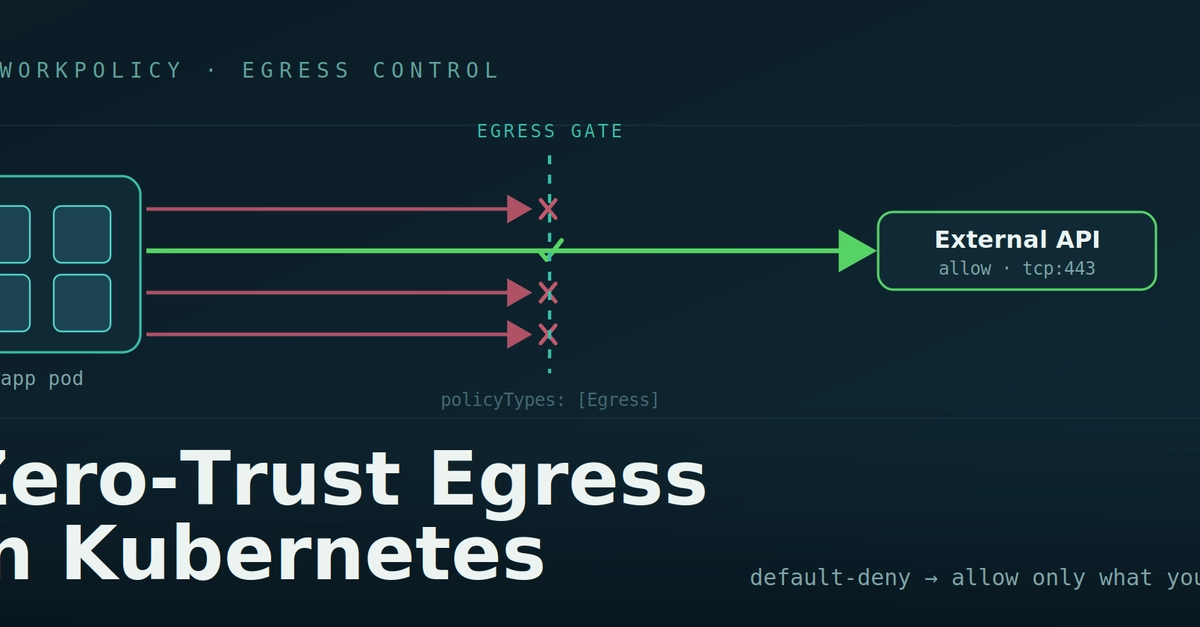
By default, Kubernetes pods can communicate with any other pod in the cluster. This is a massive security risk. The first step in Zero-Trust is implementing default-deny Network Policies.