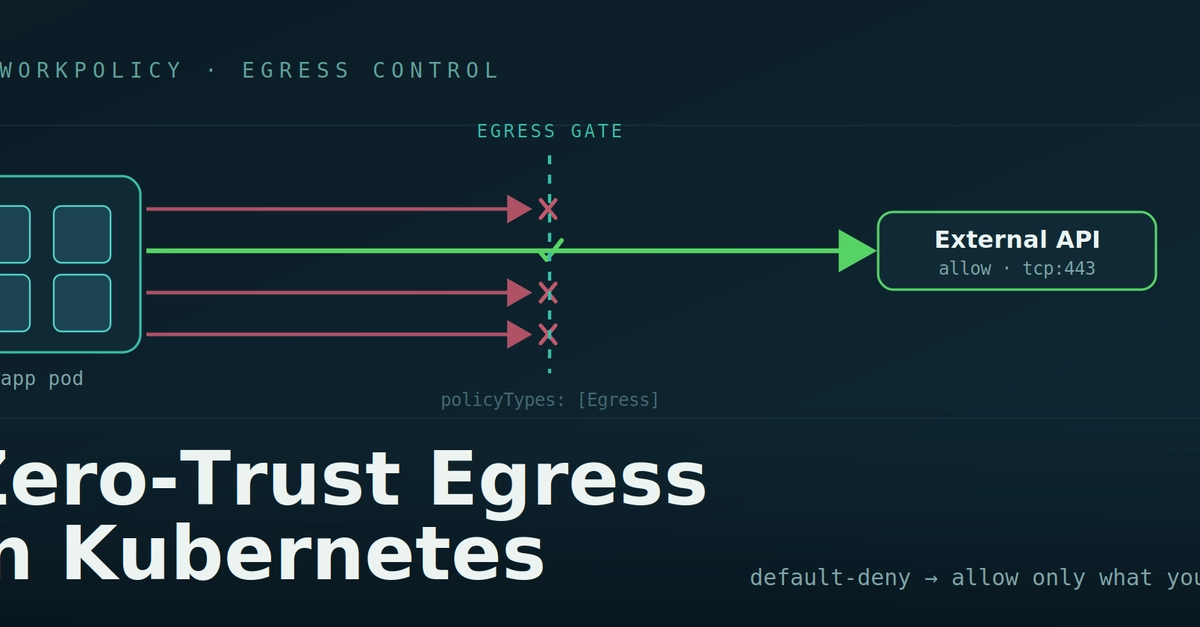
The velocity at which new features are added and applications evolve directly drives up architectural complexity. This relentless pace isn't just driven by the desire for new features; it is increasingly forced by the constant discovery of new vulnerabilities. Patching a single critical dependency can trigger a cascade of required updates and unexpected architectural changes as each product and solution comes with a myriad of implementation options and various features to enable or disable. Tailoring this complexity to your specific environment makes it challenging to guarantee every component is deployed according to industry best practices. Validated patterns bridge this gap by providing ready-to-use, heavily tested deployment patterns for various use cases, mitigating the need to build complex, security-focused architectures from scratch.The uncomfortable truth about vulnerability managementIn 2025, over 40,000 new CVEs were published. That's more than 100 every single day. Today, AI-powered exploit generation is drastically accelerating the time from vulnerability disclosure to active exploitation in the wild. "Chasing the holy grail" shows how pursuing a perfect score of zero CVEs can sometimes be counterproductive if it distracts from deeper defense-in-depth strategies. A component that's "clean" at 9 AM might have a newly disclosed vulnerability by 5 PM. Even when you achieve zero known CVEs, unknown vulnerabilities always remain.The patching math (the misconception that security is just a numbers game where fewer CVEs means less risk) simply doesn't add up for enterprise environments running hundreds of containerized workloads. Unlike traditional monolithic architectures running on a single operating system, distributed container environments introduce significantly higher architectural complexity. Countless microservices and network touchpoints offer far more configuration options where something can go wrong and inadvertently create a security gap. Trying to fix absolutely everything instantly is a Sisyphean task that conflicts with a modern, risk-based security strategy. It also ignores a fundamental truth: no matter how aggressively you try to apply updates, there will always be a lag.So, what do you do in the gap between vulnerability disclosure and patch deployment? The answer lies in a security principle that has been around for years but is more critical today than ever: Zero-trust architecture.What zero trust means for your Red Hat OpenShift clusterZero trust is not a product you install. It's an architectural philosophy that assumes a breach has already occurred, mandating that every interaction must be explicitly verified and authorized. According to NIST SP 800-207, zero trust means removing implicit trust granted to resources — assets, applications, or user accounts — based solely on their physical or network location. Authentication and authorization are discrete functions performed before any session to an enterprise resource is established.Implementing zero trust in Kubernetes and Red Hat OpenShift requires a multi-layered approach spanning workload identity, secret management, and runtime access control. Specifically within the networking domain, one of the most critical implications of this philosophy is moving beyond the default flat network posture where every pod can communicate freely. By default, Kubernetes applies no internal network restrictions, equivalent to leaving every internal door in a building unlocked simply because the building has a front gate (such as a cluster ingress controller, API gateway, or perimeter firewall). However, relying solely on this perimeter defense is fundamentally insufficient for modern cloud-native environments.According to the zero trust model, we assume a breach has already occurred and that bad actors are already inside your environment, whether they are external attackers who bypassed the perimeter, a compromised supply chain component, or malicious internal threats operating directly from within. By implementing Kubernetes network resource restrictions, we create a default deny network connection with explicit authentication and authorization to use the network and reach other resources attached to it (Figure 1).
Can't patch fast enough? Zero trust as a last line of defense
Learn how to implement a zero-trust architecture in Kubernetes and Red Hat OpenShift, ensuring every interaction is explicitly verified and authorized. Discover the Layered Zero Trust Validated Pattern (ZTVP) for a secure, GitOps-deployed zero-trust architecture.
2,003 words~9 min read