When DNA meets Section 112
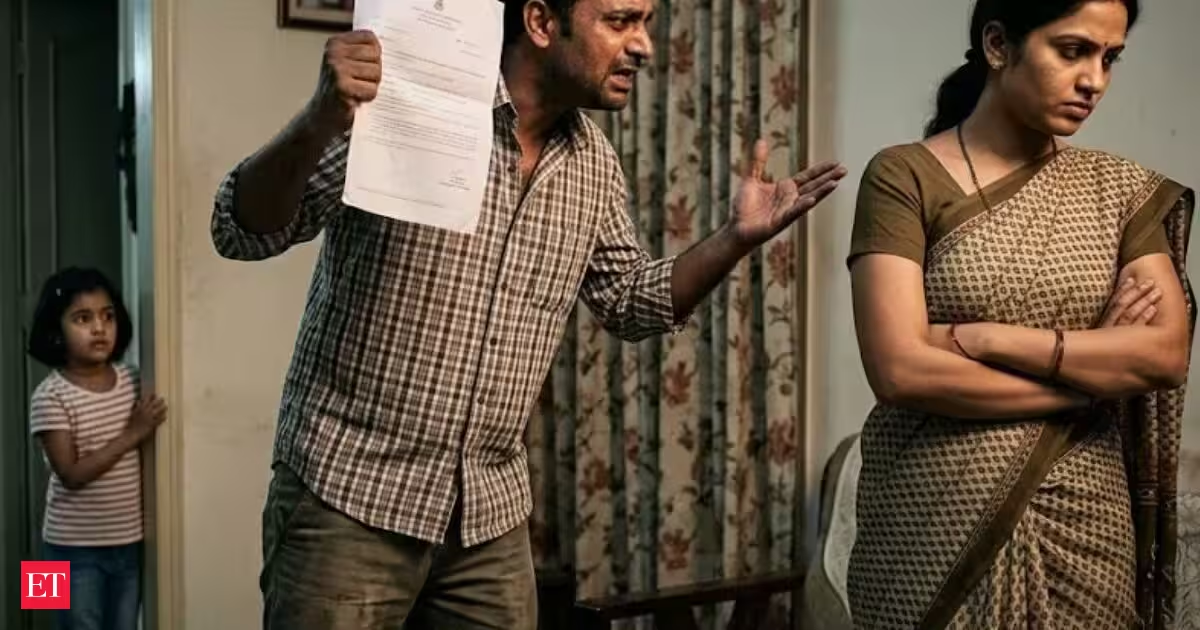
At the centre of the debate sits Section 112 of the Indian Evidence Act, 1872, now reflected in Section 116 of the Bharatiya Sakshya Adhiniyam, 2023.The provision creates one of the strongest presumptions in Indian law: a child born during a valid marriage is presumed to be the legitimate child of the husband. That presumption may be displaced only in limited circumstances, principally by proving non-access between the spouses at the relevant time.The rule was drafted in 1872, nearly a century before DNA profiling was conceived. Yet, it continues to govern some of the most fundamental questions of modern family law.Section 112 does not reject biological evidence. It performs a different function, allowing the law to recognise legal fatherhood without requiring biological proof of paternity, unless the statutory conditions for rebuttal are satisfied.The point was brought into sharp focus by the Supreme Court in Ivan Rathinam v. Milan Joseph, 2025 INSC 115. In the case, Milan Joseph sought to establish Ivan Rathinam as his biological father, although he was born during the subsistence of his mother’s marriage to Raju Kurian. The Supreme Court declined to direct a DNA test. It held that the presumption under Section 112 could not be displaced merely because Rathinam was alleged to have had a relationship with Milan’s mother. In the absence of proof of non-access between the spouses, the statutory presumption continued to operate. The Court also found no “eminent need” for the test and cautioned against permitting DNA testing to become a roving inquiry into a person’s private life.The judgment draws an important distinction between establishing biological paternity and recognising legal fatherhood. DNA may answer the biological question with extraordinary precision. But the law must first decide whether that question should be investigated and whether the result should alter an existing legal relationship.That does not mean DNA evidence is unreliable or legally irrelevant. Where the circumstances justify testing, a DNA finding can have significant consequences for parentage and related legal rights. Section 112 does not shut the door on biological truth. It merely regulates when that truth can alter legal rights.