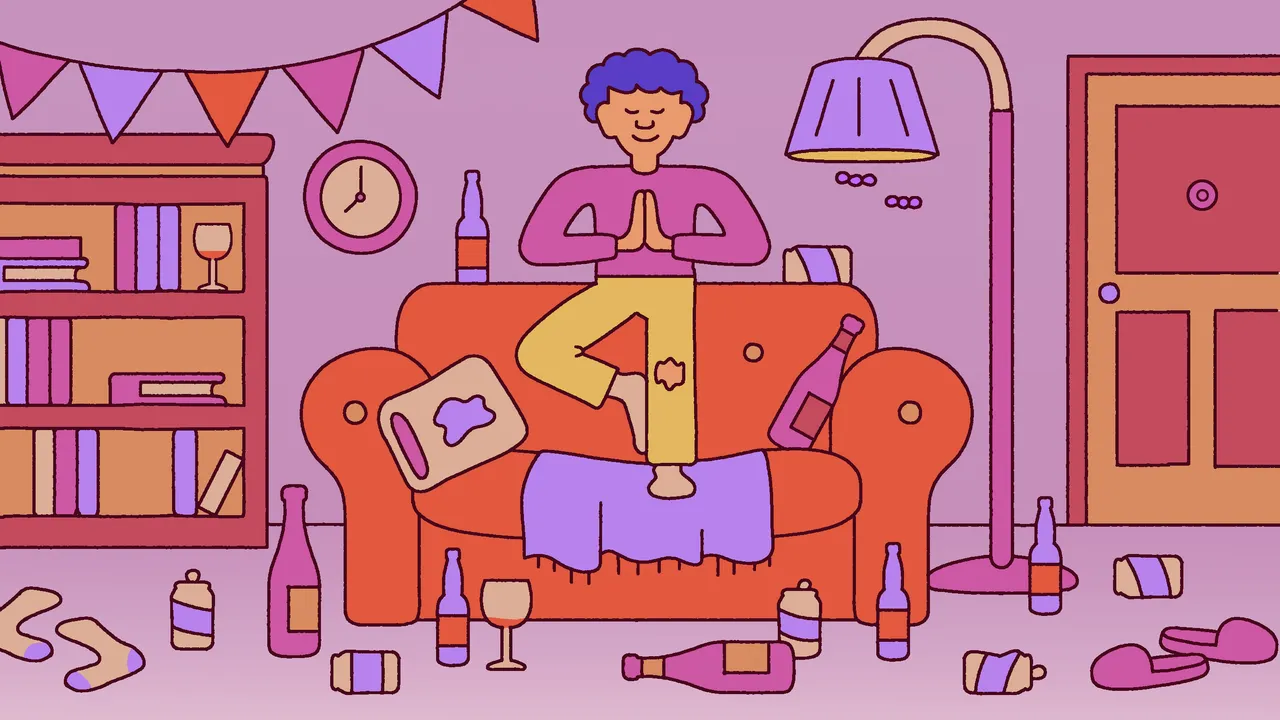
Illustration by Jackson GibbsMy go-to hangover fix has always been a bacon, egg, and cheese on a roll with the coldest bottle of red Gatorade I can find. I’ve learned over the years, though, that this is at best palliative and well short of a cure. In a new piece, Shayla Love looks at supplements being marketed on social media as an antidote to hangovers, taking us through the science behind them, and she considers humanity’s eternal quest to find a cure for the consequences of having one too many. Here are four things I learned from reading the story:Scientists don’t know what really causes hangovers. I’d always assumed that they came from dehydration (hence my red Gatorade), but researchers disagree on what really causes these mornings full of headaches and nausea.One of the oldest known hangover treatments goes back to ancient Egypt. Back then, people would wear a string of shrubby leaves as a necklace. Kinda chic!Some supplements you see on social media contain something called DHM. DHM (dihydromyricetin) is a natural ingredient that researchers have found can alter alcohol’s effects on the brain. But . . .These DHM supplements have not been studied clinically in humans. The study on the effectiveness of DHM as a treatment for alcohol use was done on rodents. Researchers found that DHM cleared alcohol from their bodies and reduced liver damage. Good for them, I suppose, but for us humans the search continues. And if you’re curious whether these supplements that are being pushed on Instagram are any good, you can read Love’s piece for her take.Evan and Caitlin Chambers, whose Altadena home was lost in the fires, decided to move a Craftsman house to their property.Photographs by Ethan Noah Roy for The New YorkerIn the city’s burnt neighborhoods, rebuilding is brutally expensive. Now some residents have turned to a lost art: moving entire houses to their vacant lots. Nicola Twilley reports on an urban airlift project. Read or listen to the story »More Top StoriesThe Trump Administration’s trade war with Canada has pushed a fringe idea into the mainstream: What if Canada joined the European Union?It wasn’t enough for Dolly Parton to sing of God’s love. She had to share it, Casey Cep writes.Take a break from the news and read our latest very, very short story, “Wishes and Fears,” by Caleb Crain.The most-clicked item in yesterday’s newsletter was about how sex tapes no longer make influencers famous in today’s media landscape.The influential Japanese Pop pioneer Yayoi Kusama, known for her polka-dot-covered objects and mirrored spaces, died yesterday, at ninety-seven. In 1996, Calvin Tomkins profiled the artist, tracing the evolution of her work, her struggles with mental health, and her relationship to New York City. Read the story »“Adults” is part of a Zoomer revamp of a time-honored format—one that, until recently, had all but disappeared from the TV landscape.Illustration by Calum HeathA show: With FX’s “Adults,” Gen Z finally gets the hangout sitcom it deserves.A movie: “Filipiñana,” which will be released in some U.S. theatres on Friday, performs a scalpel-sharp dissection of the luxury-tourism industry.A book: Peter Heller, the author of “The Dog Stars,” named Red Pine’s translation of “Poems of the Masters” as the one bit of reading he’d bring to his post-apocalyptic bunker.Critics at Large: On the latest episode of the podcast, the hosts discuss the horror films “It Ends,” “Obsession,” and “Backrooms,” and the burgeoning genre of “Gen Z horror.” Listen and follow »Today’s Crossword Puzzle: Fiona with roles in “Killing Eve,” “Andor,” and “True Detective: Night Country”—four letters. Catalogues: Can you sort the items into the correct order? Shuffalo: Can you make a longer word with each new letter? Laugh Lines: Test your knowledge of classic New Yorker cartoons.“Let’s stay here forever!”Cartoon by Avi SteinbergP.S. With the news that Meta has agreed to pay up to seventeen billion dollars to settle cases related to social-media addiction in children, it’s a good time to revisit our recent interview with the social psychologist Jonathan Haidt, who argues that technology companies have released a “mind-altering” danger in our lives.📱
Can Hangovers Be Cured?
From the daily newsletter: a writer’s quest to find a remedy to a lousy morning.
679 words~3 min read