Troops calling for fire depend on it. So does the pilot navigating to a target, or a ship coordinating its movements with a carrier group. Each of them, in moments that matter most, relies on systems roughly 22,000 miles overhead. Complex systems they will likely never see and may never once stop to think about. For most of the space age, that dependence was safe to take for granted; not any longer. Space has stopped being a sanctuary and has become a domain the U.S. military now has to plan to fight in. This paradigm shift is forcing an overhaul of how the country builds, defends, and trusts what it puts in orbit.
Space, Another Frontier
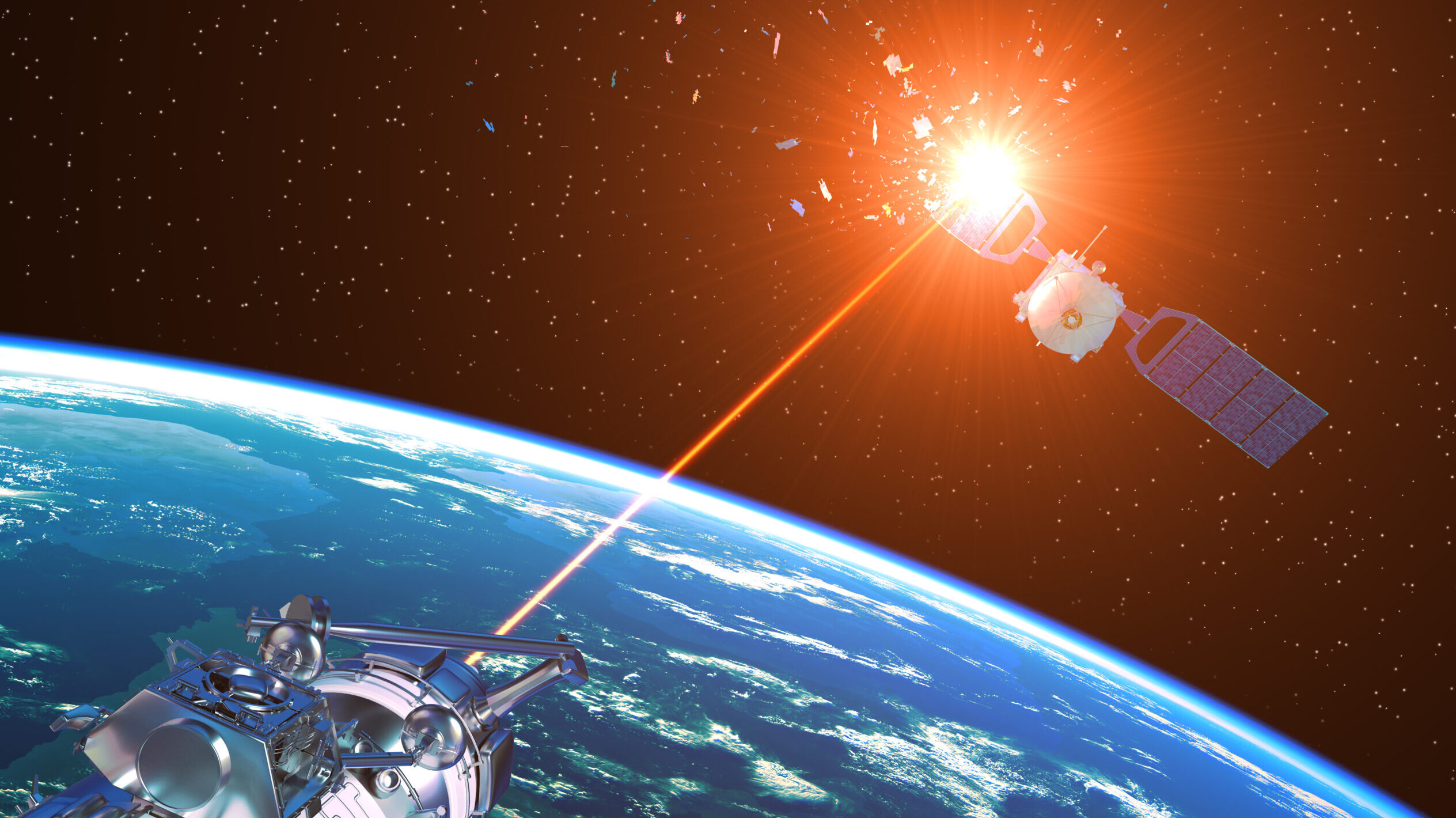
Contested space is not new or groundbreaking in itself. It has been a strategic concern since Sputnik went up in 1957. Military planners quickly understood that whoever controlled information from space would gain an advantage. What has changed, according to Jeff Hanke, president of L3Harris Space Systems, is the pace and the sophistication of the threat. Competitors have demonstrated anti-satellite weapons, electronic warfare, cyberattacks, and on-orbit surveillance systems, as well as the ability to field new capabilities quickly. "Space is no longer a sanctuary," Hanke said. "It's an operational domain where military advantage can be challenged every day." One clear institutional marker of that shift came in December 2019, when the U.S. Space Force stood up as the first new military service in more than 70 years. The service's leaders have been blunt about why. Gen. B. Chance Saltzman, the chief of space operations, has said "the peaceful use of space may no longer be assumed," even as the nation depends on space every day. For industry, Hanke said, that changes the assignment. The job is no longer simply to build systems that operate in space, but systems that can survive. Systems that keep supporting troops while an adversary actively tries to shut them down.