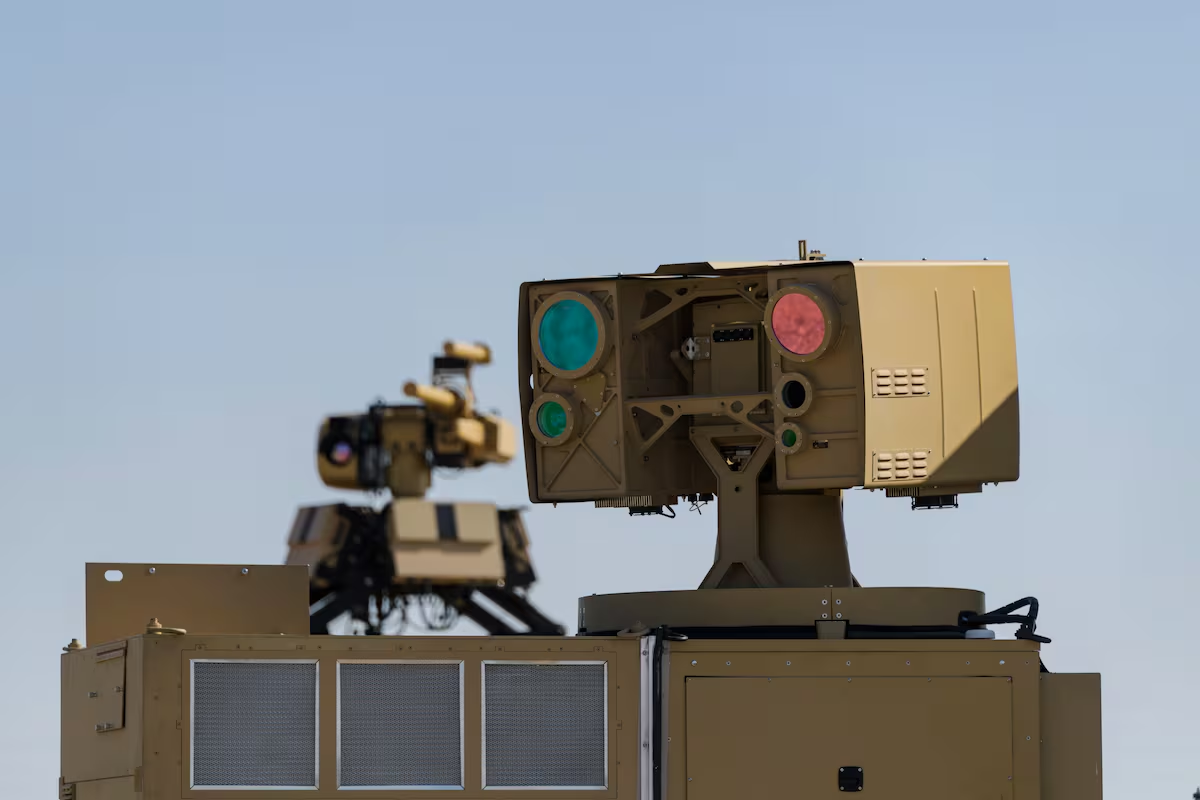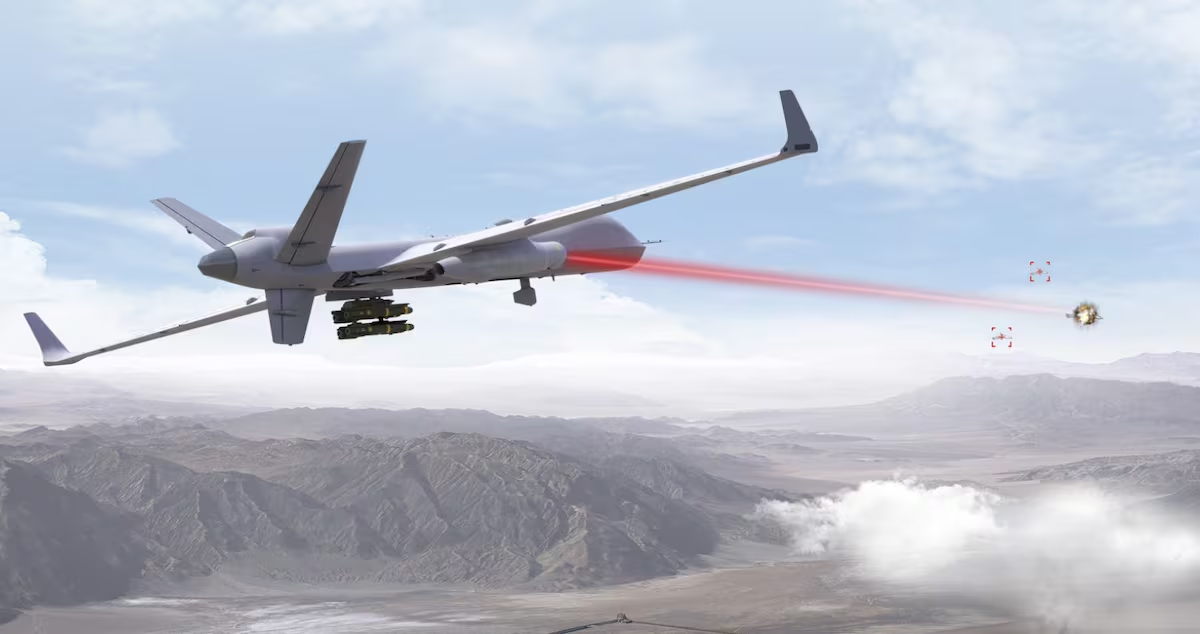
HUNTSVILLE, AL. — As the Pentagon and other militaries around the world rush to deploy large satellite constellations designed to be less susceptible to kinetic attack, US military officials responsible for space operations see laser weapons — on the ground, in the air, at sea and even in space ― as both a future threat and an opportunity.
“Surely you’re not going to try and attack with a direct asset ASAT [anti-satellite weapon] 10,000 satellites,” Lt. Col. Rick Zellman, deputy commander of US Space Command (SPACECOM), said today.
Instead, he told the annual Army Space and Missile Defense Symposium here, both adversaries and the US military’s “targeting folks” are looking to find “the various nodes where you can get a one-to-many solution” to take down “proliferated constellations.”
Those solutions include cyber and directed-energy weapons, as well as focusing attacks on the limited number of ground systems used by satellite networks, Zellman said. Directed energy is particularly attractive, he said, because it “doesn’t cost you much for a shot.”
Brig. Gen. Drew Morgan, deputy head of Army Space and Missile Defense Command (SMDC), agreed, telling the symposium that directed-energy weapons provide new “opportunities” for counterspace operations.