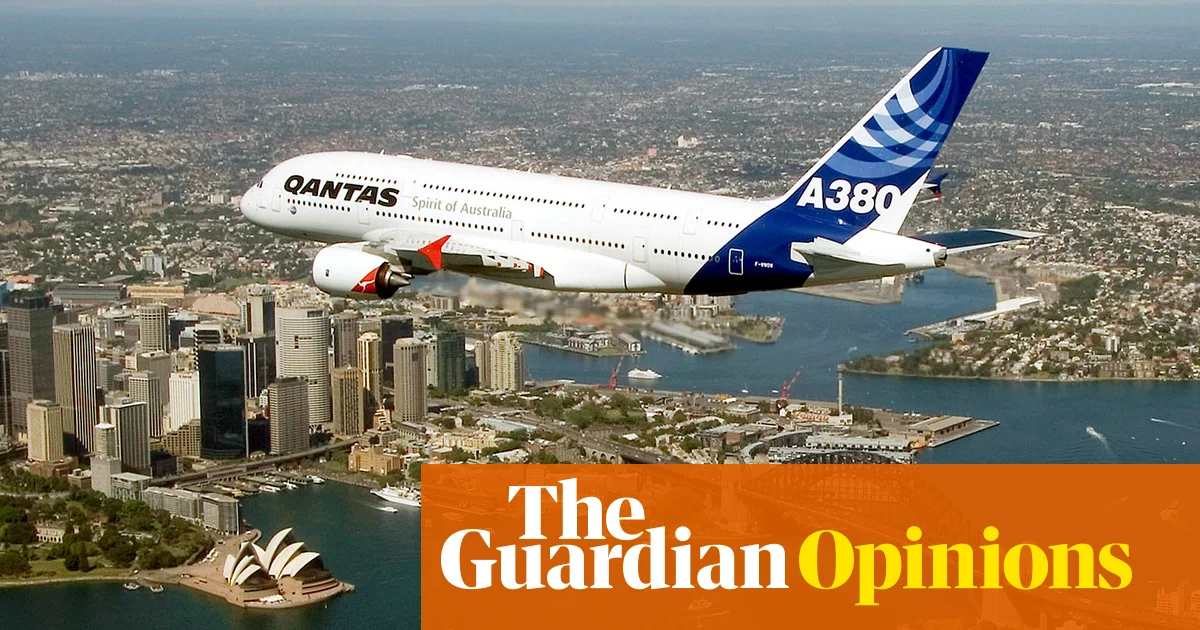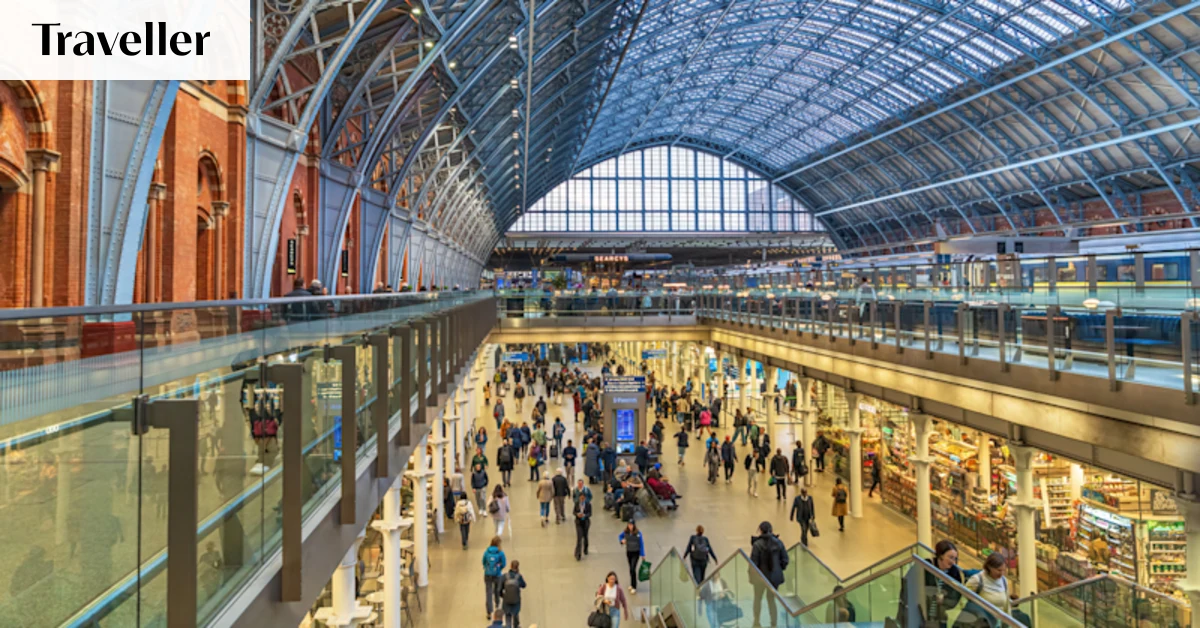
August 28, 2026 — 5:00amAfter a decade-and-a-half as travel editor of both The Sydney Morning Herald and The Age, my journey is at an end.It’s been a heck of a ride (on every form of transport you can think of), but before I walk off into that cliched “blazing fireball” sunset, I’ve taken some time to pause and reflect on the imperfect passion that is travel.Anthony Dennis is departing Traveller after 15 years.Of course, I could regale you with the best destinations I’ve suffered and the wonderful luxury hotels and resorts I’ve endured, all entirely in the interest of you, the reader.Instead, here are 15 sharper conclusions and observations regarding a pastime I still adore after 15 years.Stopovers are better value than a premium economy seatSign up for the Traveller newsletterThe latest travel news, tips and inspiration delivered to your inbox. Sign up now.A stopover in a city like Singapore makes the world of difference to a long-haul trip.iStockAside from the excellent Emirates offering, most airline premium seats can be no more than reconstituted business-class equivalents from the pre-reclining mechanism era. Unless you really need to get there, even a stopover stay in a pricey five-star with real flat beds (dream: starched white sheets) represents better value, rendering you far better prepared physically and psychologically for the next leg of your journey.Avoid long-haul overnight flights as much as possibleThere are few experiences more grim than arriving at your holiday destination (or worse, back in Australia) at dawn, or earlier, and confronting long immigration queues inside the airport and peak-hour traffic outside of it. Then there’s all that bleary-eyed time to kill before you can check into your hotel room in the mid-afternoon at the earliest. Choose day flights where and whenever possible.Failing that, book a hotel room the night beforeNow that you’ve saved all those funds on a premium-economy or even a business-class fare, reserve your hotel room the night before you arrive. That way you go straight to your room, shower, scent and head out for some sightseeing. But do ensure the hotel is fully aware of your plans lest they consider you a “no-show”. Extravagant, possibly, probably, and you wouldn’t want to do it every time, but you likely won’t regret it.Get to know your way around the economy cabin seat mapAvoid the middle-seat trap by carefully choosing your preferred seat, even at an additional cost, when booking a flight.iStockDon’t let the airline decide where you sit on a flight. Make sure you choose your seat by carefully studying the seat map when you book your flight. No one ever really regrets adding to the airline’s cynical coffers (see point 11) by paying that little extra for an exit or extra legroom or simply choosing an even slightly better seat than the one you’ve been allocated.Give me a grand railway station over a flashy airport terminalLondon’s magnificent St. Pancras International station, home to Eurostar services, is everything an airport terminal isn’t.iStockCall me jaded – or, better, realistic – but airports, especially international ones, have become glorified money-making Westfields with air bridges, and, yes, I include Singapore’s overly lauded Changi. Those annual “best airport” lists are more accurately entitled “least bad airports”. The better news is that technology is allowing us to get in and out of them – Australian airports aside where the situation remains largely terminal – far more rapidly. I’ll take a grand railway station like London’s St. Pancras or Antwerp’s Central any day, thanks.…and always give me a train over a plane while you’re at itA climate-friendly electrified express ICE train speeds across the German countryside.iStockThe renaissance in long-distance rail and overnight sleeper-carriage travel, particularly in Europe but glaringly not in Australia, has been one of the more remarkable trends in travel over the past decade and a half. Unlike planes landing at distant airports, trains usually deliver you to and from the heart of your destination, with considerably less cost and anger (oh, and have you ever heard of “rail rage”?).The high season, as we know, is past its use-by dateVessels stranded high and dry on the Rhine near Tolkamer in the Netherlands.GettyEurope’s high season for tourists has reached a new low this year with rivers emptying, record temperatures that would frazzle even an outback dweller, and once unheard of wildfires – even in Britain, for heaven’s sake – now an annual scourge. Soon the high tourist season will, by sheer crisis-driven necessity, cease to exist or will have to spread more evenly across the calendar, including the underrated winter months, with the continent and other popular destinations as beneficiaries.Undertourism is a bigger problem than overtourismAn appealing Japanese city like Matsuyama, with its restored and majestic hilltop castle, receives only a tiny fraction of the overseas tourists that a destination like Kyoto draws.Go to a city like Kyoto, Japan in peak season, and you’ll see that overtourism is a problem. However, visit most of the 792 cities and 743 towns, were it possible, in an economically challenged Japan, and you’ll find them not only bereft of tourists, but desperate for even some tempura-like crumbs of that Kyoto action. Overtourism is mostly about a lack of imagination. Let’s spread the burden and, crucially, the undoubted benefits of tourism by giving other deserving destinations a go.As suspected, sustainability has proved sadly unsustainableAfter all the trouble hotels and resorts went to remove, somewhat tokenistically, plastic drinking straws, along comes Donald Trump, himself a hotel developer, and reinstates them, at least in the US. (And we can be certain that he doesn’t hang up his towel after use or place the “do not change sheets” card on the bed). Some progress has been made in sustainability (an awful word that was never going to catch on), but who doesn’t have trouble working out which half of the hotel room bin is meant for what, and whether hotels really do recycle? Ultimately, sceptics among us can’t help but wonder whether hotels and resorts are really trying to save the planet or merely their costs.We’re all photographers (and videographers, too) nowThe conventional wisdom appeals to us, persuasively so, to put the phone down and smell, rather than shoot, the roses, with an estimated 4.6 to 4.7 billion photos snapped on smartphones each day. But for all its evils, social media, particularly Instagram, has arguably better helped us to appreciate and celebrate the beauty and wonder of the world on smartphone cameras which gain in sophistication with every new model release. Photo albums once used to gather dust in drawers, but now they live in our pockets. If only we were more photographically discerning and resisted the compulsion to snap at everything.Trump derangement syndrome isn’t real, cruise derangement syndrome isCruising makes millions of travellers happy but is also a common target for elitism and alarmism.IStockIt’s estimated that 100,000 to 115,000 people have died in aircraft accidents, including commercial flights, around the world over the past century. By comparison, 200 people die aboard cruise ships each year, overwhelmingly from natural causes. Yes, cruising’s an imperfect industry which needs to address its environmental and workplace deficiencies. But let’s give the contemptuous “floating petri dish” slur a rest and allow people in later life (or at whatever time) the holiday enjoyment they deserve.Forget the banks. Airlines are the true bastardsFew, if any, Australian brands receive the levels of public derision that Qantas manages to attract.iStockRemember that phrase from the noughties about financial institutions? Nowadays, with so many millions more of us travelling overseas, our corporate contempt is reserved for airlines arguably as much as it is for banks. Airlines, well, most of them, may still have your safety as their priority, but that’s about it. That said, the collective contempt for Qantas, for instance, is almost deranged (see above) though it’s clear that the profit-driven airline accountants, and less so the pilots, are at the control stick these days.The greatest mystery in travel remains …Why hotels, even five-star ones, consider transparent toilet doors in their bathrooms to be an excellent idea. Go ahead and install one in your own home, guys, and see how it goes, as it were.And the second-greatest mystery in travel is…It appears that hotels will never see the light on simplified guest room illumination.iStockActually, there are three: (1) what on Earth have hotels got against a simple light switch? (2) Is the hotel general manager’s own air-conditioner at his or her own address as nonadjustable as the one in their guest’s room? (3) We know hotel guests love white towels in bathrooms, but who in their right mind among us has that completely unsuitable choice of colour at their home?Eighty per cent of the world’s population has never flownLow-cost airlines – note that the “low cost” bit refers to the airline’s costs, not yours – have certainly democratised travel, for good and bad. And, despite the so-called “first-world problems” we encounter, including those above, travel remains a complete life blessing and privilege for the relatively affluent 20 per cent of us. Tourism, for all its faults, could be the best chance for world peace and harmony (and already does a fair job of it), if only we all tried harder at it. Whatever the case, it’s been an honour to have played a tiny part in its journey over all these years.Anthony Dennis is the editor of Traveller at The Sydney Morning Herald and The Age.From our partners
After 15 years as travel editor, here are 15 things I’ve learnt
My journey as travel editor is at an end. I’ve learnt I’ll take a train station over an airport, and a stopover over a better plane seat.
1,568 words~7 min read