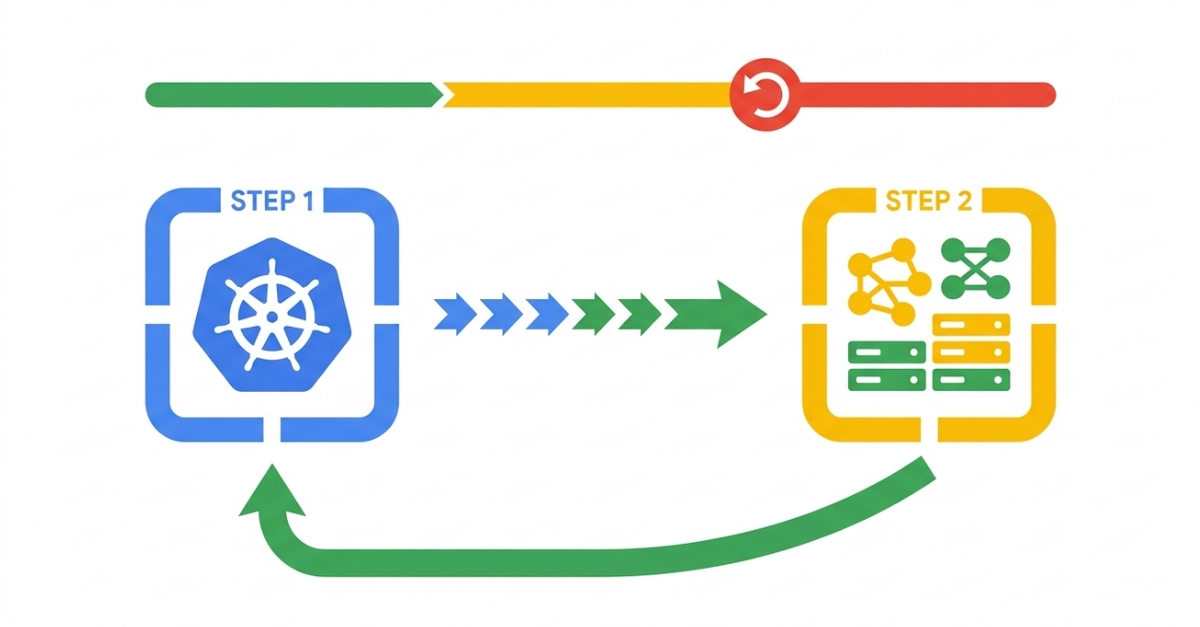
Kubernetes control plane minor version upgrades have historically been an all-or-nothing proposition. In standard Kubernetes clusters, upgrading a control plane from one minor version to the next—such as moving from 1.33 to 1.34—commits changes to storage schemas immediately. If an unexpected regression emerges after upgrading the API server, rolling back to the previous minor version was impossible without restoring etcd snapshots.
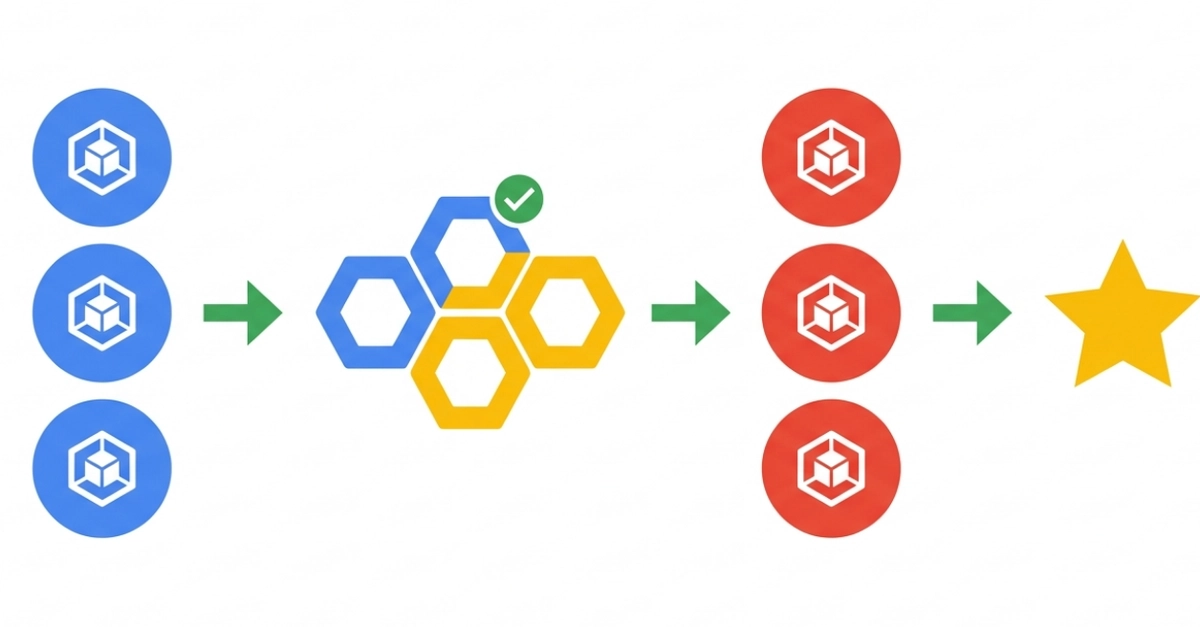
To eliminate this operational risk, the GKE team drove upstream contributions in Kubernetes Enhancement Proposal KEP-4330 (Compatibility Versions) and introduced two-step control plane upgrades. Following public preview validation with enterprise customers, this capability is now Generally Available (GA) across all GKE release channels.
In this article, I will explain how two-step upgrades work under the hood, how automated rollouts leverage canary analysis, and how to manage rollback-safe upgrades using the Google Cloud CLI and Terraform.
The problem with minor version upgrades
In Kubernetes, minor version releases introduce storage schema changes, deprecated API removals, and modified controller behaviors. When the kube-apiserver binary starts on a newer minor version, it writes resources using newer internal schemas.

 aws.amazon.com