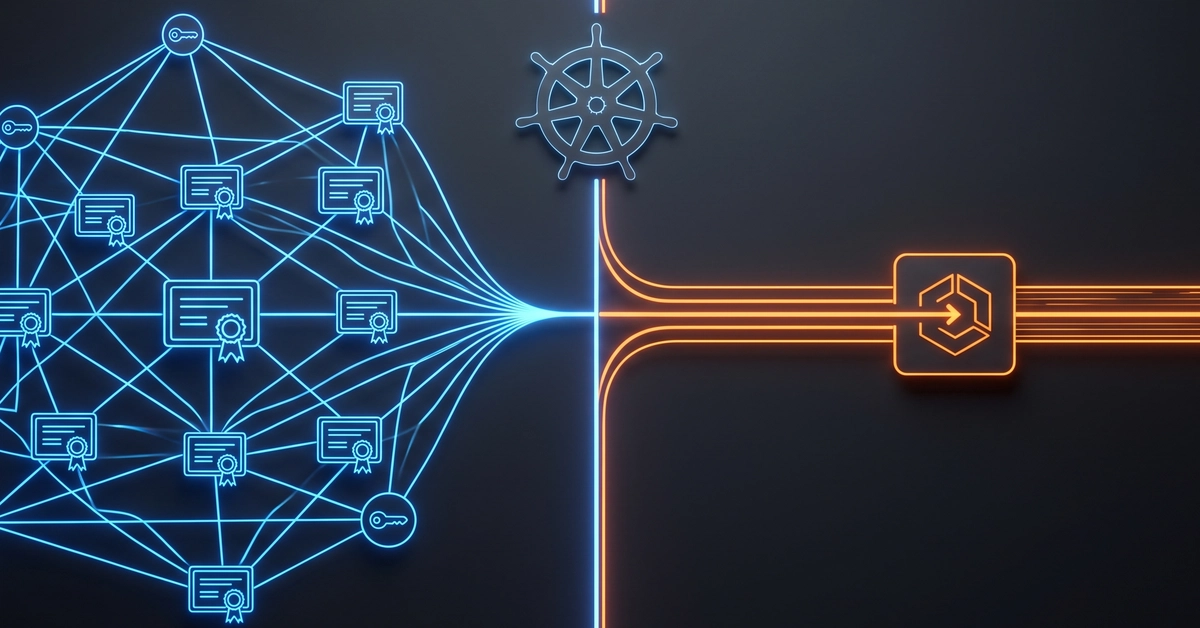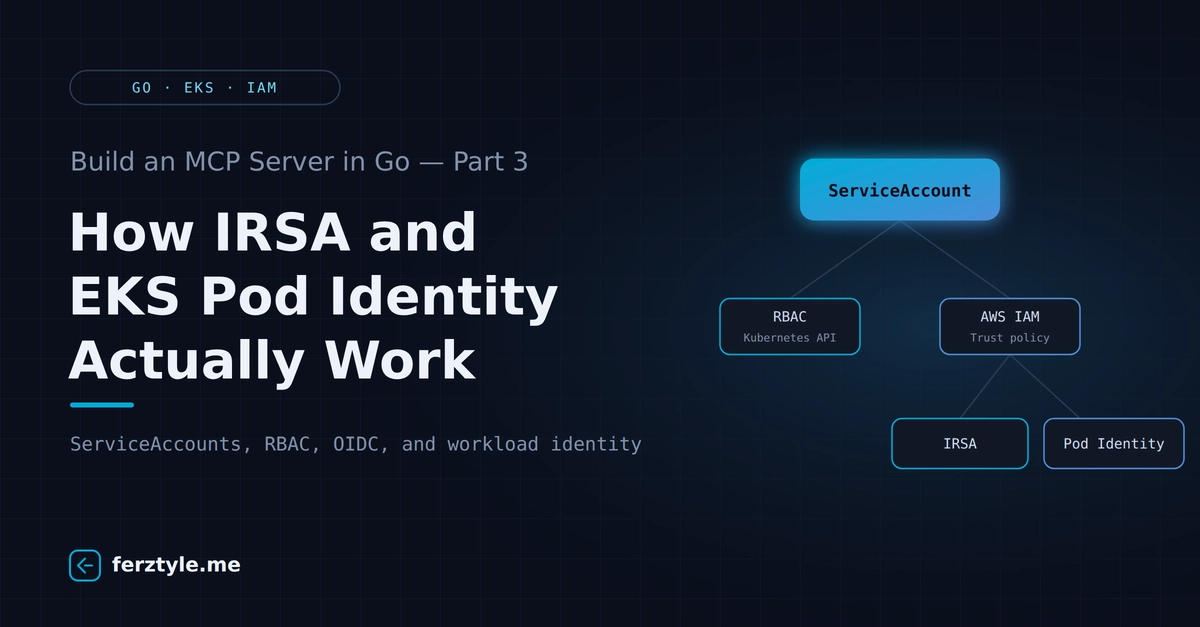
Everything the MCP server could check through Part 2 lives inside the cluster. But "my pod can't reach S3" is very often not a Kubernetes problem at all, it's a workload identity problem, and that identity lives partly on the Kubernetes side (the ServiceAccount) and partly on the AWS side (IAM, and now EKS Pod Identity). Before building a tool that diagnoses it, it's worth actually understanding how it works; most of the confusion people run into comes from treating IRSA and Pod Identity as interchangeable, when they solve the same problem through genuinely different mechanisms.
How pod permissions actually work on EKS
Before touching the diagnostic tool, it's worth stopping and explaining this properly, because "how does a pod get AWS permissions" trips up almost everyone the first time, and the two mechanisms work in genuinely different ways under the hood.
The problem neither mechanism existed to solve
An EC2 instance gets AWS credentials through an instance profile, no secrets anywhere, the instance just asks a local metadata endpoint (IMDS) and gets temporary credentials back, automatically. A pod is not an instance. Dozens of pods can run on the same EC2 node, each one potentially needing different AWS permissions; the checkout-service pod should be able to write to one S3 bucket, the image-resizer pod to a different one, and neither should be able to touch what the other can. If every pod on a node just inherited the node's IAM role, that isolation is gone; any pod could do anything the node itself could do.