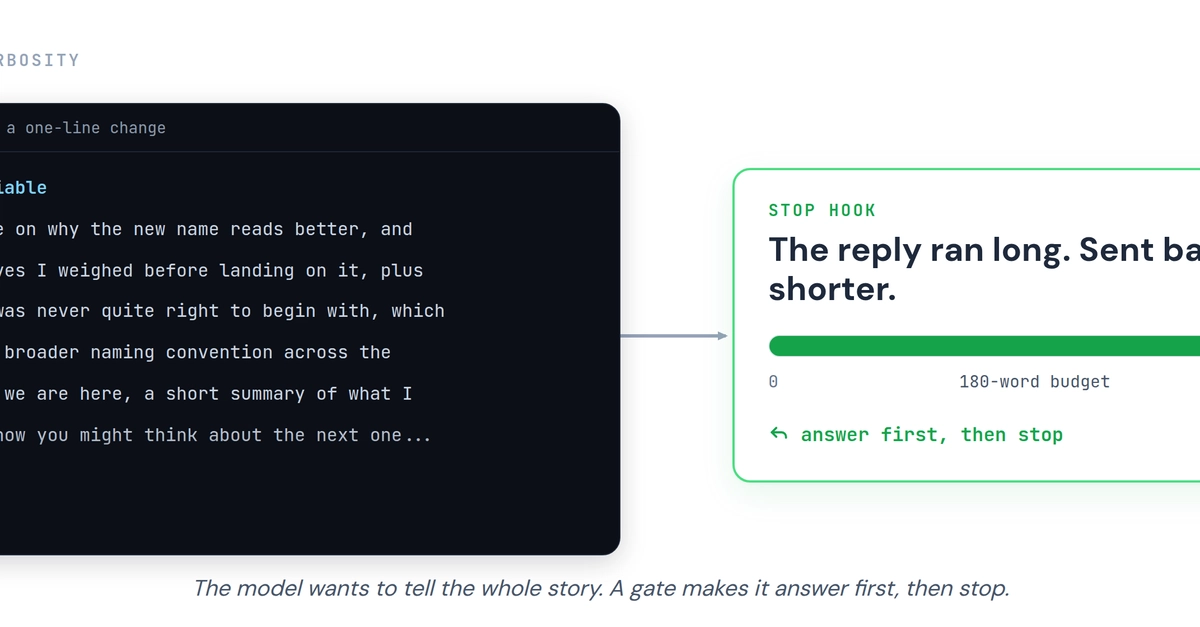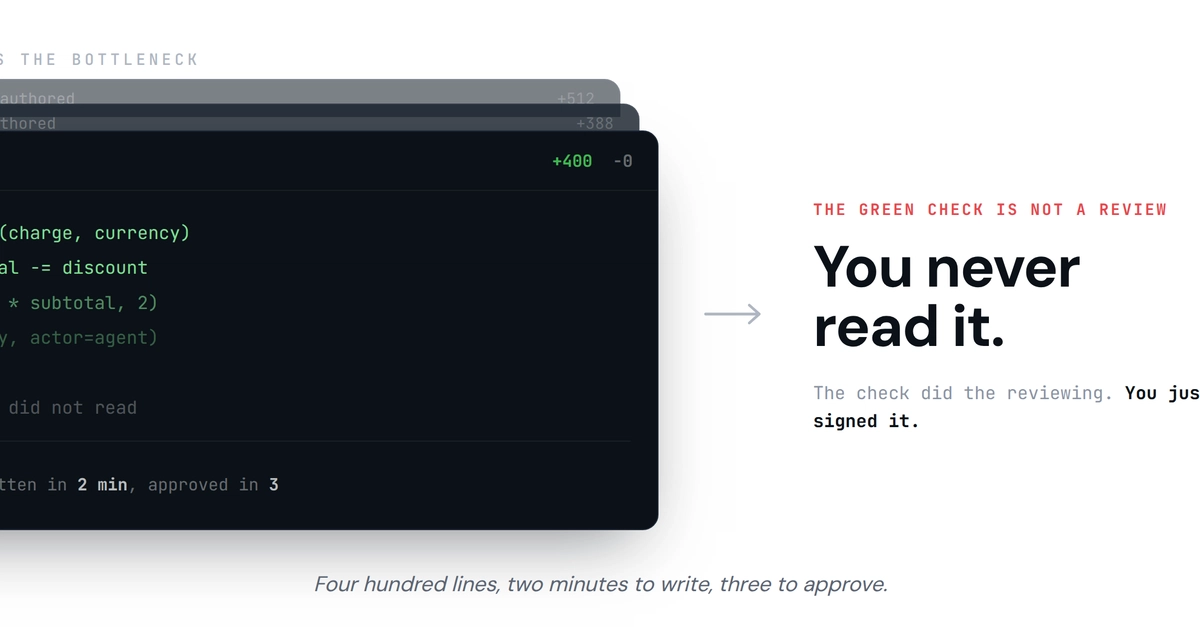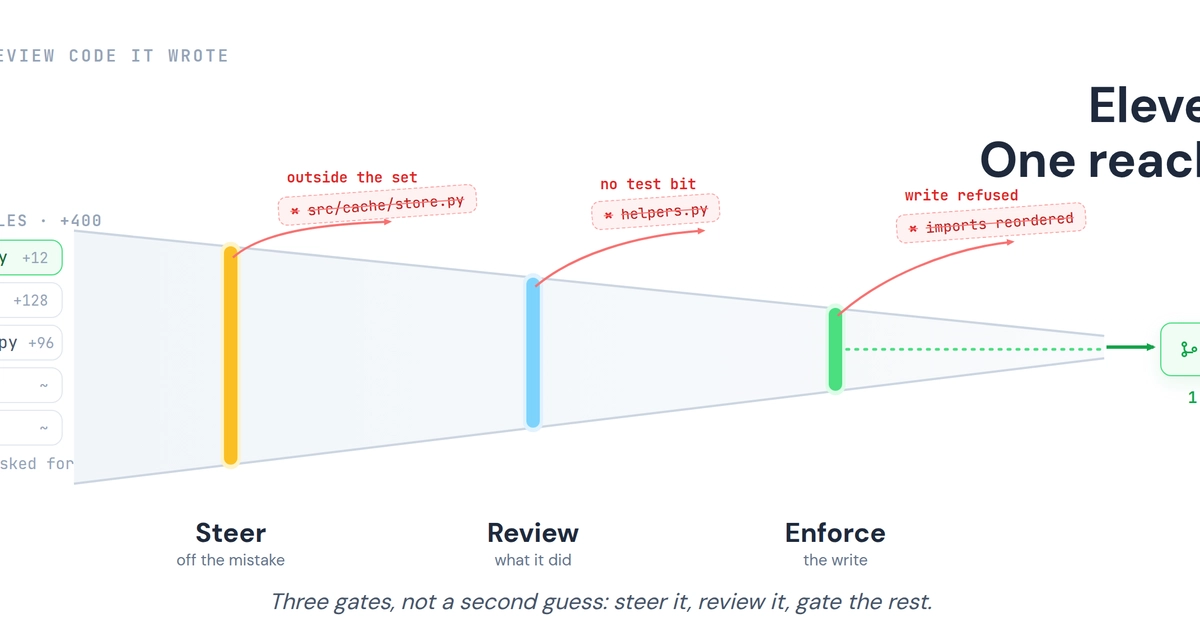
So, just another Tuesday. You ask Opus 5 for a one-line fix: a date parser is choking on a timezone suffix, change the format string. Twenty seconds later the agent reports done. You open the diff and it is not one line. It is eleven files. It rewrote the parser, renamed a helper three modules over, tidied an import block you never mentioned, and added a caching layer nobody asked for. Every test is green (actually have 11 more). The check passed, everyone's happy, except you, who now have to decide whether to read four hundred lines to approve a change that was supposed to be one.
The first half of this pair named why that decision is the hard part now. Opus 5 made writing nearly free and moved the whole cost onto review, and the reflex fix, pointing a second model at the first one, rebuilds the problem one guess at a time. That piece stopped at the diagnosis. This one is the other half: what you put in place of the second model, so the eleven-file surprise gets caught by something other than your attention at 6pm.
Anthropic documents that scope blowout as expected behavior. Its own Opus 5 guidance names it plainly: the model "can also expand the scope of a task, adding steps that weren't requested or applying its own judgment about what the task should be." A more capable model that runs longer and finishes more of the job also finishes more of the job you did not ask for. Catching that reliably takes three controls, and they are the ordinary layers of defense in depth: steer the model off the mistake, review what it did, and put a deterministic gate under both. Two of the three keep the mistake out and differ only in how far you can trust them, steering by moving the odds and the gate by refusing outright; review is how you catch what slips between them. What follows names each layer for an agent, ordered by cost rather than by when each runs, but the layered shape itself is the standard one.