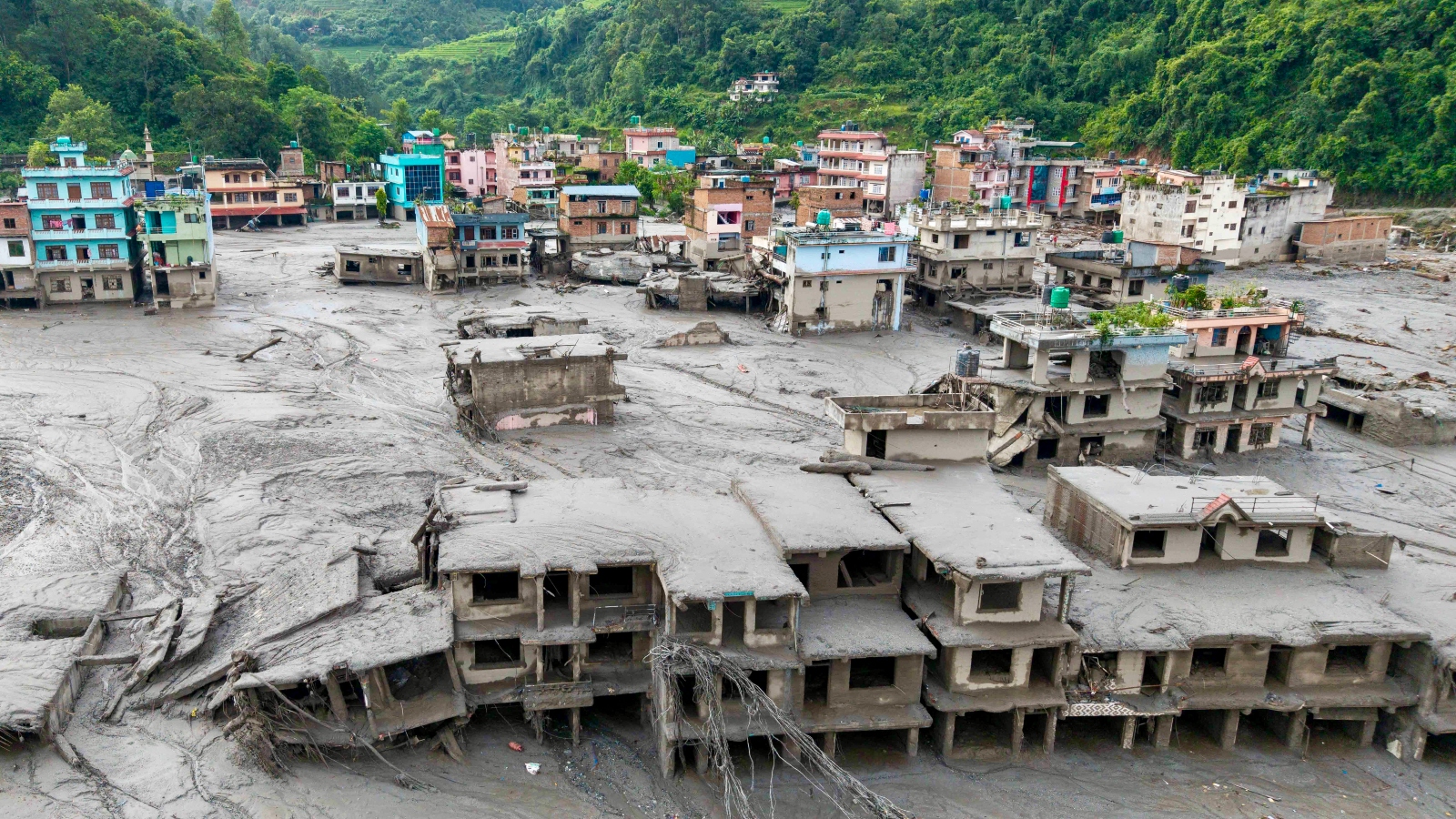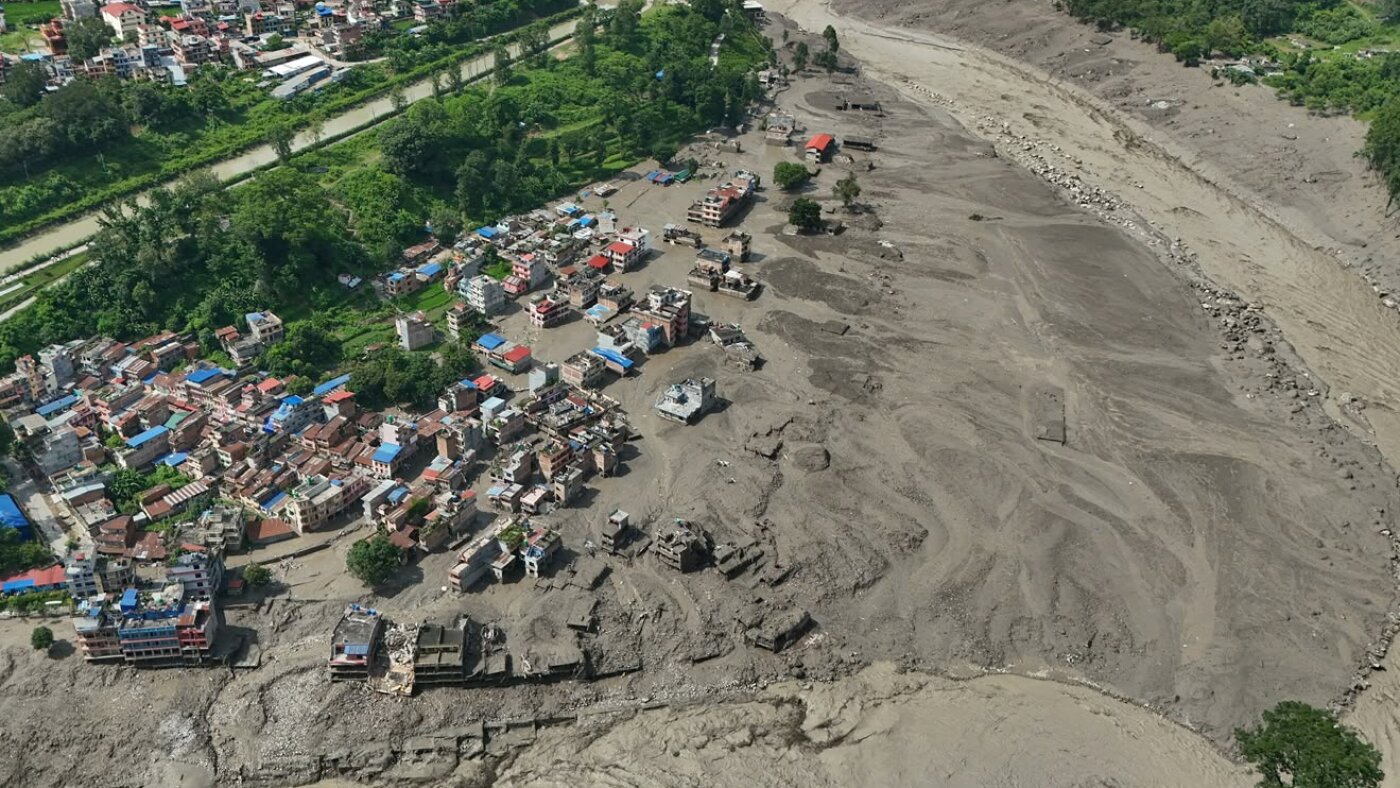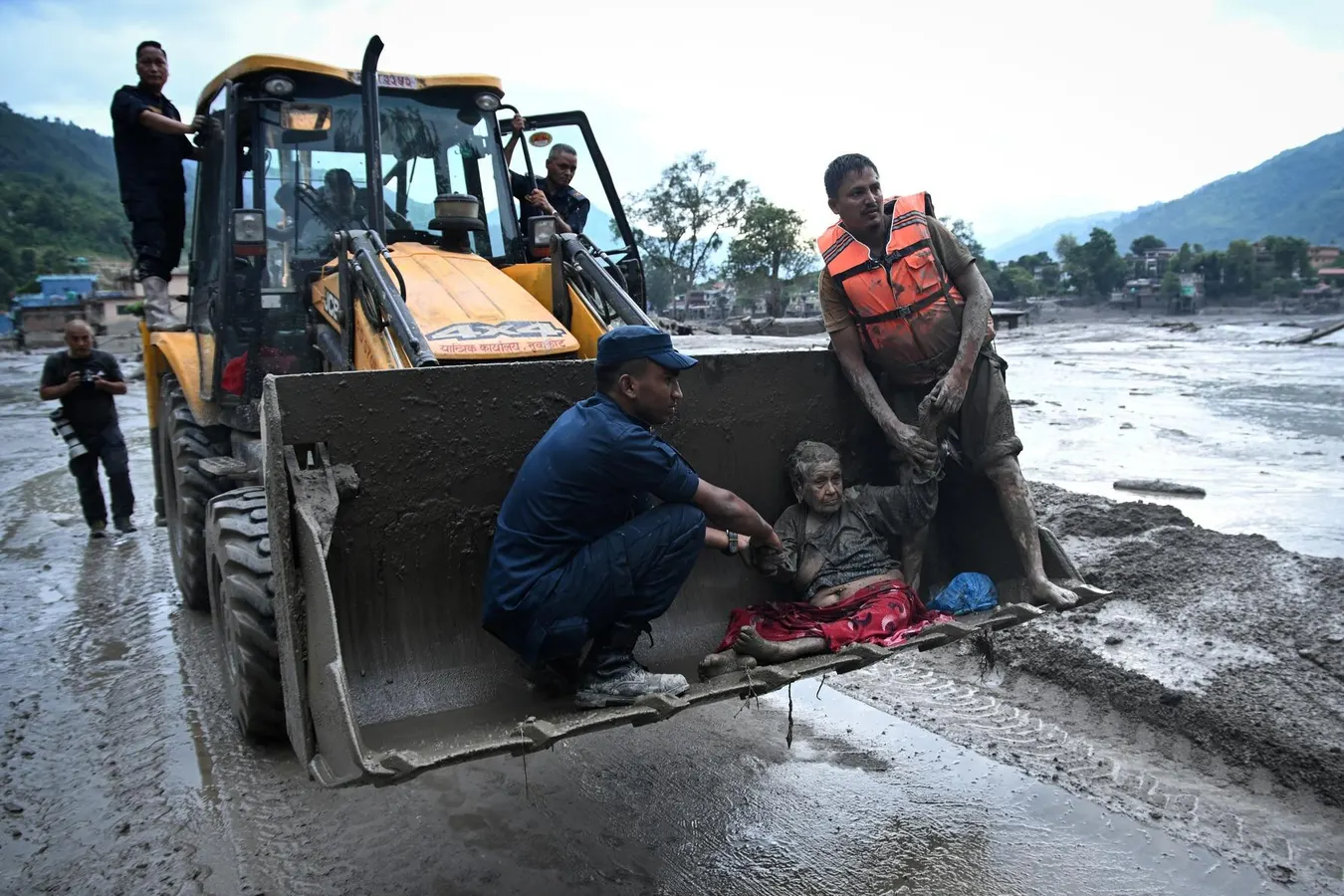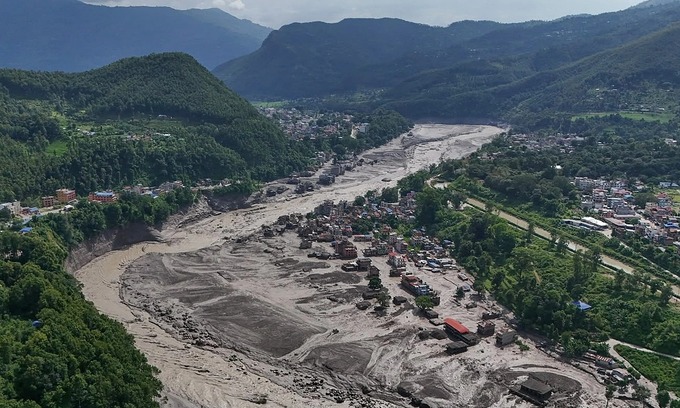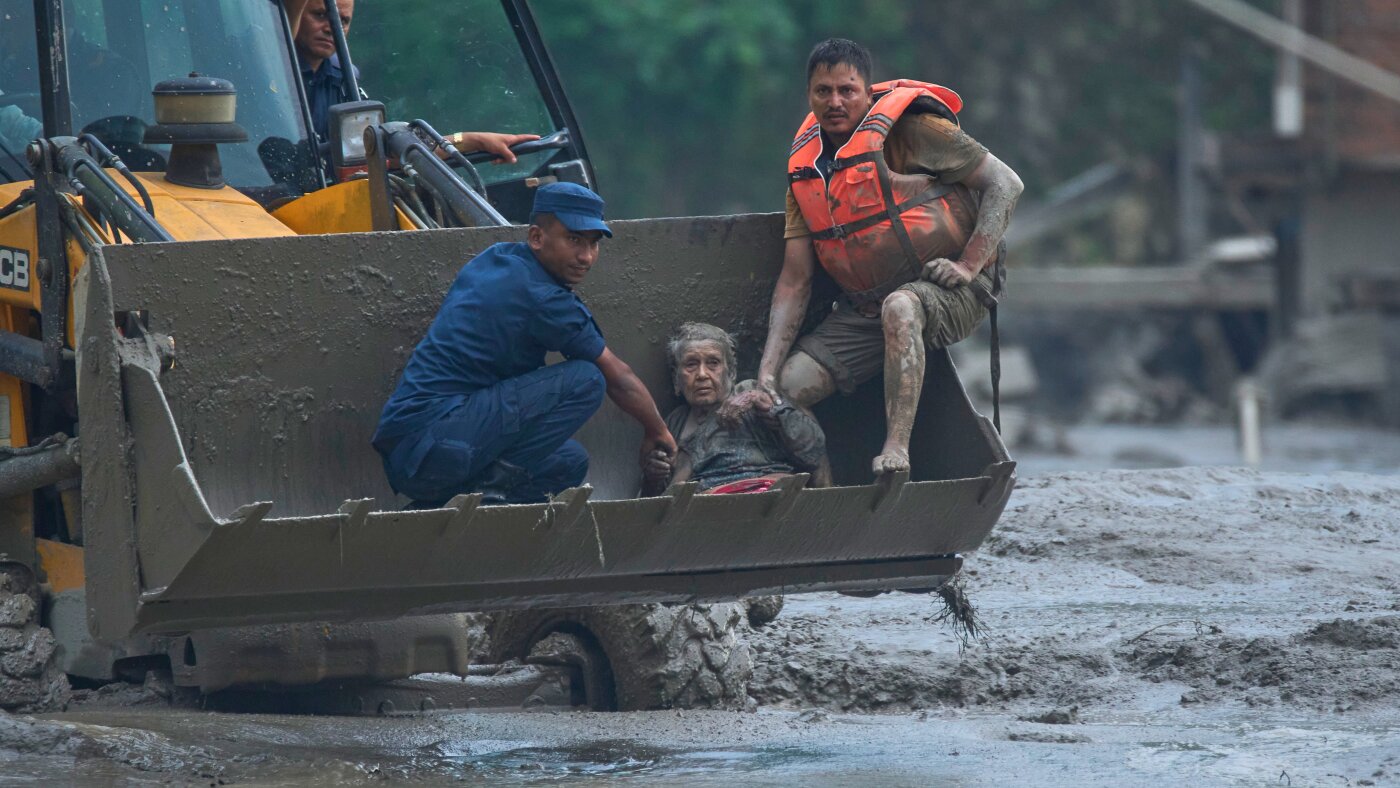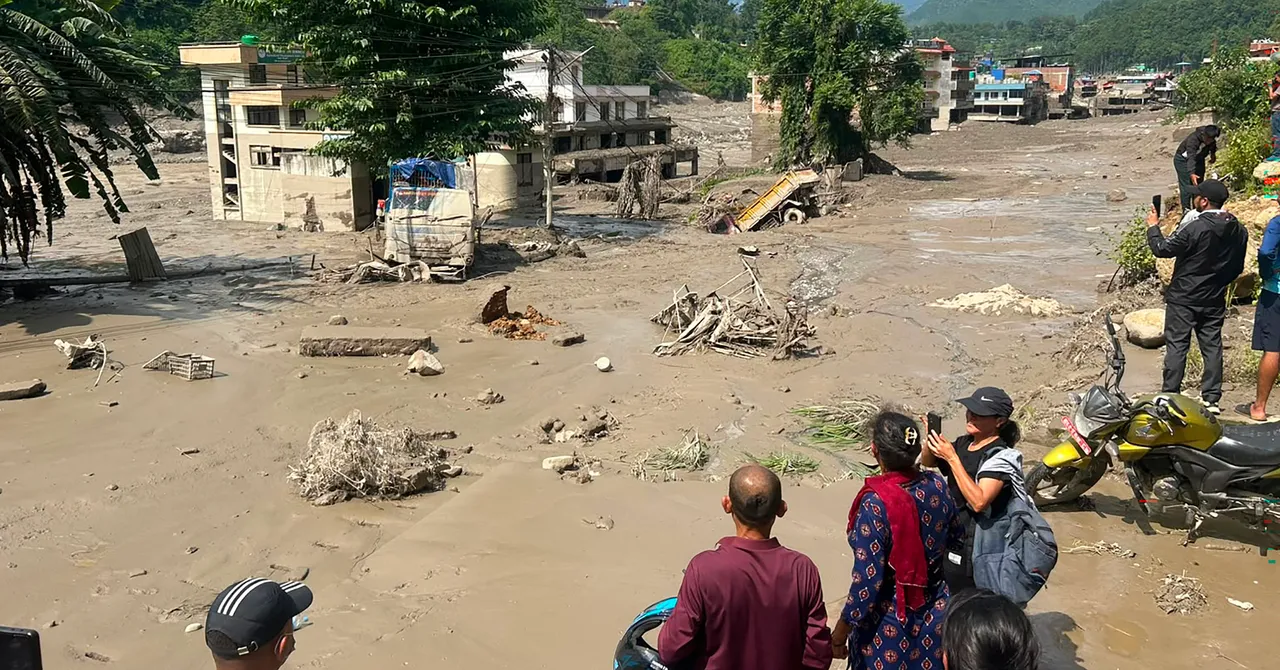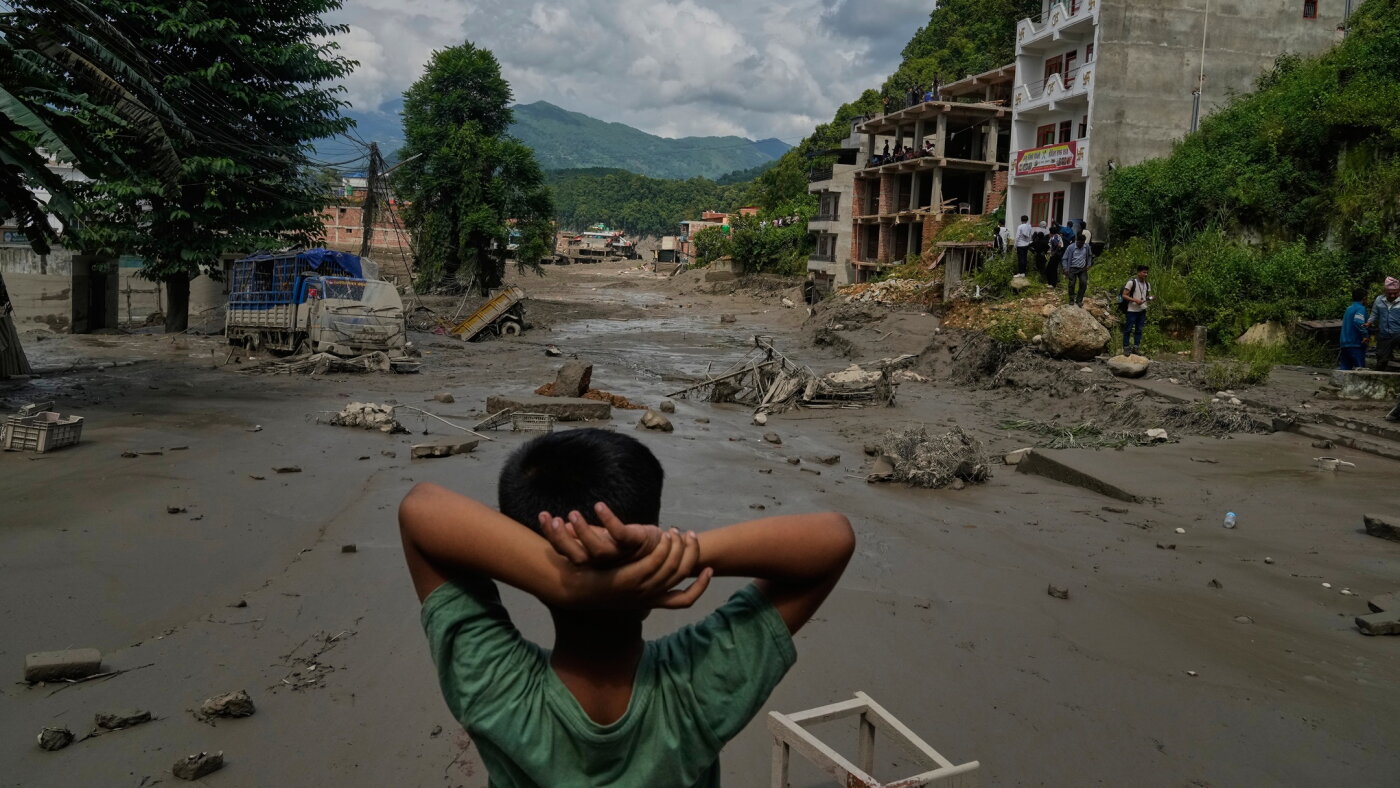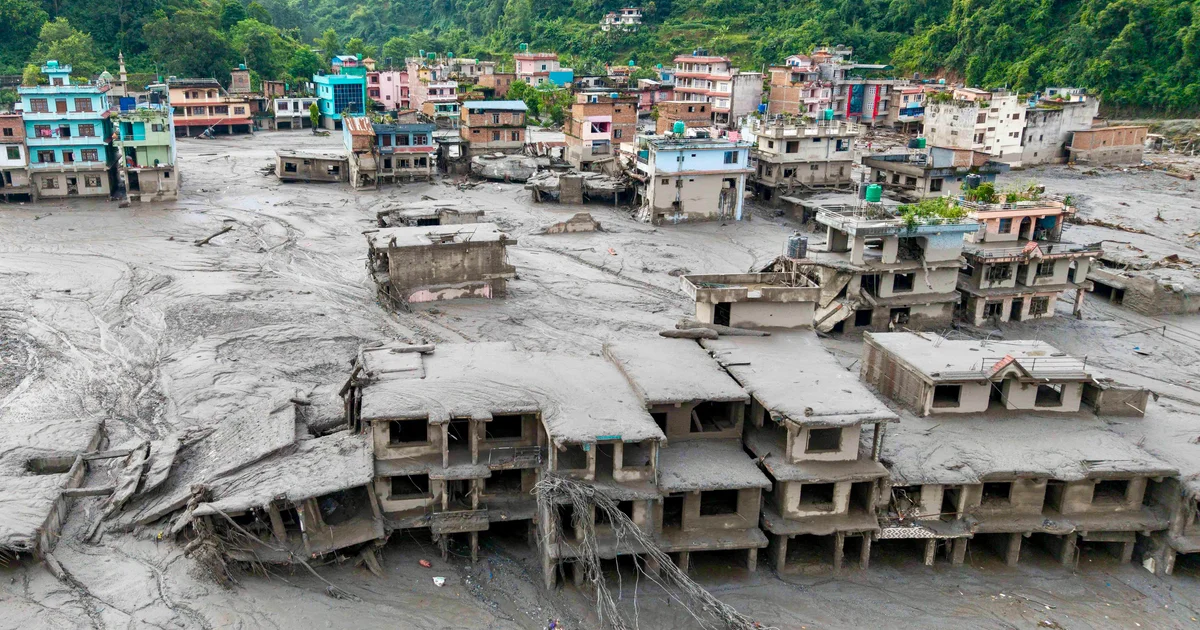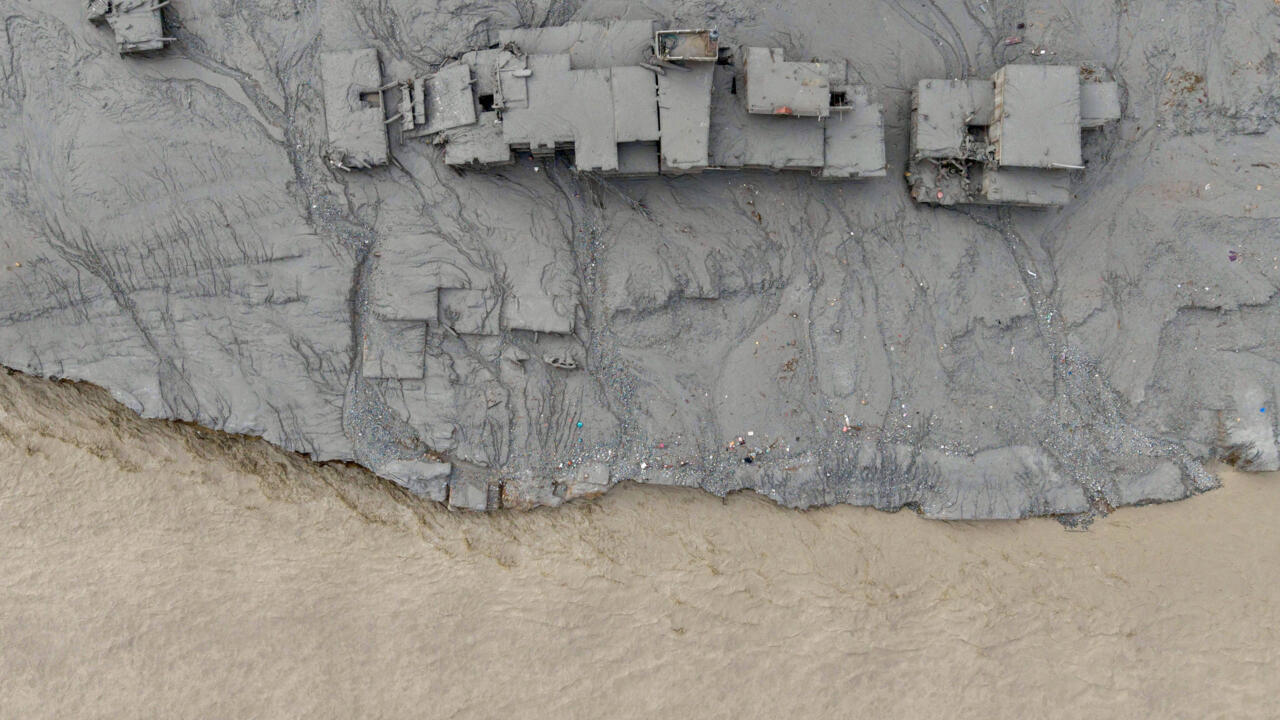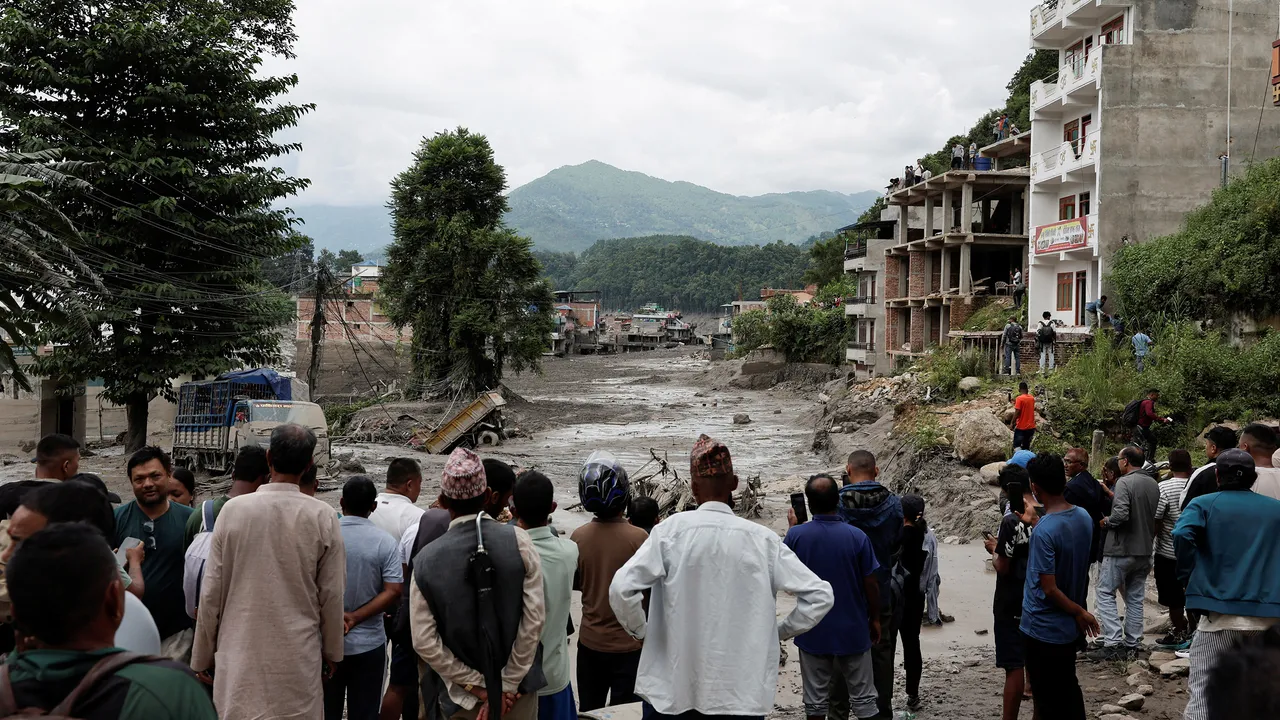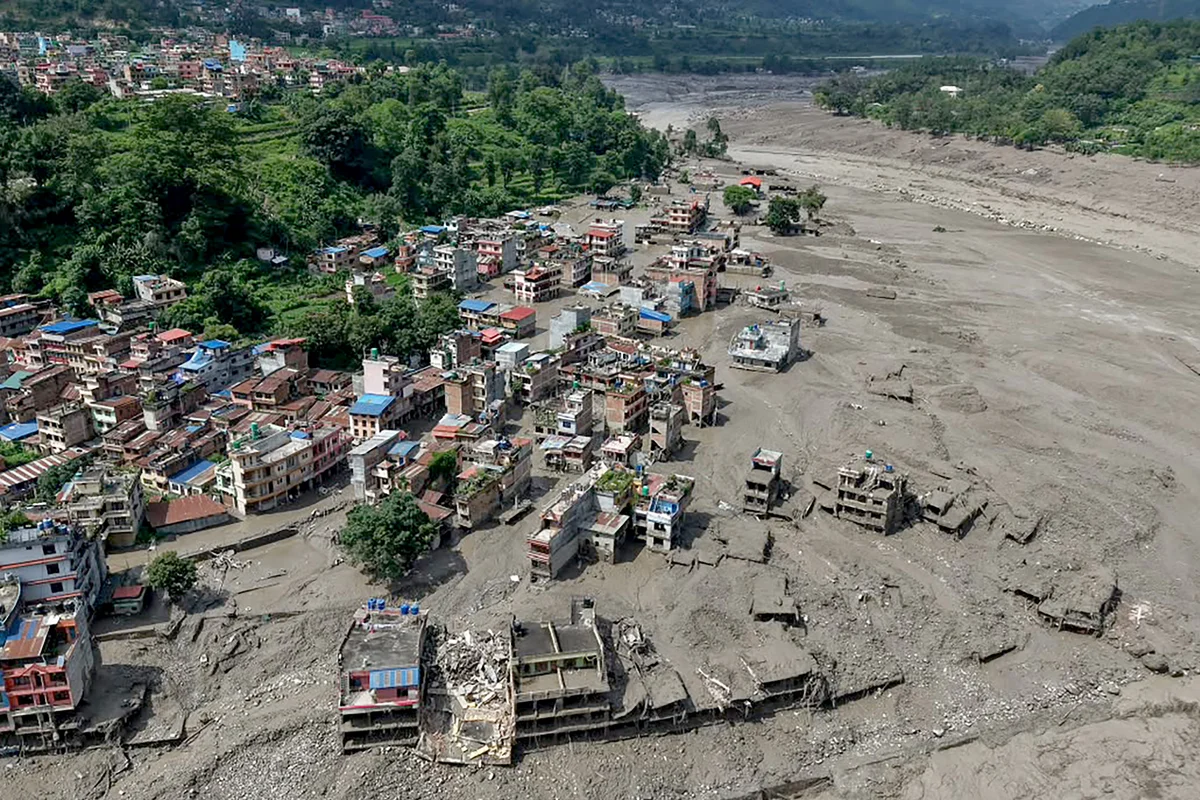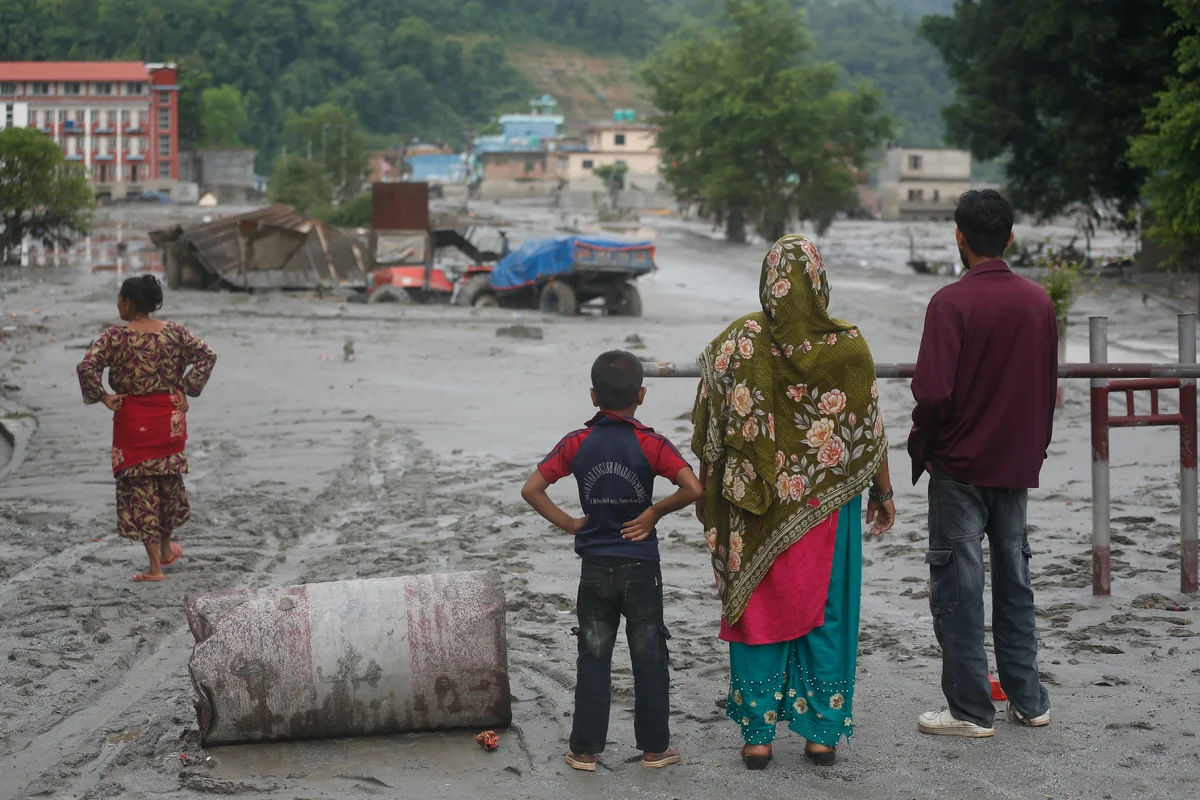
August 27, 20263 min read Add Us On GoogleAdd SciAmThe disaster has claimed hundreds of lives, and at least 1,400 people are missingBy Claire Cameron edited by Jeanna BrynerA damaged section of a highway in Nuwakot, central Nepal, is seen on August 27, 2026 Sanjit Pariyar/NurPhoto/Getty ImagesHundreds of people are dead and at least 1,400 are missing after a massive wall of water crashed through towns in Nepal and Tibet, an autonomous region of China. The flood tore up buildings, roads and other infrastructure along its path; the full extent of the damage will likely take weeks or even months to assess. But already, attention is turning to what could possibly have caused this catastrophe and why there was no warning.Nepali officials have said the floods were likely unleashed by a glacial collapse, which is when a large piece of ice, rock and debris suddenly detaches from a glacier on a mountain. Officials told Indian media outlets that whatever fell off the glacier may have dropped into a glacial lake and blocked a river, resulting in the massive wave of ice, water and debris that plowed through settlements nearby. The glacier was likely a cirque glacier, the officials said, which is a glacier that has formed in a depression or basin high in the mountains.A glacial collapse is similar to an avalanche—but instead of snow falling from a mountain slope, falling ice gathers energy and debris into a fast flowing, destructive mixture. And as the material fell, it would have taken on energy and heat that would have caused further melt, adding to the flood.On supporting science journalismIf you're enjoying this article, consider supporting our award-winning journalism by subscribing. By purchasing a subscription you are helping to ensure the future of impactful stories about the discoveries and ideas shaping our world today.Dan Shugar, an Earth scientist at University of Calgary in Canada, says that new satellite imagery shows “the glacier was only part of what failed.”“It looks to have been a large rock avalanche (a big bedrock landslide) that took part of the glacier with it,” he says. “We don’t know exactly how big yet, but big.”Infographic with satellite images of the Nepalese village of Syabrubesi near Tibet, which was largely devastated by the rising waters of the Trishuli River in deadly floods that struck on August 26Graphic by Valentin RAKOVSKY and Sabrina BLANCHARD / AFP via Getty ImagesThe mountain in question here is Lantang Lirung, part of the Himalaya. This mountain range, which is the 99th highest in the world, is nestled in the Langtang Valley, colloquially known as the “Valley of Glaciers.” Material from the mountain likely fell into the Lende Khola river, which is in Tibet. Altogether, the event affected rivers more than 100 kilometers (62 miles) away, according to Reuters.Initial seismic data suggested an earthquake may have caused the glacial collapse, but the U.S. Geological Survey suggested the avalanche itself set off a magnitude 5.2 landslide.Kristen Cook, a geomorphologist at the Institute of Earth Science at Grenoble Alpes University in France, told Scientific American that the scale of the event is “really shocking.” Based on initial analysis of seismic data, hundreds of millions of tons of material, including rock, ice and other debris, collapsed, Cook said.It’s not clear what exact role climate change had in this catastrophe. What is clear is that Earth’s glaciers are melting faster as a result of warming, and that melting is destabilizing these glaciers—and the mountains that buttress them. This is particularly true in the Himalayas. A 2023 United Nations report found that Nepal had lost a third of its ice volume in the last 30 years, with glaciers there melting 65 percent faster in the last decade than the previous ten years.“It’s difficult to conclusively link a single event directly to climate change,” Cook said. “We know it’s getting warmer in the Himalaya. Permafrost is melting. Things are becoming unstable.”Shugar says "100 percent" climate change will make these events more likely, "by some combination of glacier melt, permafrost thaw, and changes to precipitation and temperature patterns.""Of course one other very big factor is human activity. If an event like this happened in a valley with no people, we wouldn’t be having this conversation. But as humans increase our footprint (not just with permanent settlements but also roads, pipelines etc, tanker and cruise ship traffic in fjord, etc) we will increase the severity of the disaster," he says.It’s Time to Stand Up for ScienceIf you enjoyed this article, I’d like to ask for your support. Scientific American has served as an advocate for science and industry for 180 years, and right now may be the most critical moment in that two-century history.SciAm always educates and delights me, and inspires a sense of awe for our vast, beautiful universe. I hope it does that for you, too.If you subscribe to Scientific American, you help ensure that our coverage is centered on meaningful research and discovery; that we have the resources to report on the decisions that threaten labs across the U.S.; and that we support both budding and working scientists at a time when the value of science itself too often goes unrecognized.In return, you get essential news, captivating podcasts, brilliant infographics, can't-miss newsletters, must-watch videos, challenging games, and the science world's best writing and reporting. You can even gift someone a subscription.There has never been a more important time for us to stand up and show why science matters. I hope you’ll support us in that mission.
What caused the Nepal disaster—and why climate change could make these events more likely
The disaster has claimed hundreds of lives, and at least 1,400 people are missing
916 words~4 min read