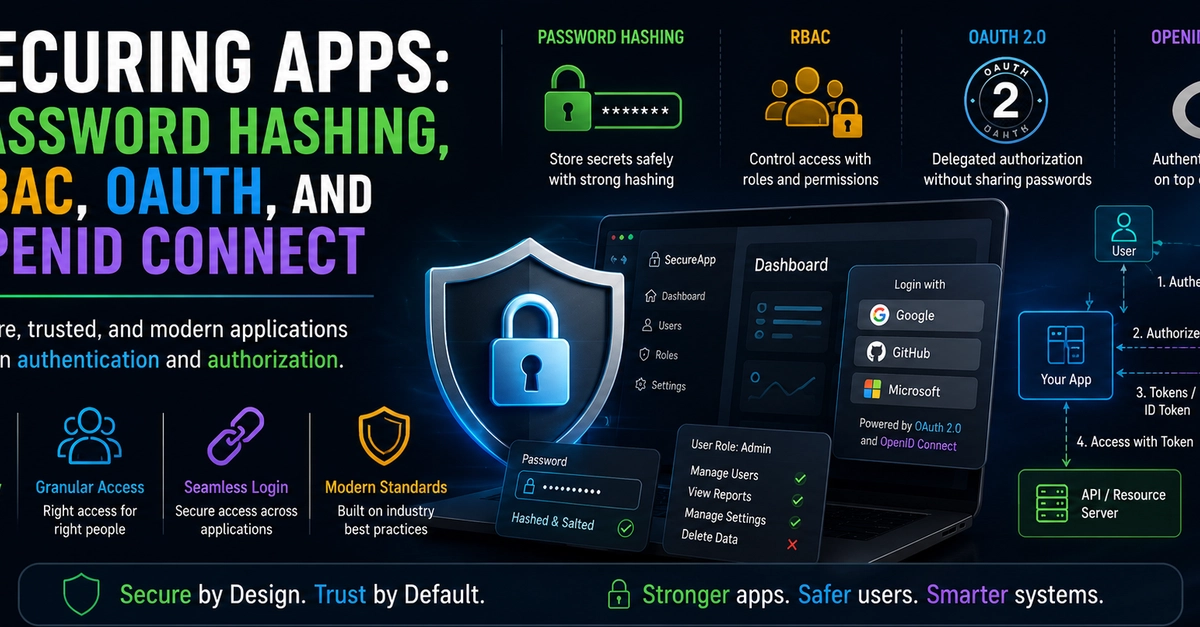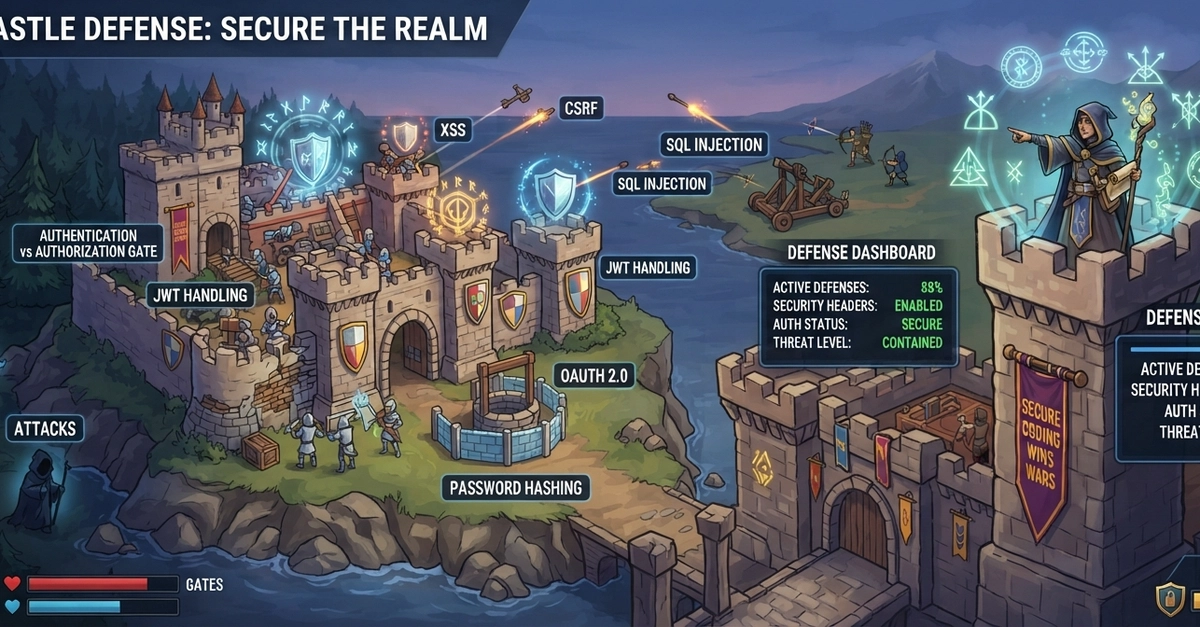
Authentication vs authorization, JWT deep dive, OAuth 2.0, password hashing, XSS/CSRF/SQL injection prevention, and security headers.
The Developer Who Stored Passwords in Plaintext
In 2012, LinkedIn suffered a breach that exposed 6.5 million password hashes. The hashes were unsalted SHA-1 — a hashing algorithm so fast that an attacker with a modern GPU could crack billions of hashes per hour. Within days, 60% of the passwords were recovered in plaintext. The attackers didn't need sophisticated exploits; they just needed a database dump and a rainbow table.
The breach was preventable. Salting (adding random data to each password before hashing) and using a slow hashing algorithm (bcrypt, scrypt, or Argon2) would have made cracking infeasible. These weren't obscure techniques — they were well-documented best practices that LinkedIn's engineering team either didn't know or didn't prioritize. The cost: a $1.25 million settlement, a decade of reputational damage, and millions of users whose credentials were compromised.
This is the uncomfortable truth about web security: most breaches aren't caused by sophisticated attacks. They're caused by developers who didn't know the basics. SQL injection, cross-site scripting (XSS), and broken authentication have been on the OWASP Top 10 for over 20 years — and they're still the most common vulnerabilities in production applications.