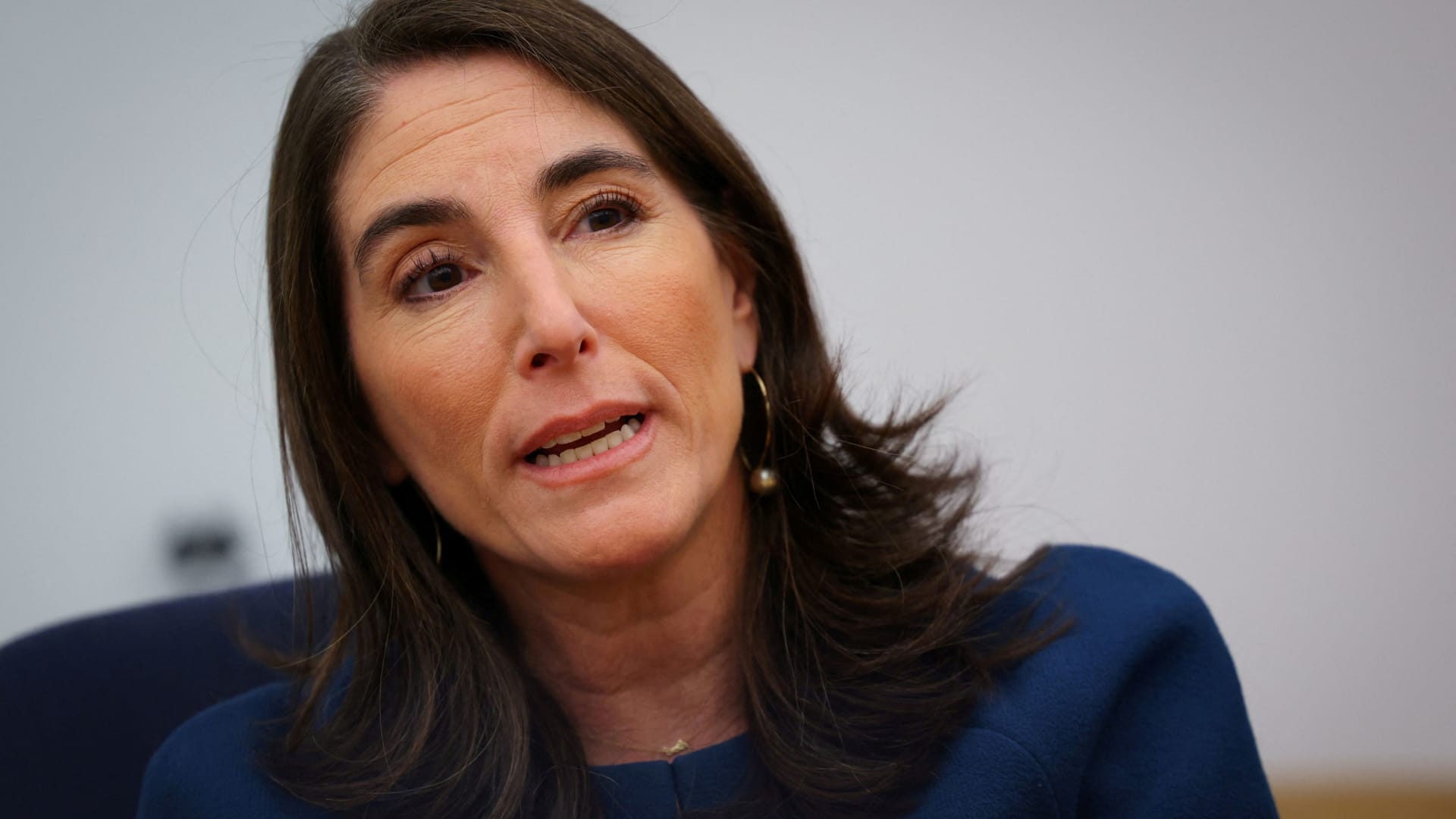
Cleveland Fed President Beth Hammack thinks the invisible line that separates tight monetary policy from loose monetary policy sits higher than most of her colleagues believe. And if she’s right, the Federal Reserve may not be fighting inflation as hard as it thinks it is.
Hammack has placed her estimate of the neutral interest rate, the theoretical level where policy neither stimulates nor restricts economic growth, at around 1.4% to 1.5% in real terms. That puts her at the upper end of the Federal Open Market Committee’s range, where the median longer-run nominal rate projection has sat around 3% in recent Summary of Economic Projections.
The neutral rate debate, explained
The neutral rate, sometimes called r-star or r*, is the Goldilocks zone for interest rates: not so high that it chokes economic growth, not so low that it lets inflation run wild. Economists infer it from factors including productivity growth, demographics, and global capital flows. Model estimates like the Laubach-Williams framework have pegged it around 1.4%, while Cleveland Fed research has pointed closer to 1.5%. Both show an upward trend as of mid-2025.
When Hammack says her neutral rate estimate is higher than her peers’, she’s essentially arguing that the current federal funds rate of roughly 3.5% to 3.75% isn’t doing as much heavy lifting against inflation as the committee might assume. In her words from December 2025, the prevailing rate felt “maybe a little bit below” her neutral estimate.