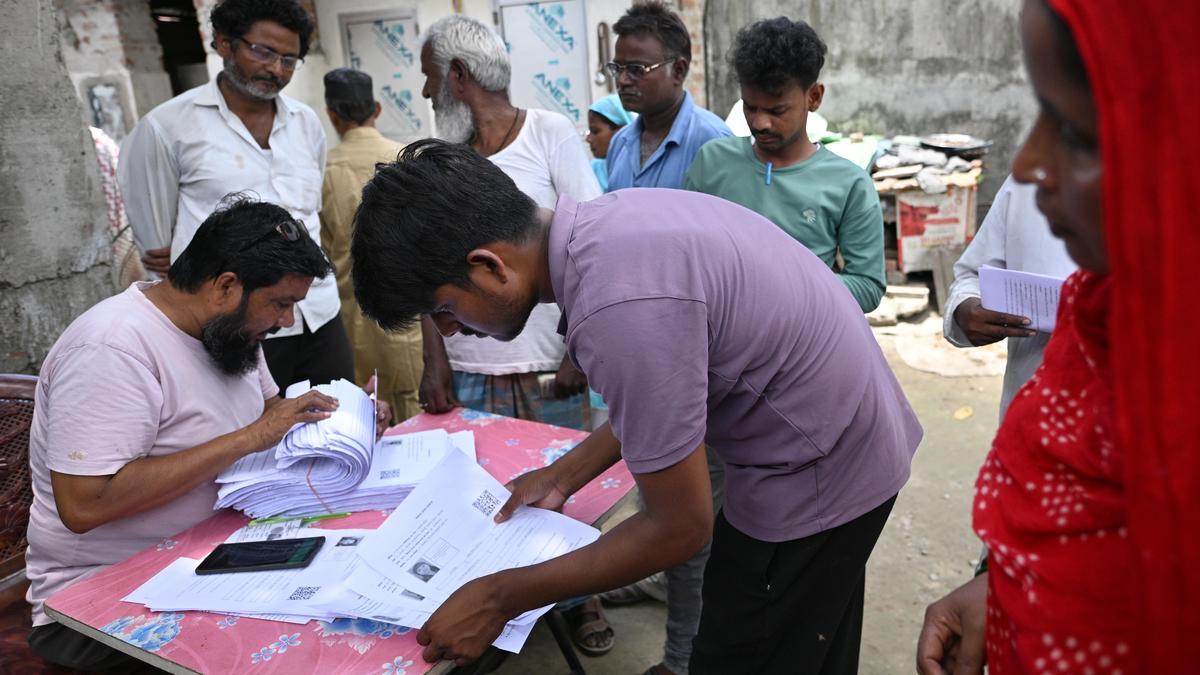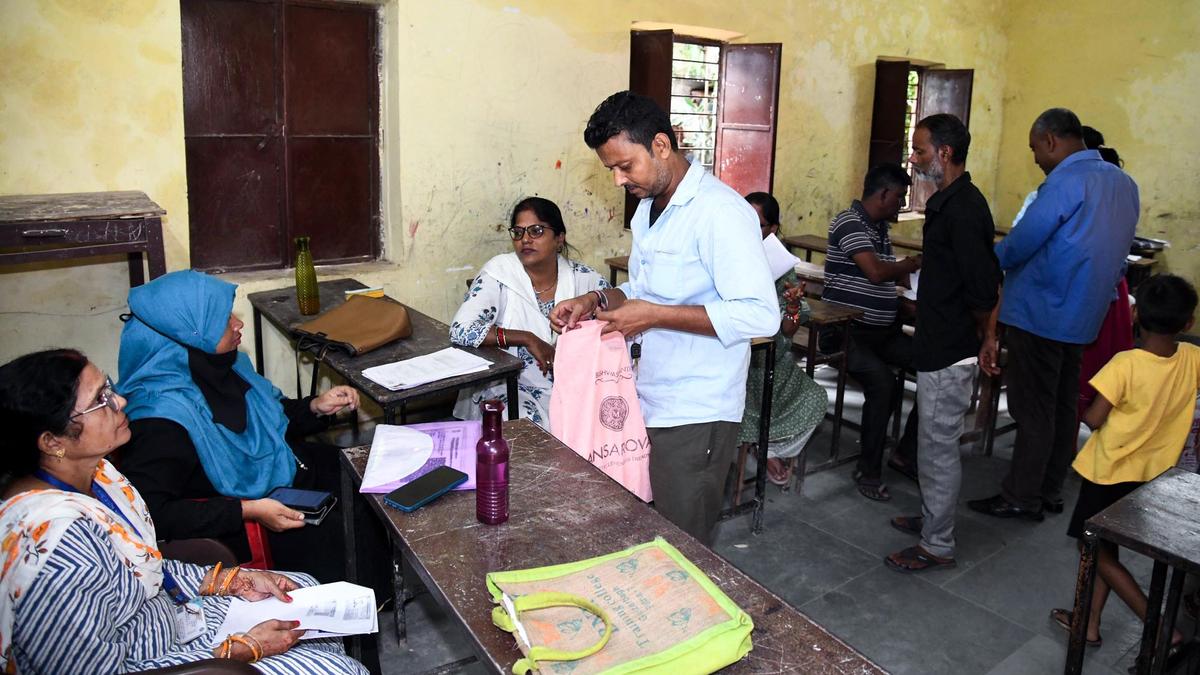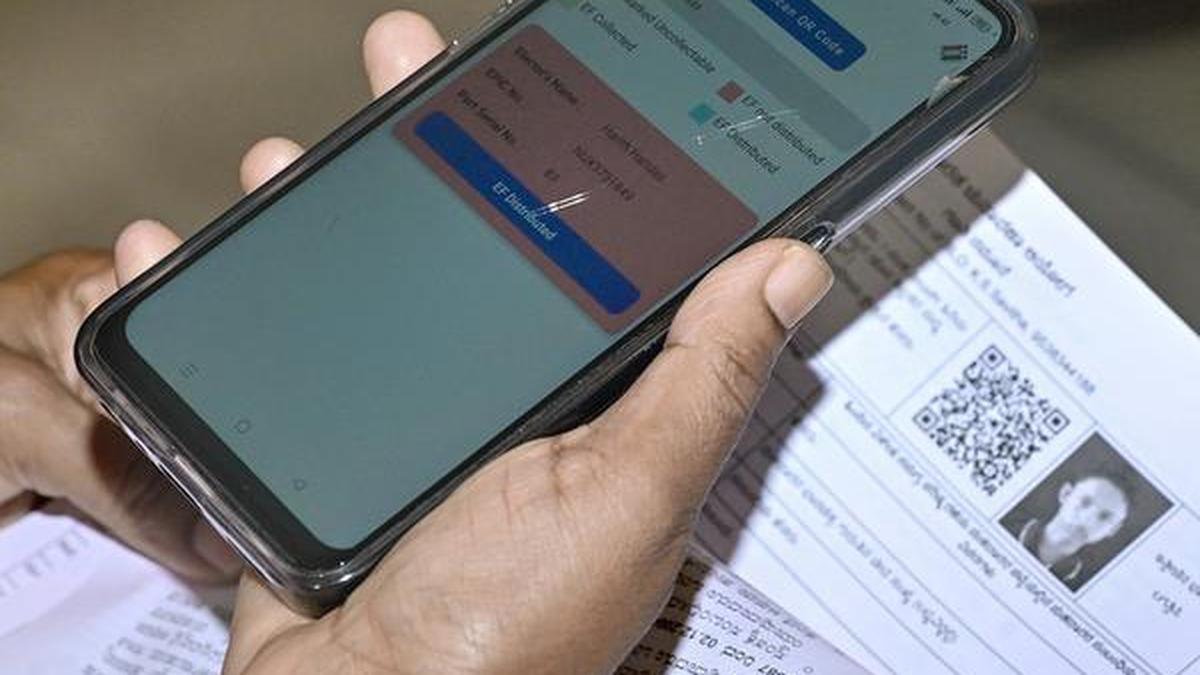
A booth-level officer digitising the details given in the enumeration form of a voter in Mangaluru.
| Photo Credit: H.S. MANJUNATH
In a democracy, electoral rolls are not just a bureaucratic register of names. It is a legal record of belonging — a document that determines who may participate in the Republic’s most solemn contest of power. Every inclusion affirms citizenship in the democratic process; every exclusion raises unsettling questions of representation, access, and trust in institutions — even if it doesn’t conclusively decide on citizenship.Several recognised political parties across the spectrum had, from time to time, raised serious concerns regarding inaccuracies on the electoral rolls. They cited inclusion of ineligible and deceased individuals and exclusion of eligible voters. In response, and to restore this public trust and confidence in the integrity of the electoral rolls, the Election Commission, in its order dated June 24, 2025, directed the conduct of the special intensive revision (SIR) in Bihar noting several factors necessitating such an exercise, such as rapid urbanisation, frequent migration, young citizens becoming eligible to vote, non-reporting of deaths, inclusion of the names of foreign illegal immigrants, illegal cross-border migration, and widespread duplication on the rolls. The process commencing with Bihar, where the Assembly election was held later in 2025, was followed by a nationwide SIR. Published - August 27, 2026 12:19 am IST