(Image credit: Future)
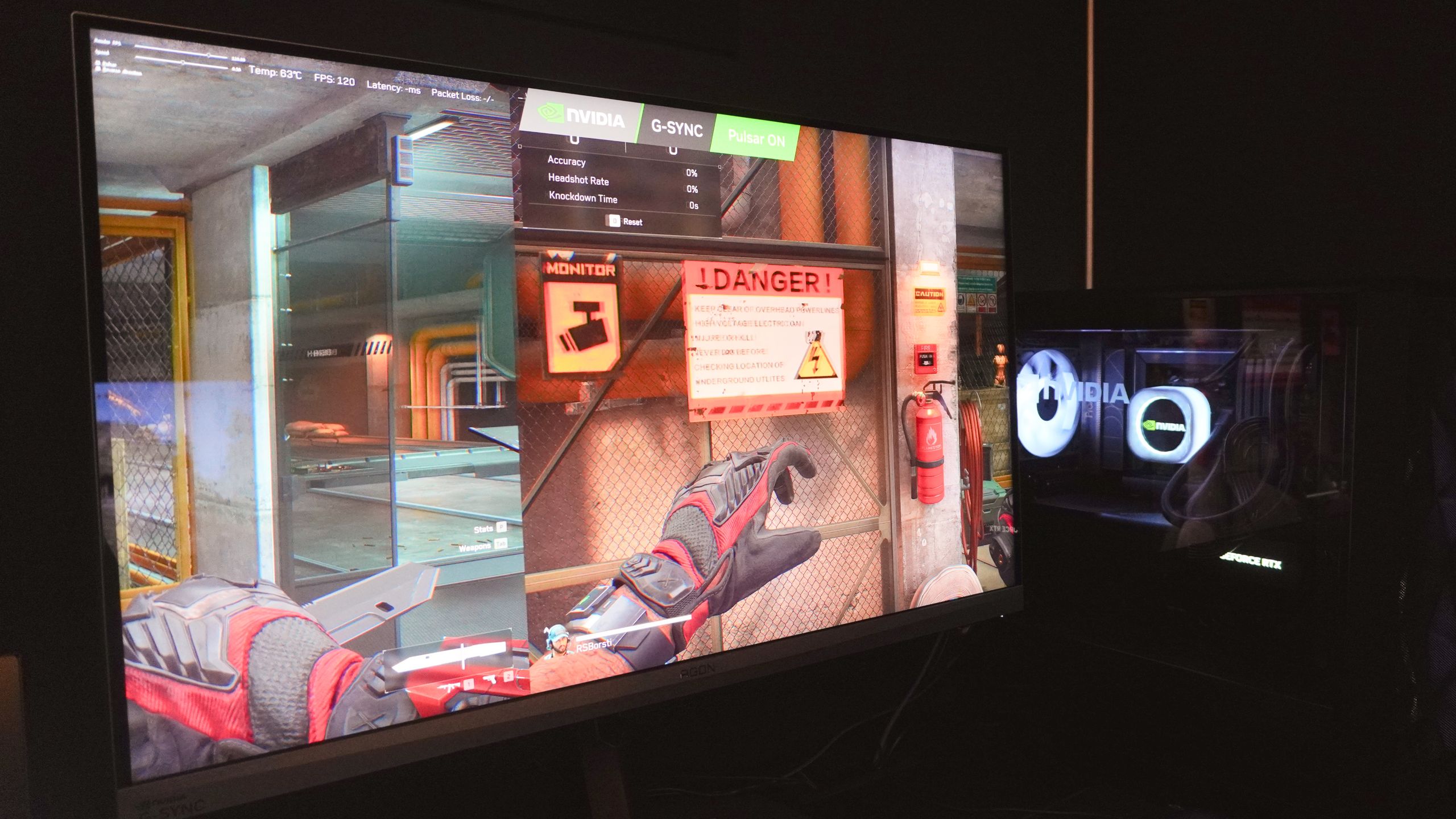
Super high-resolution monitors usually force you to compromise on motion clarity. Compared to lower-resolution esports panels, it’s simply next-to-impossible to push the same insane 500Hz+ refresh rates. That was until Nvidia found a way around that.Enter the 5K AOC Agon Pro AGP327KG — the first of its kind armed with Team Green’s G-Sync Pulsar. I saw this technology at CES 2026 in some competitive-tier gaming monitors, but now it's in something with staggeringly high pixel density; to me, this is a game changer.G-Sync Pulsar explained
(Image credit: Future)What is G-Sync Pulsar? Good question! You’ve already got variable refresh rate and extreme low motion blur on deck, so what else does it do? Well, a simple way to explain it would be that Nvidia’s regulating the pulse of the monitor itself — specifically the backlight.To make an IPS monitor like this light up, you need a backlight strobing to illuminate the pixels. In normal screens, the whole backlight will strobe independently of what’s being shown on screen. That means that as the game moves, monitor backlight strobes may reveal pixels in mid-transition, which leads to the human eye perceiving blur.
(Image credit: Future)G-Sync Pulsar brings variable-frequency strobing tied to the refresh rate, so the backlight strobe pulses in lock step with every game frame (also known as a scanout). That ensures a stable image with every pop of light, which gives you a crispier picture and the perception of higher motion clarity.Previously, Pulsar was limited to smaller 27-inch 1440p panels, and in my time testing it, I was blown away by the tack-sharp definition of everything on screen. Slapping it on a 5K 144Hz monitor shows exactly what the tech can do when given the space to stretch its legs, and I’m floored by it.The end result