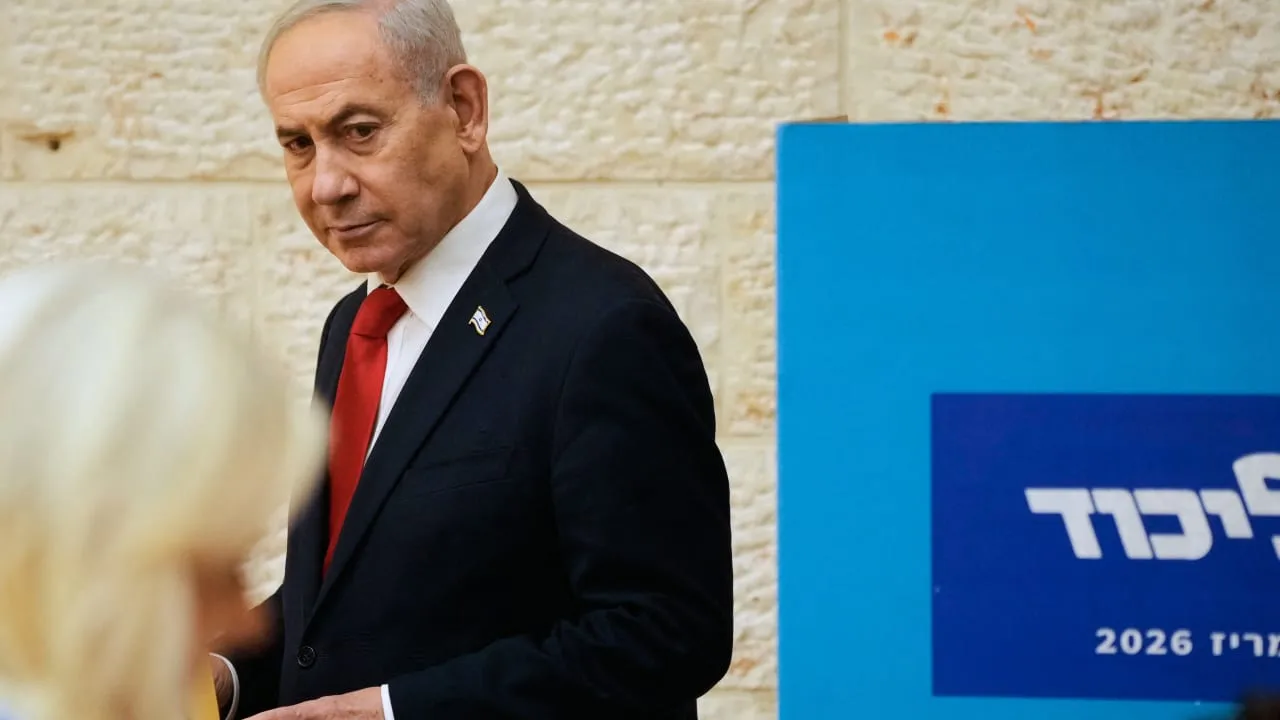
ByGERSHON BASKINAUGUST 27, 2026 15:00Prime Minister Benjamin Netanyahu has a serious problem. Israel is approaching an election in which voters will be asked to judge not only the country’s longest-serving prime minister but the man who was prime minister on October 7.If the election becomes a referendum on responsibility for the greatest security failure in Israel’s history, the hostages, the economic cost of prolonged war, Israel’s international isolation, and the government’s failure to turn military achievements into a better strategic reality, Netanyahu faces a difficult election. But if Israel goes to elections while fighting another war, the political terrain changes.Netanyahu can once again present himself as “Mr. Security”: the experienced leader standing between Israel and enemies determined to destroy us. Responsibility for yesterday is pushed aside by fear of tomorrow. Netanyahu needs a war to win.It may not matter much where it is fought. It could be Gaza, where Israel has still failed to transform Hamas’s military defeat into a viable political alternative. It could be the West Bank, where settlement expansion, settler violence, and Palestinian despair increase the danger of a major explosion. It could be Lebanon, Syria, or Iran. Given the deterioration in relations with Ankara, even a confrontation involving Turkey can no longer be dismissed as unimaginable.Why war is needed for Netanyahu's election success?Netanyahu’s great political advantage has always been fear. He does not need Israelis to believe everything is going well. He needs them to believe everything is dangerous and that only he is experienced and tough enough to protect them.An Israeli soldier is seen in Kibbutz Kfar Aza, one of the hardest-hit communities in the October 7 onslaught by Hamas, on October 27, 2023 (credit: GILI YAARI/FLASH90)October 7 should have destroyed the myth of “Mr. Security.” Instead, Netanyahu has spent the years since rebuilding it. The catastrophe did not occur because Israel lacked military power. It came after years in which Netanyahu’s governments convinced themselves that the Palestinian conflict could be managed rather than resolved, Hamas contained, the Palestinian Authority weakened, and military superiority substituted for political strategy.Since October 7, Israel has demonstrated extraordinary military capabilities. But tactical military success is not strategic victory. The purpose of military force is to produce a political reality better than the one that existed before the fighting began. By that standard, Israel’s achievements remain incomplete.Hamas has been devastated, but legitimate Palestinian governance has still not been allowed to take full responsibility in Gaza. Gaza remains destroyed and unstable. The West Bank is moving toward greater violence. Iran remains a strategic threat. Lebanon lacks a durable political arrangement with Israel, and relations with Turkey are deteriorating.Netanyahu knows how to order military operations. What he repeatedly refuses to do is cash military achievements in for diplomatic and political gains. That is the central failure of his leadership.A strategic leader would use Hamas’s weakening to replace it with legitimate Palestinian governance backed by Arab states and an international security structure. He would use Israel’s military strength to negotiate from confidence, connect Saudi normalization to Palestinian statehood, and build a regional structure in which Israeli security depends less on permanent control over Palestinians and more on secure borders, regional partners, and enforceable guarantees.That would be victory.Another bombed building is not victory. Another assassination is not victory. Another military operation that produces only the next military operation is not victory. Israel has demonstrated that it can destroy. The question is whether its government knows how to build anything afterward.War serves Netanyahu politically because diplomacy requires decisions while war postpones them. Peace requires deciding what happens in Gaza after Hamas, whether Israel intends to rule Palestinians forever, what happens to the settlements, and whether Palestinian statehood is ultimately in Israel’s interest.War postpones those questions. It also transforms an election campaign. When missiles are flying and reservists are being called up, October 7 becomes yesterday’s argument. The immediate question becomes: Who can protect us now? Netanyahu knows how to campaign on that terrain better than almost anyone in Israeli history.Every proposed war should have to answer four questions: What is the military objective? What is the political objective? What happens the day after? How does this make Israel safer five or 10 years from now?The IDF chief of staff also bears an extraordinary responsibility. He is subordinate to Israel’s elected civilian government and does not determine national policy. But his professional duty is not simply to mobilize whatever forces the political leadership demands. He must give the cabinet his best professional judgment about whether a proposed war is actually necessary for Israel’s defense.If Netanyahu proposes a new war, or renews an existing one, before elections and the chief of staff concludes professionally that it is unnecessary for Israel’s defense and is being driven primarily by political considerations, he has a duty to tell the cabinet and government so unequivocally.And if, despite that warning, the government orders the IDF into a war the chief of staff believes is not necessary to protect Israel, he faces an extraordinary choice. He should not turn the IDF into an instrument for protecting a prime minister’s political future.If that is genuinely his professional conclusion, he should resign rather than personally lead the army into such a war, and tell the Israeli public – without revealing operational secrets – why he can no longer take professional responsibility for the decision.That would not be a military coup against civilian authority. The elected government would remain free to appoint another chief of staff and pursue its lawful policy. It would be an act of professional accountability by the officer entrusted with the lives of Israel’s soldiers.Because soldiers are not political assets. Israeli soldiers die. Reservists lose months of their lives. Families live under constant anxiety. The economy absorbs another shock. Palestinians pay an enormous civilian price, and whenever the battlefield expands, Lebanese, Syrians, and Iranians may pay as well.The question is therefore not whether Israel has the military capacity to start another war. It usually does. The question is whether the war is necessary.And Israelis should ask one uncomfortable question: Does this war make Israel safer, or does it make Netanyahu politically safer?There is also the disturbing possibility that a major security crisis close to election day could create pressure to postpone elections. I am not claiming Netanyahu has such a plan, and an Israeli prime minister cannot simply cancel elections by decree.But one principle should be established now: War cannot become an electoral strategy, and national emergency cannot become an instrument for postponing democratic accountability.The alternative Netanyahu should fear most is not another enemy army. It is an end to the wars.Imagine Israel approaching elections with Hamas removed from government, a new Palestinian administration entering Gaza, Israeli forces withdrawing as Palestinian and international forces take responsibility, reconstruction underway, Saudi normalization advancing, and the United States leading a regional process that strengthens Israeli security while creating a genuine political future for Palestinians.What does Netanyahu campaign on then? He would finally have to defend his record rather than defend the country against the next emergency. He would have to answer for October 7, for the belief that Hamas could be managed, for weakening Palestinian moderates, and for repeatedly failing to transform military superiority into political strategy.Israel needs strength. It needs a powerful military and the willingness to use force when necessary. But permanent war is not strength. The real test of power is whether it produces a political outcome that makes the next war less likely.Netanyahu has spent decades telling Israelis that only he can keep them safe. If he needs Israel to remain at war in order to remain in power, Israelis should ask a much simpler question: Whose security is he really protecting?Follow us on Google
Benjamin Netanyahu needs a war to win | The Jerusalem Post
If Israel goes to elections while fighting another war, the political terrain changes.
1,284 words~6 min read