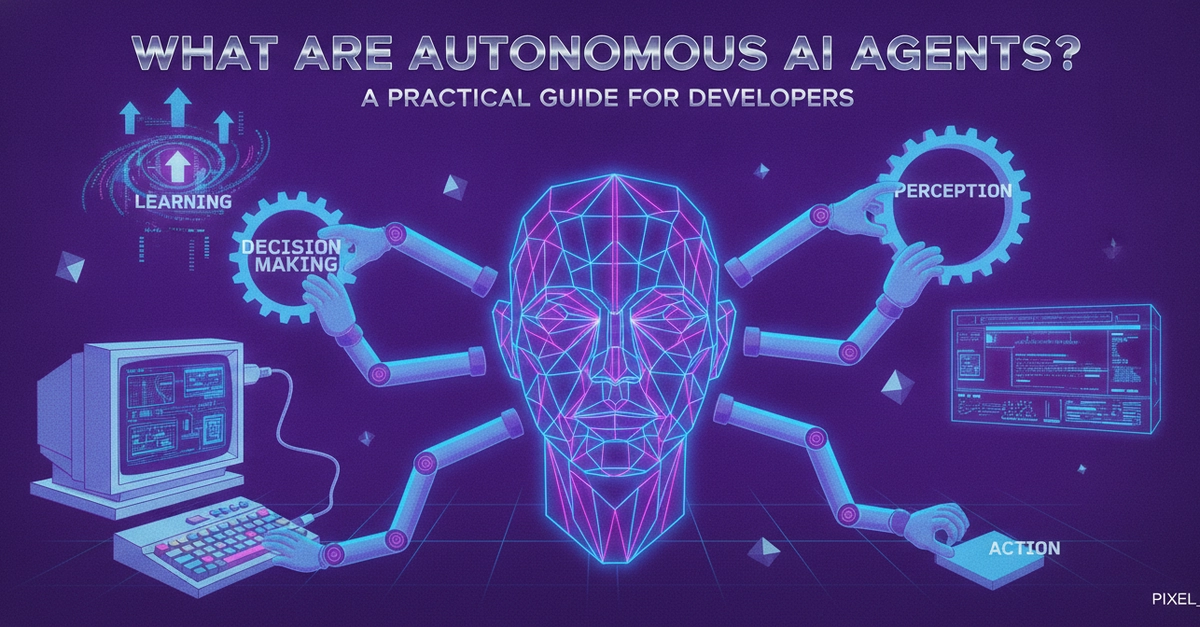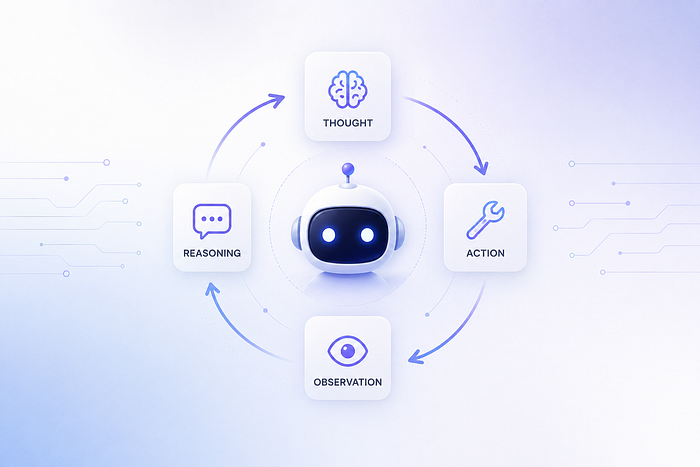
AI agents are the biggest shift in how we build software since the API. For years we wrote programs that did exactly what we told them, step by step. An AI agent is different: you give it a goal, a set of tools, and the freedom to decide how to reach that goal. It plans, acts, observes the result, and tries again until the job is done. This guide breaks down what an AI agent actually is, how one works under the hood, and how to build a reliable one without getting burned.
From Chatbots to Agents
A large language model on its own is a text predictor. Ask it a question and it returns a well-phrased answer, but it cannot check a database, send an email, or browse a live website. It only knows what it was trained on.
An agent wraps that model in a loop and hands it tools. Instead of just answering, the model can now decide to do something — call a function, run a query, read a file — look at what came back, and decide what to do next. The model becomes the reasoning engine; the tools become its hands.
That single change turns a clever autocomplete into something that can book a meeting, triage a support inbox, or publish an article end to end.