Shell scripting remains the connective tissue of modern deployment pipelines, system administration, and container orchestration. Yet, despite its ubiquity, Bash is notoriously fragile. A single unquoted variable or a missing error handling flag can result in disastrous silent failures, partial script executions, or critical security vulnerabilities.
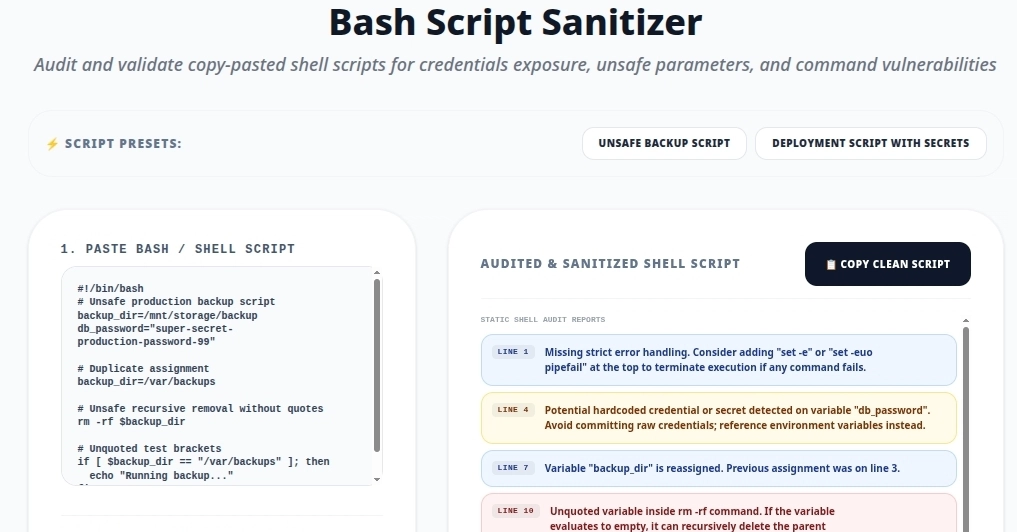
In this technical guide, we will analyze common, high-risk anti-patterns in Bash scripts, explain why standard shell environments fail silently, and demonstrate how to programmatically audit shell script structures for duplicate variables and unsafe parameters.
1. The High-Risk Anti-Patterns of Silent Bash Failures
By default, Bash execution engines are designed to be permissive. Unlike strict programming environments that throw exceptions and halt execution on errors, shell scripts will happily continue executing even if a key command fails or a variable is undefined.
Anti-Pattern A: Missing Safety Headers