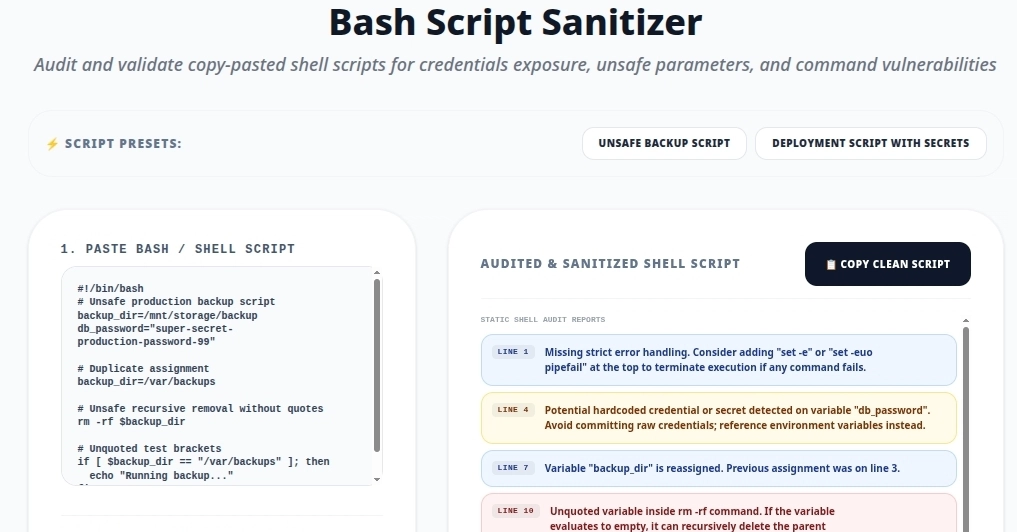
There comes a moment in every developer's life when they stare at a terminal at 3:47 AM and realize that a 200-line shell script they wrote three months ago has just done something unspeakable to a production database. The script did not fail loudly. It did not crash with a helpful error message. It simply kept going, cheerfully executing command after command, treating every catastrophic failure as a mild suggestion.
This is the moment you understand that bash error handling is not a feature. It is a survival mechanism.
Shell scripting occupies a strange place in the software ecosystem. It is simultaneously the most accessible programming environment and the most hostile. Bash does not hold your hand. Bash does not warn you when you are about to walk off a cliff. Bash assumes that if you typed rm -rf / at 2 AM while sleep-deprived, you must have had your reasons. Bash is a tool for adults who have made their peace with chaos.
But chaos, while philosophically interesting, is a poor foundation for infrastructure.
The Default Behavior Is a Trap