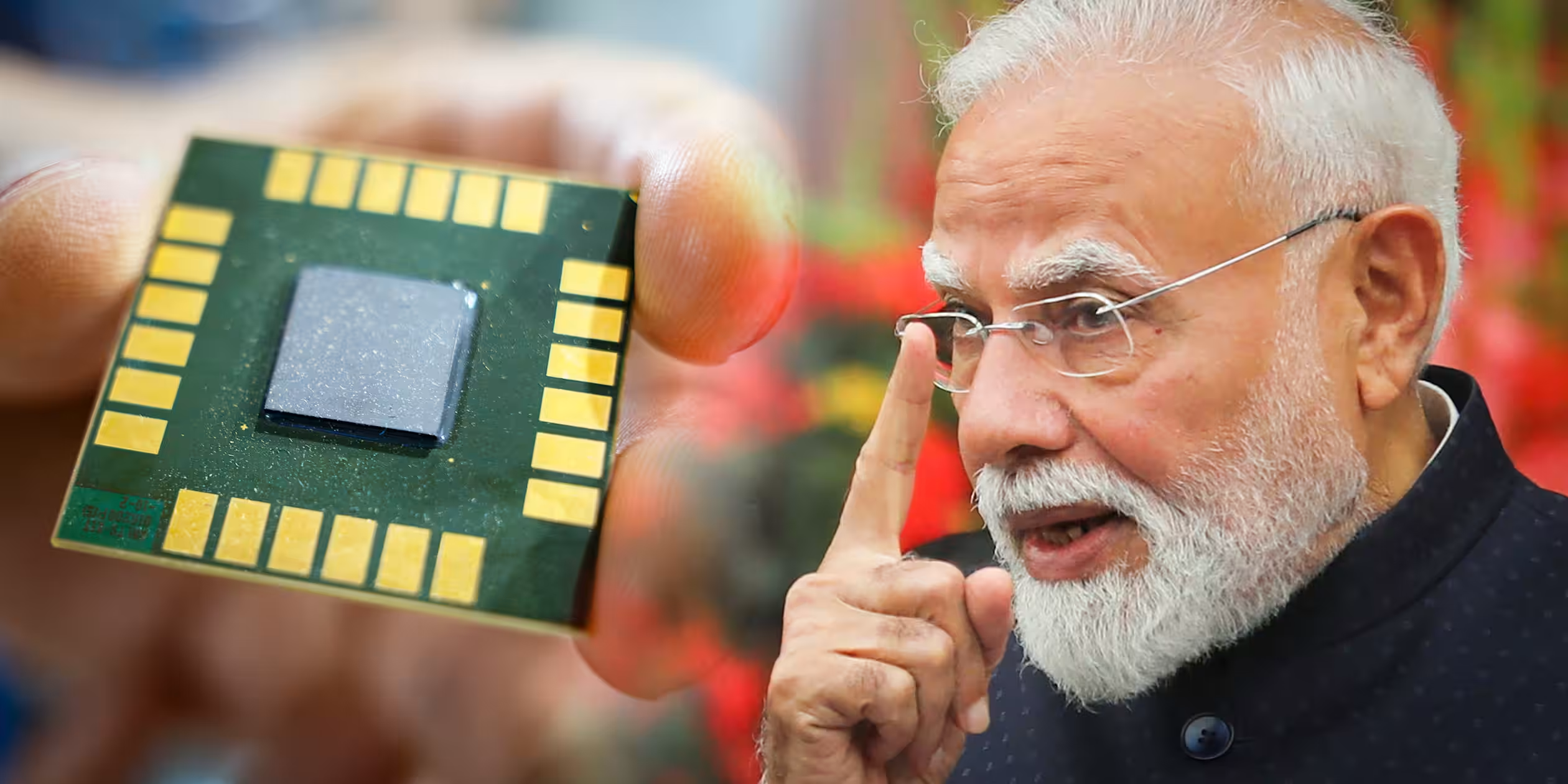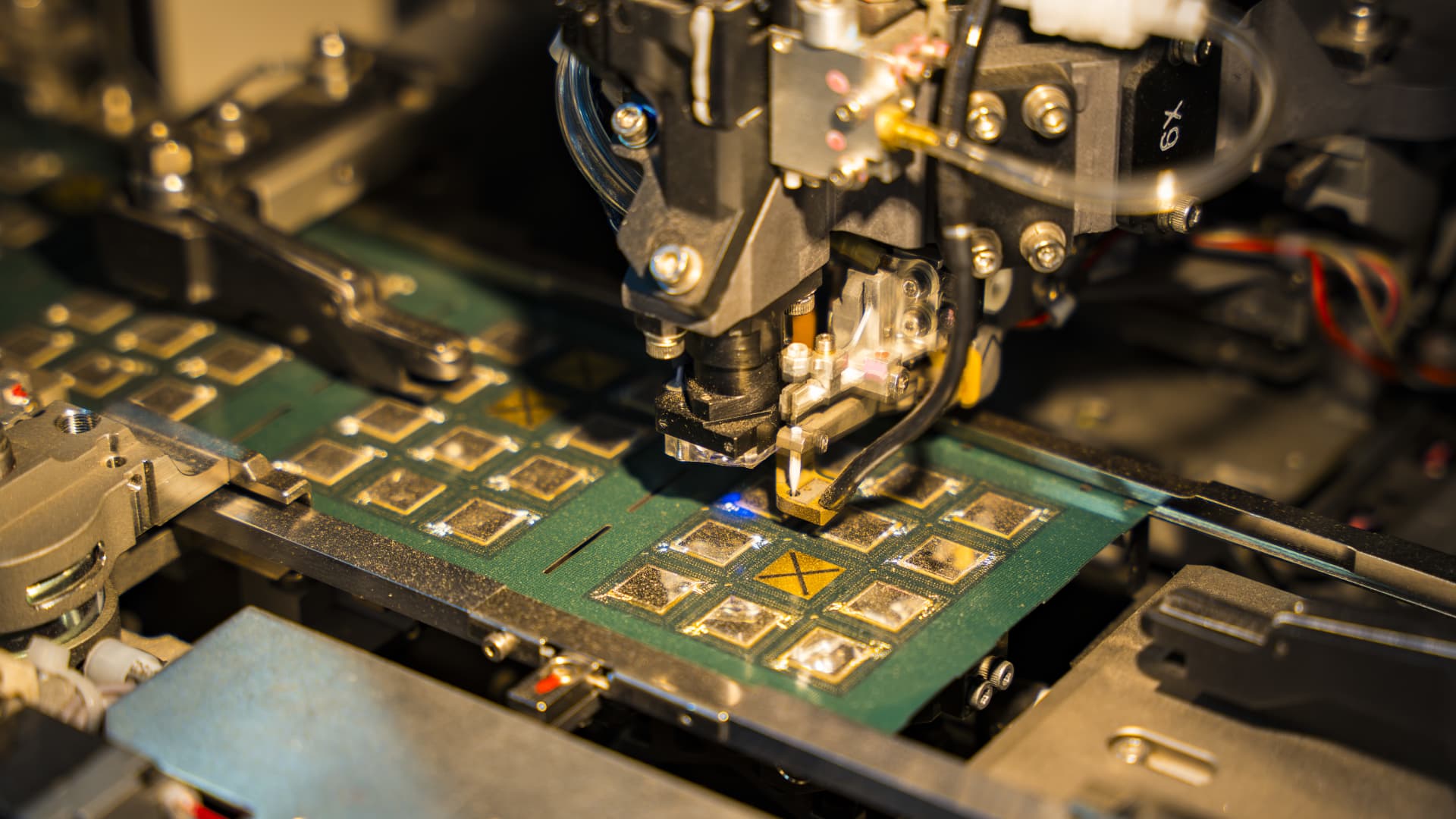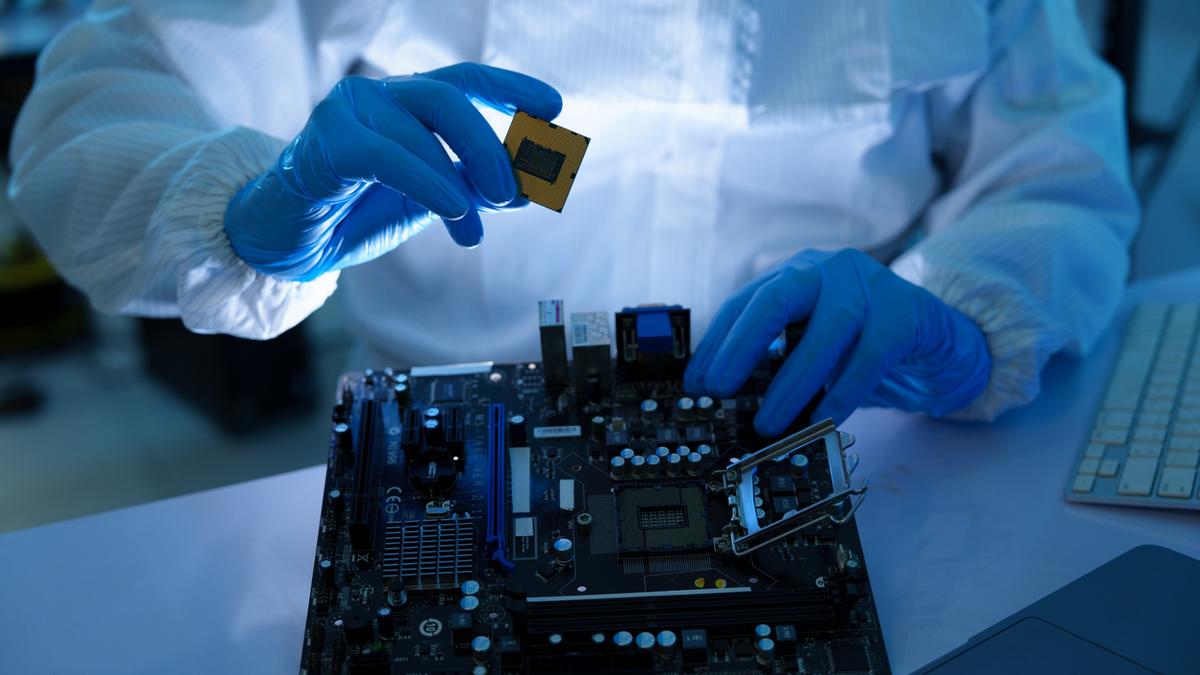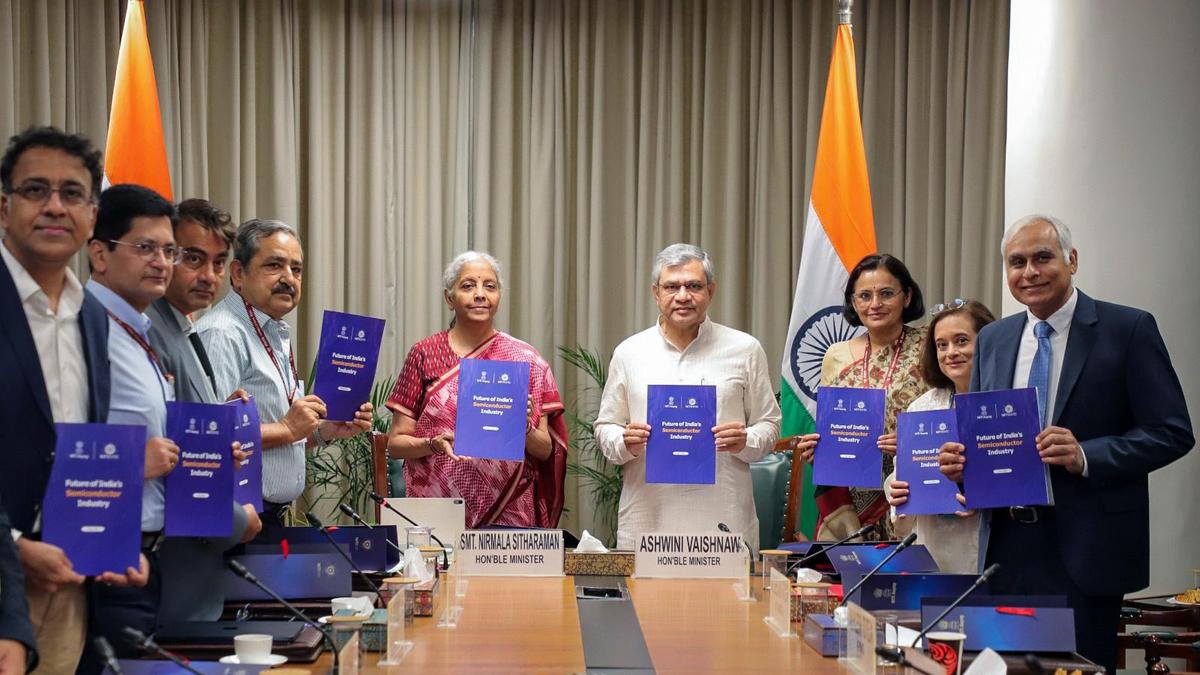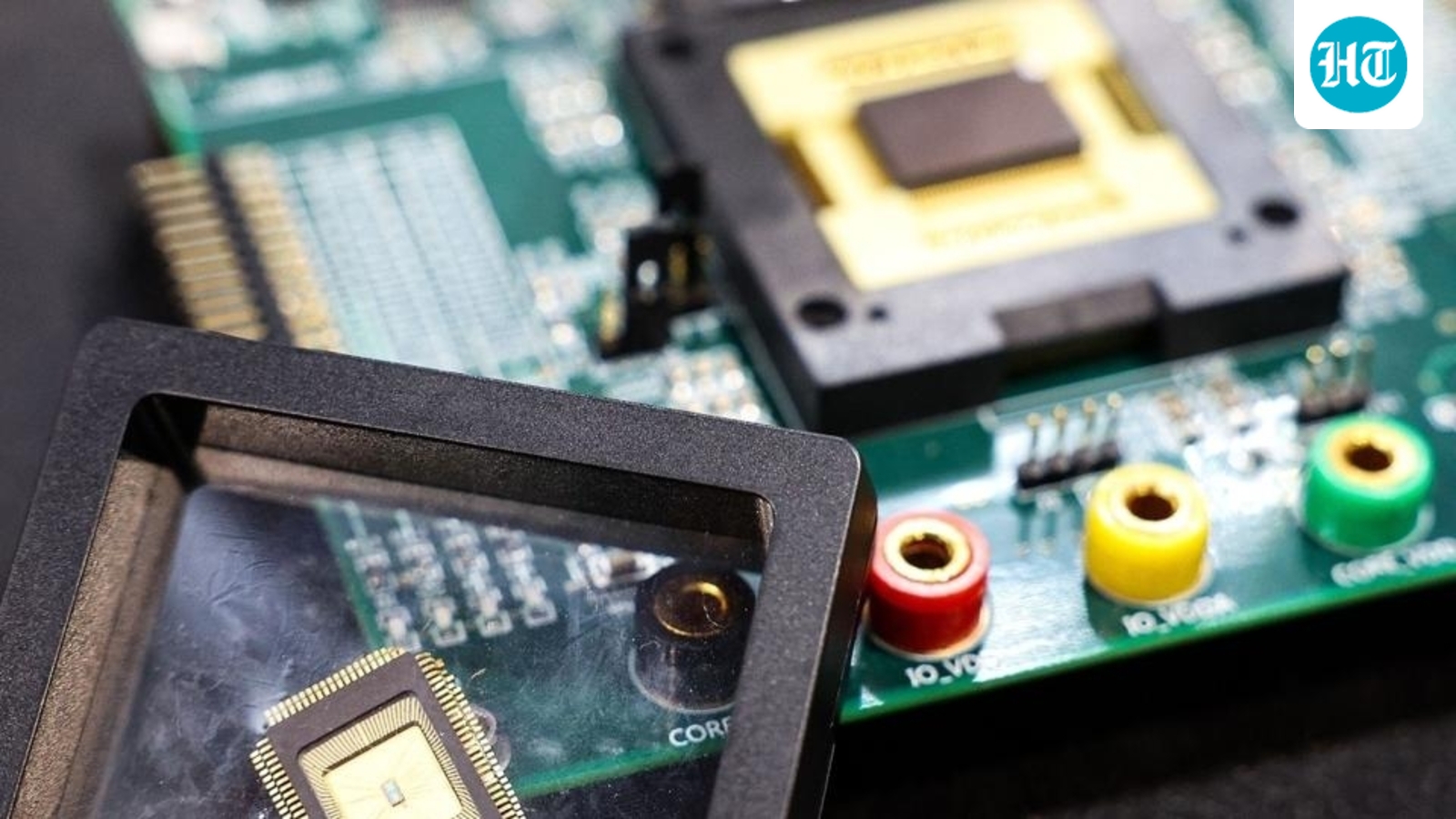
India designs a fifth of the world’s chips. Only in the past year has it begun, at commercial scale, to make any of them.SemiconductorThat single fact captures both our achievement and our unfinished business. Roughly 20% of the world’s semiconductor design engineers work in India--a figure the government itself placed on record in Parliament in 2025--and companies such as Qualcomm, Intel, Nvidia and Broadcom run some of their largest design centres out of Bengaluru, Hyderabad and Noida. Yet for decades, our contribution ended at the design file. The wafer, the package, the finished product: Al of it happened elsewhere. In hindsight, building critical components and equipment at home should always have been the priority. We simply postponed it. This essay, which grew out of an extended dialogue between technology leaders, makes one argument. India’s next decade depends less on how much software we write and more on how much we are willing to build; and on whether we prepare our people, from the IITs to the ITIs, to build it. The encouraging news is that the pieces are falling into place faster than most expected. The task now is to connect them. Software is eating the world, we were told in 2011, and India built a formidable industry proving the point. But software has to be served on something. Hardware is the plate. The plate is finally being made here. The India Semiconductor Mission, approved in December 2021 with an incentive outlay of ₹76,000 crore, has sanctioned a dozen projects with an investment pipeline of about ₹1.64 lakh crore--a silicon fab, two compound-semiconductor fabs and nine assembly, testing and packaging units across six states. Micron’s plant at Sanand and Kaynes Semicon’s facility have commenced commercial production; CG Semi’s assemblyand-test unit was inaugurated in July 2026; and Tata Electronics’ ₹91,000 crore fab at Dholera, built with Taiwan’s PSMC, is designed for 50,000 wafers a month. Twenty-three chip designs have already been taped out under the Design Linked Incentive scheme, and a second phase--ISM 2.0, with a proposed outlay of ₹1.25 lakh crore spanning equipment, materials and indigenous intellectual property--has been cleared by the finance ministry’s expenditure committee. The momentum of fab to lab to market is real. It must be maintained, not merely admired.Electronics more broadly tells the same story. Production has grown from ₹6.4 lakh crore in FY22 to ₹11.3 lakh crore in FY25; mobile-phone output has risen nearly 30-fold in a decade, from ₹18,000 crore to ₹5.45 lakh crore, across more than 300 factories where there were once two; and electronics has climbed from India’s seventh-largest export category to its third, with exports of $38.6 billion in FY25. None of this happened by accident. It happened because policy, capital and talent were pointed at the same target.Within this landscape, one class of chips deserves particular attention: field-programmable gate arrays, or FPGAs--versatile, energy-efficient devices foundational to modern AI, telecommunications and defence electronics. When Lattice Semiconductor, one of only three global FPGA players, opened a research and development Centre of Excellence in Pune in 2025 to work on edge AI, vision and security, it signalled confidence in Indian engineering that goes well beyond routine implementation work. It should be treated as the beginning of a national effort in programmable hardware, not a footnote. Three policy moves would consolidate these gains. First, carry the mission through its second phase without losing nerve; fabs are decade-scale commitments, and the government’s demonstrated willingness to fund long-term projects is the ecosystem’s single greatest asset. Second, fix what might be called the people plumbing: rules at our premier institutions still make the long-term engagement of international manufacturing experts difficult, and complex process knowledge transfers through years of working side by side, not through guest lectures. Flexible, multi-year visa and contract frameworks are overdue. Third, rebalance the incentives of public research funding so that success is measured not only in publications but in patents, prototypes and production-ready designs. Papers matter. Products matter more. Fabs are not built by policy documents. They are built by people willing to work beyond the air-conditioned cubicle--and this is where our education system, for all its recent improvement, still falls short. India produces roughly 1.5 million engineering graduates a year. How many are ready for industry depends on whom you ask: the India Skills Report 2025 puts overall graduate employability at about 55%, while Mercer-Mettl’s Graduate Skill Index, drawing on a million students across 2,700 campuses, puts it at 42.6%. Neither figure is flattering. Meanwhile, industry estimates project a shortfall of 250,000 to 300,000 skilled semiconductor professionals by 2027--precisely when the new plants will need them. The air-conditioned technocrat had a good run. The next decade belongs to engineers prepared to get their hands dirty. A large part of the answer lies where policy has rarely looked: the polytechnics and Industrial Training Institutes of semi-urban India, and the young people of Telangana, Andhra Pradesh, Uttar Pradesh, Bihar, Odisha and the Northeast. The country has more than 14,600 ITIs with over 14 lakh enrolled students--a vast reservoir of practical talent that has received only incremental support for decades. The ₹60,000 crore National Scheme for ITI Upgradation, approved in May 2025, is the most serious correction in a generation: 1,000 government ITIs modernised in a hub-and-spoke model, five National Centres of Excellence for Skilling, 50,000 trainers and 20 lakh young people over five years--co-funded by industry and, crucially, managed by it. Execution will decide whether it produces ISRO-style pathways from technician training into high-value manufacturing careers, or merely freshly painted buildings. These young people will form the backbone of a self-reliant India, and they deserve the same care and clarity of pathway that we extend to our university graduates. Two quieter reforms belong alongside it. Engineering curricula should treat project and programme management as core engineering rather than a soft-skills elective. One cannot plan work one has never sweated through; delivering on time and on budget is a discipline, not a personality trait. And grassroots skilling deserves scale. Initiatives such as SAWiT.AI--a women-only programme run by the SAWiT network with the ed-tech firm GUVI on the Kalido platform--set out to train five lakh women in generative AI in its first phase, in six Indian languages, with a stated ambition of one crore. With women making up less than a fifth of India’s AI workforce, this is not philanthropy. It is capacity-building. A final word on talent concerns the phrase “embracing risk”. We understand risk aversion. But retaining and upskilling an experienced mid-career professional is not a risk; discarding that experience for short-term gains is. Fresh talent and seasoned hands are not substitutes for one another. They are the two halves of any workforce that actually ships.No single actor can carry this transformation, and the ecosystem around it has already changed more than most people realise. India now hosts 2,117 Global Capability Centres employing 2.36 million professionals and generating close to $98 billion in revenue--and, tellingly, 96% of the centres established since FY2021 arrived with product or portfolio ownership from day one, skipping the old back-office apprenticeship entirely. The world has stopped asking whether India can own serious work. The remaining question is whether those mandates will extend into hardware--and whether our own institutions are organised to meet them. Government can act as the catalyst it is uniquely placed to be: funding ambitious, long-horizon projects in waste management, health care and sustainable agriculture that private capital deems too risky, and treating them as platforms for skill-building as much as for solutions. Universities, meanwhile, must become working workshops, not classrooms alone. India has no shortage of young PhD holders; hiring them as full-time, hands-on professors and technicians--while senior faculty anchor the theoretical curriculum--would change what a degree means. Oversight and mentoring from industry veterans, Indian and international, should be built into the model from the start. And blended, cross-border teams that pair Indian design talent with international manufacturing and management experience remain the fastest bridge across our skill gaps.None of this is easy, and none of it is theoretical any more. The first made-in-India chips exist. The skilling money is sanctioned. The conversation that sparked this essay was not one of critique but of opportunity: the talent is present, the capital is committed, the policy intent is on record, and a world busy rearranging its supply chains is watching with interest. What remains is assembly--connecting fabs to curricula, ITIs to industry, universities to workshops, and experience to youth. Fittingly, for a country learning to make things again, assembly is the step done by hand. Let us begin.(The views expressed are personal)This article is authored by Siddharth Savyasachi Malu, director, AI Centre of Excellence, Shiv Nadar University, Delhi NCR and Robin Abrams, chair, board, FactSet Research Systems and member, board, Lattice Semiconductor.
Forging India’s tech future: Case for a nation of makers
This article is authored by Siddharth Savyasachi Malu and Robin Abrams.
1,455 words~7 min read