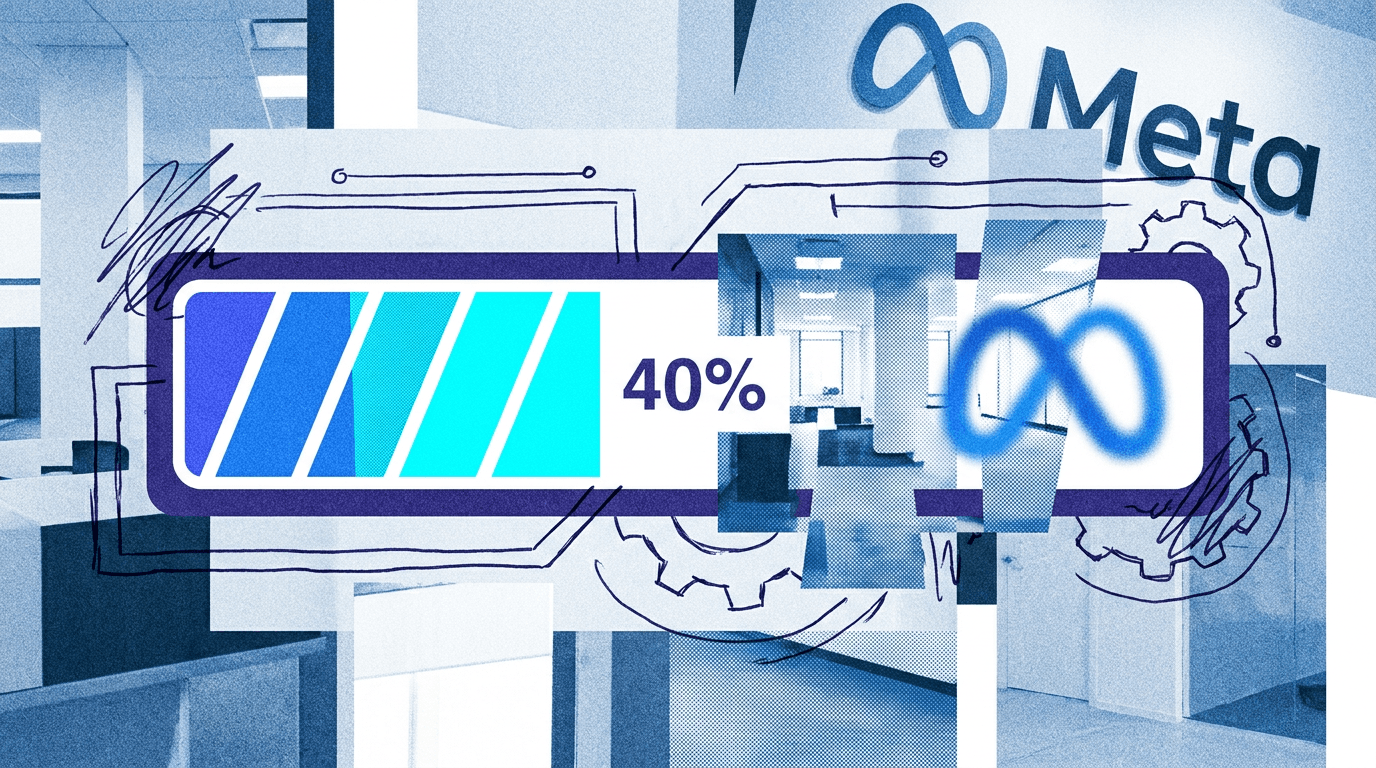
Meta's AI layoffs may have increased code output, according to CTO Andrew Bosworth, but AI-assisted code is a poor metric to test the success and ROI of AI implementationAFP via Getty ImagesMeta slashed 10% of their workforce in May and saw a 220% increase in AI-assisted code changes YoY.But while the code multiplied…so did the problems.New and upgraded user features increased by only a modest 36%. But the most significant issues arrived when technical and cybersecurity incidents at the Big Tech giant jumped 40% from the previous year. As a result, rather than boosting productivity, employee time spent firefighting climbed to 70% compared to last year. Meanwhile, favorable employee sentiment plummeted from 74% to just 55% (first reported by Reuters as part of their in-depth investigation into Meta’s layoffs and the resulting backlash).Meta is the classic textbook example of what happens when an organization rolls out AI implementation rapidly, at the expense of its people, sacrificing quality and employer brand and heightening risk in the process.The headcount reductions were part of a project codenamed Project OT (for organizational transformation). Meta executives proposed that smaller, leaner teams, or pods of 3-5 employees overseen by a pod lead, could produce more work faster than traditional team and management structures.While Andrew Bosworth, the company’s CTO, told employees internally that radically smaller teams were working, pointing to increased code generation as evidence, Reuters revealed that the rollout this year left some employees overwhelmed and confused, with one pod lead unsure of their role because they had not been provided management training.Other employees were underwhelmed: they were not laid off but reassigned to applied AI engineering teams, where they undertook what they considered boring, mundane AI model-training tasks, leaving staff feeling undervalued and less engaged at work.What Happens When Companies Like Meta Overestimate AI?“Review time on AI-native engineering teams has increased by nearly 30% as faster code generation creates more pull requests and larger diffs for the same number of people to evaluate,” I was told via email based on research data from Lariddin, an AI productivity measurement platform. “As companies deploy agents into individual tasks without redesigning the full workflow, employees must wait for outputs, juggle multiple agents, and then review, correct, or redo the work they produce.”Might companies be blindly overestimating AI's promise and current capabilities, and confusing increased production with increased productivity?One downside of AI in the workplace is that it creates a lot of noise. When you hand everyone a tool that democratizes access to what were once specialized skills, labor, and assets, you essentially make that work a commodity and reduce its value to task creation alone.While this can be a good thing (a non-creative can design a fully polished slide deck for their next presentation, for example, without needing a design professional), it has side effects.The more you have access to a tool that can achieve everything, the fewer limitations you have, and the more time you spend absorbed with that tool. It may make you look busy, efficient, and highly useful, but the problem is, you have little or nothing to show for it.Even worse, it can hurt your employer brand and morale, the very aspects that are needed to drive successful AI implementation in the first place. Meta reportedly began patchwork plans to fix its employee morale issue after strong backlash erupted across the organization, according to Reuters reporting, including a PR campaign aimed at repositioning the company in a positive, people-focused light and holding off on company-wide layoff plans initially proposed for later this year.But dissatisfaction, low-quality output, and security incidents can leave a devastating dent in a company seeking rapid gains with AI.Hasty AI implementation that leaves people as an afterthought or a number on a spreadsheet leads to serious consequencesgettyAs an example, in a 2025 study of 1,150 workers led by Stanford Social Media Lab and BetterUp Labs:About 40% of knowledge workers reportedly received AI slop in the last month.An estimated 15.4% of all work output received is workslop.About two hours are lost per incident.“Each workslop incident costs $186/month per affected employee,” BetterUp revealed. “Scaled across a 10,000-person organization — and accounting for the 40% prevalence rate — that’s $9 million per year in lost productivity. This is a floor, not a ceiling. It doesn’t account for the cost of damaged relationships, increased turnover, or eroded trust,” they said in their report.As I reported recently in a previous article, “Companies Are Investing Billions In A Future Employees May Not Be In,” when companies make humans an afterthought while investing billions in AI, they lose an invaluable resource: context, institutional memory, and knowledge.Employers Face AI RealitySo, the question every employer needs to face reality with is this:Is our increased use of AI tools, agents, and teammates actually yielding meaningful ROI?How are we measuring the effectiveness of our AI implementation programs? Are we focusing on vanity metrics like adoption rates, improved production speed, etc., or are we measuring success by improved quality, meaningful changes for our customers, boosted revenue, and optimized human efficiency that enables people to enjoy their work and feel fulfilled?
Meta’s AI Layoffs Boosted Code Changes By 220%. Then Came The Problem
Meta's AI layoffs earlier this year have begun to implode, according to Reuters. Here's how the situation exposed AI's weaknesses, and what you can learn as a leader.
847 words~4 min read