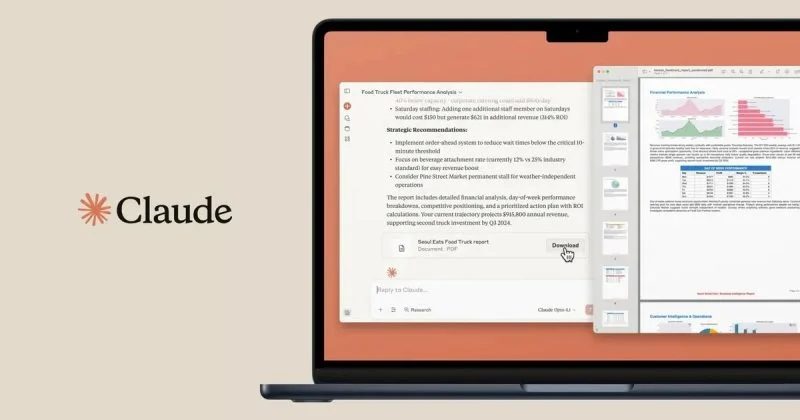
A browser designed for Claude’s own workspaceThe important distinction is that Anthropic is not turning Claude into a conventional consumer browser. Instead, the browser is being embedded inside Cowork so Claude can independently access the web while carrying out a broader task. Anthropic says many web-based jobs do not require access to the browser a user is already using; they simply require a browser that Claude can operate itself. That distinction lets Cowork research websites, gather information and interact with pages without taking control of the user’s everyday browsing session. The approach fits Anthropic’s broader push to turn Claude from a conversational assistant into an agent capable of completing multi-step knowledge-work tasks.The change also addresses a limitation of the previous setup. Until now, Claude’s web access inside Cowork depended on the Claude in Chrome extension. That extension remains useful when users want Claude to work directly with a page that is already open, particularly when the page requires an existing login. But for tasks such as researching several websites or gathering information from the open web, Anthropic argues that Claude does not necessarily need access to the user’s personal browser.How Claude’s built-in browser differs from the regular appThe built-in browser does not represent a completely separate version of Claude. Rather, it gives Claude another environment in which its existing agentic capabilities can operate. Cowork remains the workspace through which users delegate tasks, while the browser becomes one of the tools Claude can use to complete those assignments. Recent updates have also brought Cowork closer to Claude’s broader product ecosystem, including shared memory and more continuity between Claude experiences.The distinction becomes clearer when comparing Cowork with Claude in Chrome. Anthropic says the Chrome extension is intended for situations where a user already has a page open and wants Claude to work with the accounts and information available there. That could include an inbox, CRM or document. The new Cowork browser, by contrast, is designed for situations where Claude simply needs web access of its own. Existing Chrome-extension users will continue to have the extension as the default browsing option unless they change their preferred browser in Claude Desktop settings.Chromium-based architecture gives Cowork an independent web environmentAt the technical level, the new browser is based on Chromium, the open-source browser project that also underpins browsers such as Chrome and Edge. Anthropic’s choice gives Cowork a mature web-rendering foundation while keeping the browser environment separate from the user’s ordinary browsing session. This separation is important because the browser is intended to be Claude’s working environment rather than a window into everything a user is already doing online.Anthropic describes it as “Claude’s browser, not yours,” highlighting the fact that it does not automatically inherit a user’s browser logins. To make the environment more useful, the company allows users on supported systems to import some logins from Chrome, Edge and Firefox. However, Anthropic says banking, email and single-sign-on credentials are excluded by default.
Anthropic’s Claude Gets a Built-In Browser for Agentic Web Work
Anthropic has introduced a new feature in the Cowork desktop version of Claude, incorporating an independent browser for smoother web navigation. This innovation is geared towards subscribers, enabling Claude to autonomously access online information for various tasks. By providing this dedicated browsing capability, Anthropic aims to significantly improve productivity and enhance Claude's AI capabilities in a focused web environment.
488 words~2 min read