Academia
The 35th Muktamar (congress) should be more than a leadership contest. It should mark a new commitment to integrity, independence and service in the life of Indonesia’s largest Muslim organization.
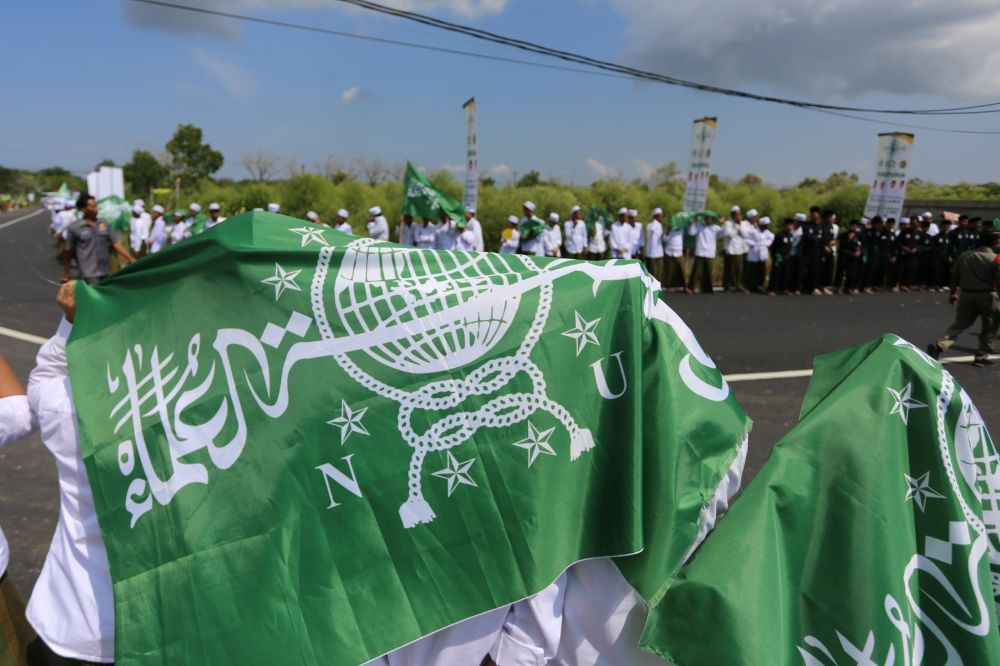
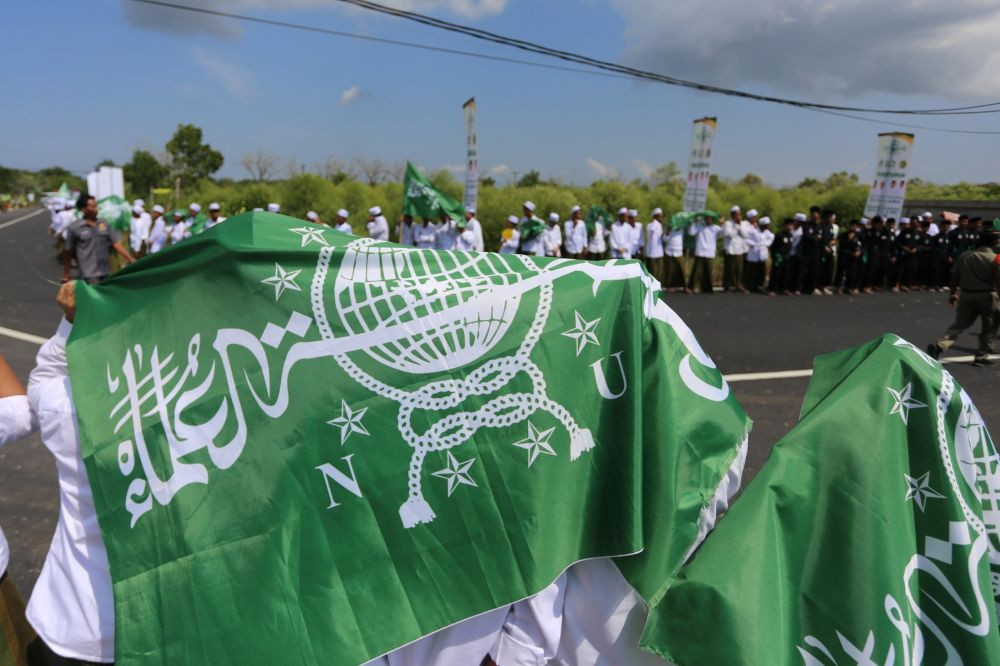
Bated breath: Groups of santri (Islamic boarding school students) hold aloft the flag of Muslim organization Nahdlatul Ulama (NU) as they wait along a road for the presidential motorcade to arrive on June 23 ahead of the closing ceremony of the NU National Conference of Islamic Scholars and Grand Conference at the Syachona Mohammad Cholil Islamic Institute in Bangkalan, East Java. (Antara/Moch. Asim)
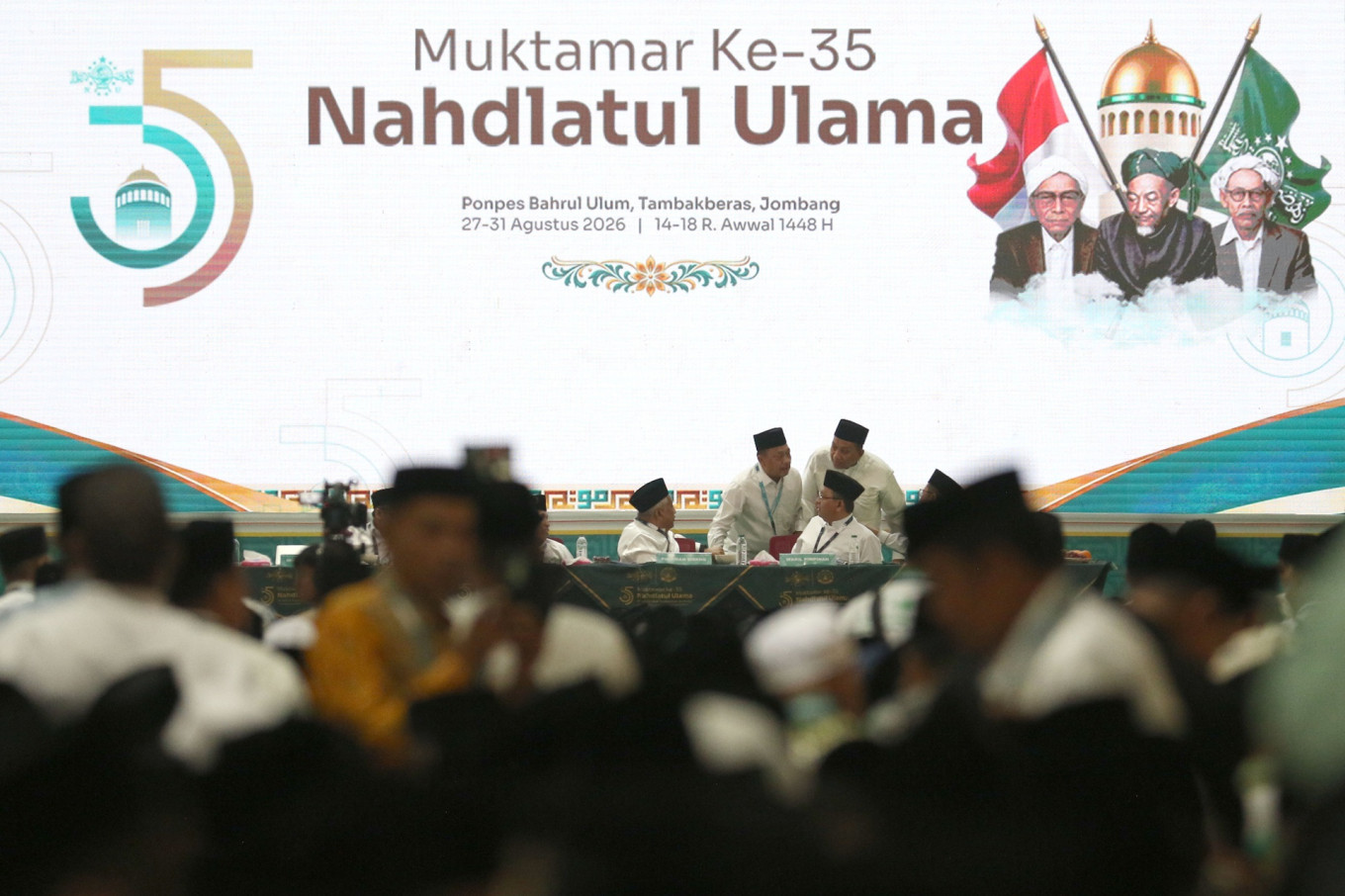
Indonesia marks its 81st year of independence this month at a moment of profound historical weight. Almost simultaneously, Nahdlatul Ulama (NU)—the country's biggest social and religious forces—enters its second century as it convenes its 35th Muktamar (congress) from Aug. 27 to 31 at the Bahrul Ulum Islamic Boarding School in Tambakberas, Jombang, East Java.These two milestones are inextricably linked. Together, they pose an essential question: What kind of Indonesia do we aspire to build, and what moral leadership will carry us there?
The nation is chasing its Golden Indonesia 2045 vision against a backdrop of geopolitical friction, strategic rivalry, economic protectionism, rapid technological disruption, artificial intelligence, climate pressures and global resource insecurity. At home, the challenges remain deeply felt: persistent poverty, inequality, corruption, disparities in healthcare and education, joblessness, environmental strain and eroding public trust.