Thursday 27 August 2026 4:13 am
| Updated:
Wednesday 26 August 2026 7:28 pm
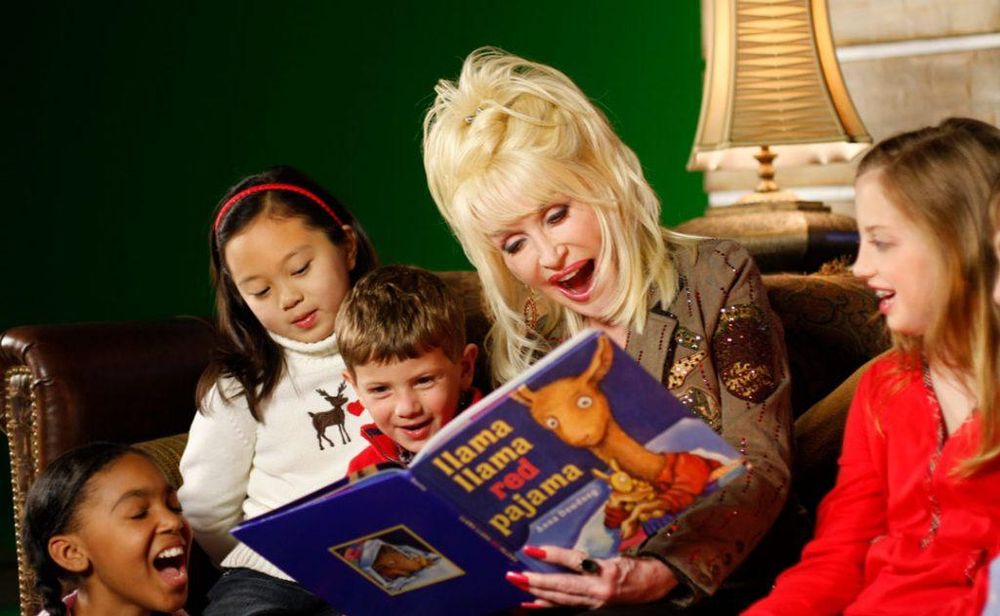
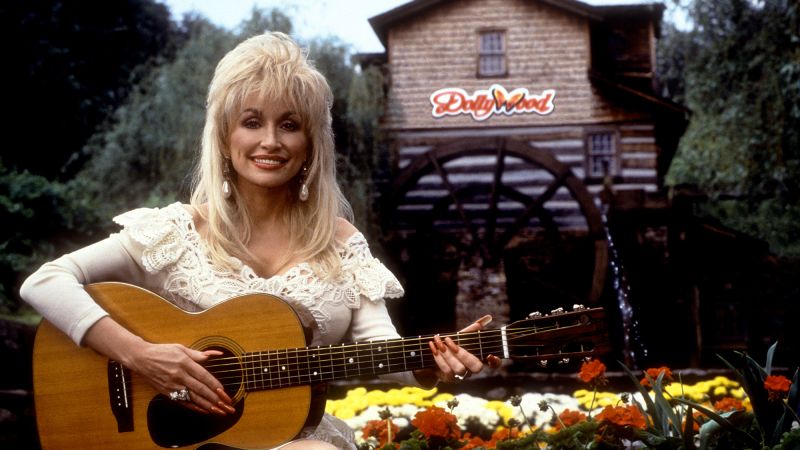
Dolly Parton is often celebrated as a working class hero, but her entrepreneurial triumphs can be read as a fable of capitalism too, writes Anna MoloneyWhen asked in 2019 whether she identified as a feminist, Dolly Parton was adamant to the negative. “No I do not. I think of myself as a woman in business.” It’s a telling answer, not just in its rejection of the feminist label (which Parton associated with a warped anti-men rhetoric) but in its identification of Parton as a woman not primarily, as we might assume, of the world of music, but of the cold, mercenary one of business. Indeed, when going to watch the Dolly Parton musical Here You Come Again at the New Wimbledon Theatre just last year, I was struck by just how many references there were to Parton’s commercial empire, from Dollywood to her own line of cake mixes. But even that barely scratched the surface. Hotel resorts, dinner shows, a cosmetics line, a Cup of Ambition Coffee brand, multiple production companies and even a canine clothes line (Doggy Parton), Parton was never shy when it came to making money. It is apt that my own love for Dolly, and the reason I was on a trip to an off-West End touring musical, was nurtured not by my music-loving mother, but by my businessman father.Because though a hugely talented singer and songwriter no doubt, Parton’s musical talent was arguably eclipsed by her business acumen; and indeed the largest stake of her wealth would come to be not from her music, but her theme park resort.Dolly Parton’s American DreamParton’s own entrepreneurialism started early. She possessed an inherent sense of her own worth, especially when it came to intellectual property. At just 20 years old, she established her own music company, Owe-Par (named as a combination of hers and her uncle Bill Owens’ names), giving her early ownership of her own catalog (a move long predating Ms Swift’s battle to own her own records). She later boldly turned down Elvis Presley when he asked to record her song I Will Always Love You, due to her unwillingness to relinquish half the publishing rights as demanded. This would prove savvy: Whitney Houston’s later cover of the record earned Parton over $10m just in royalties in the 90s alone.Parton was equally always knowing of her own commercial value. Going into boardrooms full of men, she said she’d always say the same thing: “Get past the boobs, get past the everything else and just listen to what I’ve gotta say, because I think I can make us all a bunch of money.” Indeed she could. By 2025, Parton’s net worth was estimated at almost half a billion dollars.In many ways, it was the ideal of the American Dream. Born in a one-room cabin in Tennessee, the fourth of 12 children, Parton’s was a rags to riches tale of hard work and hard graft. Unapologetically new money in her repudiation of taste (she credited her own distinctly glam look to being patterned after “the town tramp”), her singularity also captured the American celebration for the individual. Meanwhile, her most famous hit, 9-to-5, while interpreted by some as an anti-capitalist, working class anthem, can also be heard as a chant for the entrepreneur; expressing the frustration of working on somebody else’s clock for somebody else’s dime. Indeed, when the song was reworked for a Squarespace ad for the 2021 superbowl advocating for the 5-to-9 – “Cos it’s hustlin’ time! Whole new way to make a living” – Parton was lambasted by the New Statesman for having joined the “girlboss hellscape”. Activist or capitalist?Yet despite these protestations of betrayal, Parton never claimed to be wanting to dismantle the system. She was fiercely purposeful but also practical; “I don’t go into meetings to change the world,” she once commented and was famously apolitical. This earned her the almost singular achievement of being equally revered by the right and the left, and was at least partially motivated by her commercial sensibilities. When asked by The Guardian in 2023 why she avoided politics from an early stage, she said so as not to have lost half her audience. It’s a stance that would likely be critiqued if given by a young star today, where fence-sitting is far from glamorised. From Taylor Swift, who was near forced by fans to declare a political endorsement in 2016, to Olivia Rodrigo, who has been praised by fans for her fierce political activism on women’s issues, Parton’s political silence, along with her unashamedness about making money, is an unfashionable one for female artists today. And yet it would be the ungenerous observer who begrudged Parton her commercial mindedness. The good she has gone on to do with her riches – Parton described herself as “addicted to the feeling of giving” – has been well documented: the Imagination Library, a literacy scheme set up by Parton in 1995 inspired by her father’s own struggles as a result of not knowing how to read, has gifted over 33m free books to children worldwide; in 2020, as the world locked down amid the coronavirus pandemic, she funded early research into the Moderna vaccine; in Sevier County, Tennessee, Parton has even been credited with reducing the school dropout rate from 35 per cent to six per cent thanks so her pledge to give every student who graduated $500. Even the creation of Dollywood was motivated partly as a jobs creation scheme, with Parton saying she always wanted to give back to where she came from. In short, Dolly may have been an entertainer, but there was nothing performative about her desire to do good. For Parton, making money was a means to something bigger. In a way, it subscribed to a version of capitalism often thought impossible; one motivated not by greed but by a genuine, dare I say trickle down philosophy. In 2022, when awarded $100m to use for philanthropic purposes by Jeff Bezos, she accepted the money with grace, and praised her benefactor: “When people are in a position to help, you should help. And I know that I’ve always said I try to put my money where my heart is, and I think you do the same thing.”For Parton too though, making money was a bid for creative freedom. When asked by one interviewer about her business empire, Parton was said to have looked offended. “I’m not doing it for the money,” she replied. “I had to get rich in order to sing like I was poor again,” she explained; in other words, then, the quest to own one’s time and money. The working man’s dream, or perhaps the business woman’s. To Dolly, the rhinestone capitalist, may you sing your heart out now.