Story audio is generated using AI
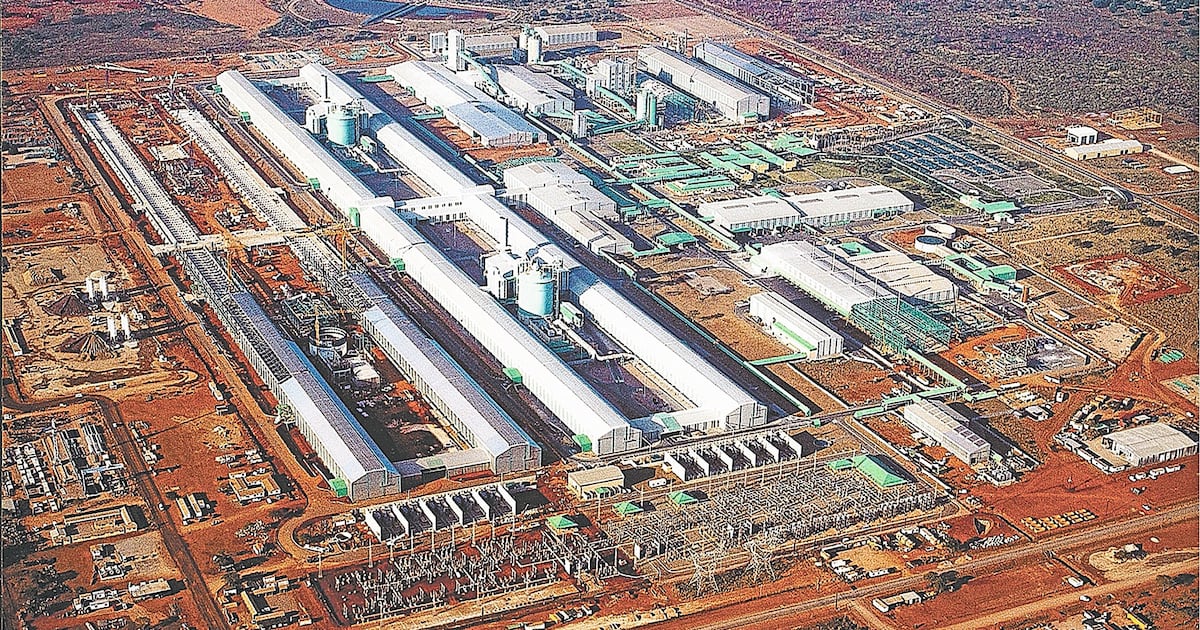
The future of Kalagadi Manganese is in further jeopardy after the Supreme Court of Appeal (SCA) threw out the mining house’s bid to challenge the Industrial Development Corporation’s (IDC’s) authority to institute business rescue proceedings against it.The ruling is the latest twist in the IDC’s six-year battle to place the company in business rescue.Kalagadi’s mineral base is a world-class asset. However, the company, founded and chaired by Daphne Mashile-Nkosi, owes the IDC a staggering R6bn — with the parties engaged in a lengthy legal battle since 2020.The SCA on Tuesday noted that Kalagadi operates the world’s largest sinter plant and has mining rights that contain about 960-million tonnes of manganese ore deposits.Despite its apparent riches and capacity to produce 3-million tonnes of run-of-mine manganese ore per annum from its operations in the Kalahari Basin, Northern Cape, the country’s second-highest court noted the company’s assets have not translated into financial stability.“On the contrary, despite having access to considerable mineral resources, Kalagadi has been floundering financially and, for at least the past six years, has not been able to service its debts. The contrast between the abundance of its underlying assets and its persistent inability to meet its debt obligations lies at the heart of the present dispute,” the court said.The SCA judgment also flagged that the IDC’s sustained and deliberate decision-making process culminated in a decision to institute the business rescue proceedings — which Kalagadi has opposed — opting rather to restructure its debt.Kalagadi argued before the SCA that the IDC’s business rescue application has become “stale” as too much water has gone under the bridge since the IDC launched proceedings in 2020.However, the SCA found that delay alone does not extinguish such an application or render it incompetent. “First, the delay is largely self-induced. The history of the proceedings shows that the business rescue application was delayed by interlocutory challenges and procedural skirmishes initiated by the applicants, including repeated challenges to the IDC’s authority and related applications for leave to appeal,” the court ruled.“A litigant who materially contributed to the delay cannot readily rely on it as a separate ground to nonsuit its opponent. To allow that would turn the consequences of a litigant’s own forensic choices into a substantive defence.“Despite the passage of nearly six years, Kalagadi has not shown that it can service the debt or put forward a concrete and workable restructuring proposal. “In that context, the negotiations are best viewed as exploratory discussions conducted alongside, rather than in place of, the IDC’s decision to protect and enforce its rights through business rescue.”Business Day