Story audio is generated using AI
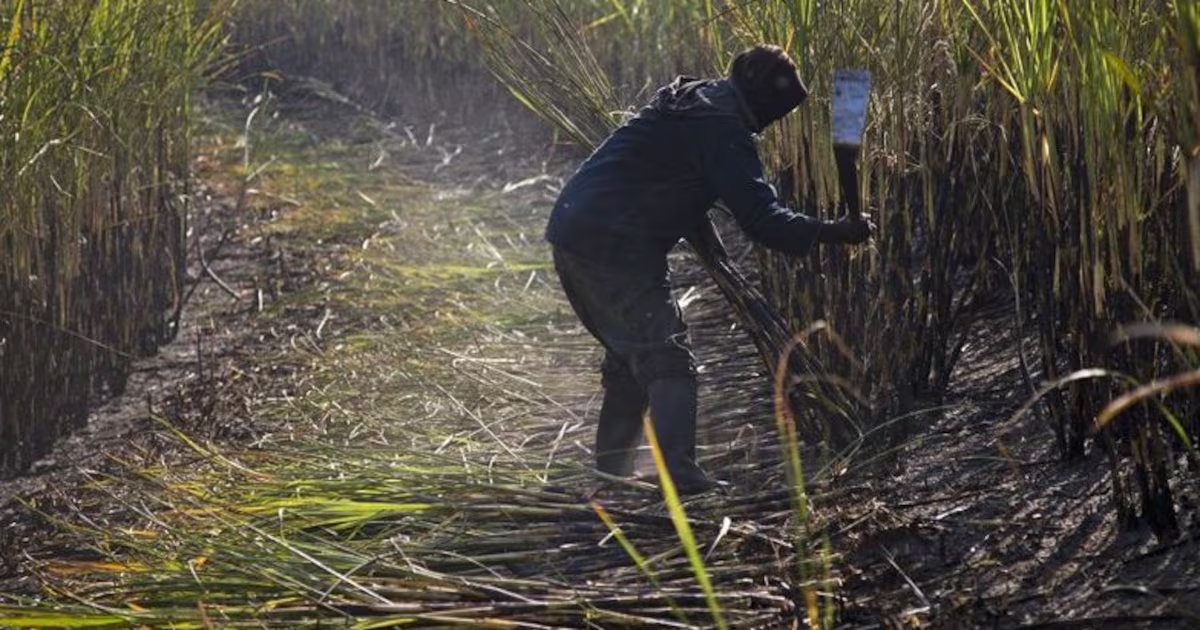
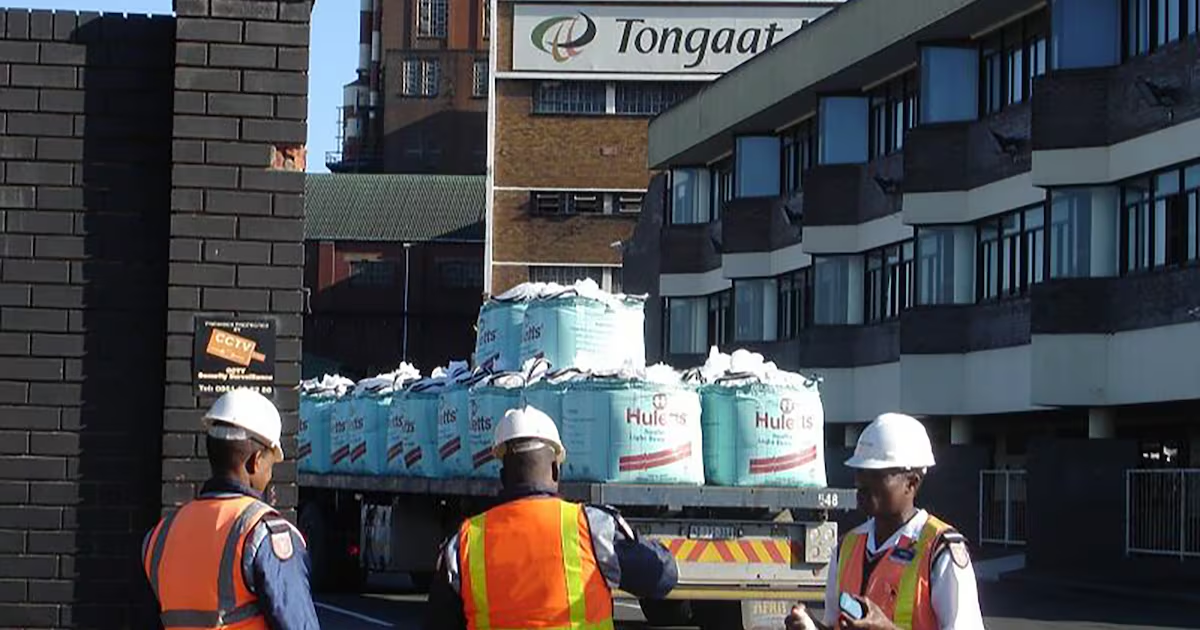
The Industrial Development Corp (IDC) is doubling down on Tongaat Hulett’s turnaround, betting that the debt-laden sugar giant burdened with roughly R15bn in liabilities can be transformed into a viable business. The state-owned financier argues that its continued backing of Tongaat is aimed at preserving value in a distressed but strategically important agribusiness while maximising the prospects of recovering public funds already committed to the company. The IDC’s role has expanded significantly since Tongaat entered business rescue four years ago, with the corporation providing post‑commencement finance of R2.5bn that has kept operations running and positioned it as a key stakeholder in the restructuring process. The funding will be converted into a significant shareholding in the company.Bongani Miya, IDC divisional executive for agro-industries and services, said: “The commercial and investment rationale for backing Tongaat is to preserve and recover value in a strategically important agribusiness with an established operating base, significant assets, and deep linkages across the sugar value chain.”The rationale for backing Tongaat is to preserve and recover value in a strategically important agribusiness with an established operating base, significant assets, and deep linkages across the sugar value chain— Bongani Miya, IDCHe said supporting the restructuring helps avoid the value destruction that would result from liquidation, protects the IDC’s existing exposure, and creates a pathway to stabilise the business, restore operational sustainability, and potentially unlock future value through diversification into adjacent agro-industrial and agro-energy opportunities, including bioelectricity, ethanol and sustainable aviation fuel. The IDC’s R2.5bn exposure to Tongaat is modest relative to its overall R143bn loan and investment portfolio. “As a proportion of IDC’s overall loan and investment portfolio, this remains a manageable exposure within the corporation’s normal portfolio governance, risk-management and approval frameworks,” Miya said.Last week, the IDC, Tongaat’s business rescue practitioners and the Vision consortium led by businessman Robert Gumede announced a binding agreement for the IDC to extend its postcommencement finance to September and convert its loan to the sugar company into equity. Tongaat operates in South Africa, Zimbabwe, Mozambique and Botswana. In South Africa, it employs 2,600 people and supports more than 25,500 jobs in communities surrounding its three mills, refinery and animal feeds plant.“Once concluded, the transaction with Vision will result in the conversion of these liabilities into equity, thus easing [Tongaat’s] liquidity challenges. Additional commercial funding will be working capital required to support the operations of the business,” Miya said.Despite the restructuring framework, the IDC is cautious about setting expectations for a turnaround timeline. Miya said multiple variables — including execution of the restructuring, access to funding and broader market conditions — would determine when the company returns to profitability.“It would be premature to commit to a specific profitability timeline,” he said.Instead, the IDC is taking a long-term investment view, prioritising sustainable recovery over quick returns. “IDC’s approach is to take a long-term view where there is a credible path to restoring sustainability, while continuing to manage risk and protect value,” said Miya. Tongaat’s recovery prospects are also tied to broader industry dynamics. The influx of low-priced imports has accelerated sharply, undermining domestic pricing and complicating recovery prospects for local producers already operating under financial strain.Industry estimates suggest roughly 111,696t of sugar imports from regions such as Southeast Asia and Latin America were received or expected in the first three months of the current season — close to half of the total volumes imported during the entire 2025/26 season. Much of this sugar is subsidised by foreign governments, particularly those of Brazil and Thailand, enabling it to enter the South African market at prices local producers struggle to match.Tongaat warned that sustained import pressure could erode margins just as it seeks to stabilise operations and execute a complex restructuring process.While trade policy falls outside the IDC’s direct mandate, the entity has acknowledged the issue and is engaging with policymakers and industry bodies. Miya said the IDC was in talks with the department of trade, industry & competition and other stakeholders about the matter. As a shareholder, the IDC is expected to play a more active role in Tongaat, particularly in shaping governance and oversight mechanisms. Miya said the corporation would require governance arrangements that match Tongaat’s scale and complexity, with a focus on transparency, accountability and effective execution of the turnaround plan.“As a prospective shareholder, IDC would require governance arrangements that protect stakeholder value, support transparent reporting and ensure effective oversight,” he said.Business Times